







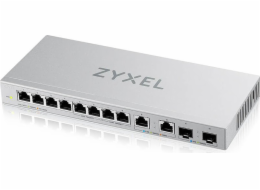
ZyXEL Switch 12portový gigabitový neřízený přepínač s 8porty 1G + 2porty 2,5G + 2porty SFP+ XGS1010-12-ZZ0102F
Skladem, dodání 2-4 dní
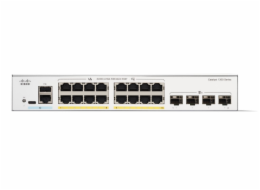
Cisco Catalyst switch C1300-16T-2G Sada pro montáž do racku není součástí balení. Cisco Catalyst řady 1300 jsou managovatelné switche Gigabit Ethernet Layer 3 podnikové třídy určené pro malé a střední podniky a pobočky. Tyto jednoduché, flexibilní a bezpečné switche jsou ideální pro nasazení mimo rozvodnou skříň. Řada Catalyst 1300 pracuje na přizpůsobeném softwaru operačního systému Linux s intuitivním grafickým rozhraním, který zjednodušuje nastavení sítě a pokročilými funkcemi, které urychlují digitální transformaci, zatímco všudypřítomné zabezpečení chrání kritické obchodní transakce. Přepínače řady 1300 poskytují ideální kombinaci cenové dostupnosti a možností pro malé a střední podniky a pomáhají vám vytvořit efektivnější a lépe propojenou pracovní sílu. Stránky produktu: C1300-16T-2G Performance Switching capacity and forwarding rate (All switches are wire-speed and nonblocking) Capacity in millions of packets per second (mpps) (64-byte packets) 26.78 Switching capacity in gigabits per second (Gbps) 36.0 Layer 2 switching Spanning Tree Protocol (STP) Standard 802.1d spanning tree support Fast convergence using 802.1w (Rapid Spanning Tree Protocol [RSTP]), enabled by default Multiple spanning tree instances using 802.1s (MSTP); 8 instances are supported Per-VLAN Spanning Tree Plus (PVST+); 126 instances are supported Rapid PVST+ (RPVST+); 126 instances are supported Port grouping/link aggregation Support for IEEE 802.3ad Link Aggregation Control Protocol (LACP) Up to 8 groups Up to 8 ports per group with 16 candidate ports for each (dynamic) 802.3ad link aggregation VLAN Support for up to 4093 VLANs simultaneously Port-based and 802.1Q tag-based VLANs, MAC-based VLAN, protocol-based VLAN, IP subnet-based VLAN Management VLAN Private VLAN with promiscuous, isolated, and community port Private VLAN Edge (PVE), also known as protected ports, with multiple uplinks Guest VLAN, unauthenticated VLAN Dynamic VLAN assignment via RADIUS server along with 802.1X client authentication Customer premises equipment (CPE) VLAN Auto surveillance VLAN (ASV) Voice VLAN Voice traffic is automatically assigned to a voice-specific VLAN and treated with appropriate levels of QoS. Voice Services Discovery Protocol (VSDP) delivers networkwide zero-touch deployment of voice endpoints and call control devices Multicast TV VLAN Multicast TV VLAN allows the single multicast VLAN to be shared in the network while subscribers remain in separate VLANs. This feature is also known as Multicast VLAN Registration (MVR) VLAN translation Support for VLAN one-to-one mapping, in which customer VLANs (C-VLANs) on an edge interface are mapped to service provider VLANs (S-VLANs), and the original C-VLAN tags are replaced by the specified S-VLAN Q-in-Q VLANs transparently cross a service provider network while isolating traffic among customers Selective Q-in-Q Selective Q-in-Q is an enhancement to the basic Q-in-Q feature and provides, per edge interface, multiple mappings of different C-VLANs to separate S-VLANs Selective Q-in-Q also allows configuring of the Ethertype (Tag Protocol Identifier [TPID]) of the S-VLAN tag Layer 2 protocol tunneling over Q-in-Q is also supported Generic VLAN Registration Protocol (GVRP)/Generic Attribute Registration Protocol (GARP) GVRP and GARP enable automatic propagation and configuration of VLANs in a bridged domain Unidirectional Link UDLD monitors physical connections to detect unidirectional links caused by incorrect Detection (UDLD) wiring or cable/port faults to prevent forwarding loops and blackholing of traffic in switched networks DHCP relay at Layer 2 Relay of DHCP traffic to a DHCP server in a different VLAN; works with DHCP Option 82 Internet Group Management Protocol (IGMP) versions 1, 2, and 3 snooping IGMP limits bandwidth-intensive multicast traffic to only the requesters; it supports 2000 multicast groups (source-specific multicasting is also supported) IGMP querier IGMP querier is used to support a Layer 2 multicast domain of snooping switches in the absence of a multicast router IGMP proxy The IGMP proxy provides a mechanism for multicast forwarding based on IGMP membership information without the need for more complicated multicast routing protocols Head-of-Line (HOL) blocking HOL blocking prevention Loopback detection Loopback detection provides protection against loops by transmitting loop protocol packets out of ports on which loop protection has been enabled. It operates independently of STP Layer 3 IPv4 routing Wire-speed routing of IPv4 packets Up to 990 static routes and up to 128 IP interfaces IPv6 routing Wire-speed routing of IPv6 packets Layer 3 interface Configuration of a Layer 3 interface on a physical port, LAG, VLAN interface, or loopback interface Classless Interdomain Routing (CIDR) Support for CIDR Routing Information Protocol (RIP) v2 Support for RIP v2 for dynamic routing Policy-Based Routing (PBR) Flexible routing control to direct packets to a different next hop based on an IPv4 or IPv6 Access Control List (ACL) DHCP server Switch functions as an IPv4 DHCP server, serving IP addresses for multiple DHCP pools or scopes Support for DHCP options DHCP relay at Layer 3 Relay of DHCP traffic across IP domains User Datagram Protocol (UDP) relay Relay of broadcast information across Layer 3 domains for application discovery or relaying of Bootstrap Protocol (BOOTP)/DHCP packets Security Secure Shell (SSH) Protocol SSH is a secure replacement for Telnet traffic. Secure Copy Protocol (SCP) also uses SSH. SSH v1 and v2 are supported Secure Sockets Layer (SSL) SSL support: Encrypts all HTTPS traffic, allowing highly secure access to the browser-based management GUI in the switch IEEE 802.1X (authenticator role) 802.1X: RADIUS authentication and accounting, MD5 hash, guest VLAN, unauthenticated VLAN, single/multiple host mode, and single/multiple sessions Supports time-based 802.1X, dynamic VLAN assignment, and MAC authentication IEEE 802.1X supplicant A switch can be configured to act as a supplicant to another switch. This enables extended secure access in areas outside the wiring closet (such as conference rooms) Web-based authentication Web-based authentication provides network admission control through a web browser to any host devices and operating systems STP Bridge Protocol Data Unit (BPDU) Guard A security mechanism to protect the network from invalid configurations. A port enabled for BPDU Guard is shut down if a BPDU message is received on that port. This avoids accidental topology loops STP Root Guard Prevents edge devices not in the network administrator’s control from becoming STP root nodes STP loopback guard Provides additional protection against Layer 2 forwarding loops (STP loops) DHCP snooping Filters out DHCP messages with unregistered IP addresses and/or from unexpected or untrusted interfaces. This prevents rogue devices from behaving as DHCP servers IP Source Guard (IPSG) When IPSG is enabled at a port, the switch filters out IP packets received from the port if the source IP addresses of the packets have not been statically configured or dynamically learned from DHCP snooping. This prevents IP address spoofing Dynamic ARP Inspection (DAI) The switch discards ARP packets from a port if there are no static or dynamic IP/MAC bindings or if there is a discrepancy between the source or destination addresses in the ARP packet. This prevents man-in-the-middle attacks IP/MAC/port binding (IPMB) The preceding features (DHCP snooping, IPSG, and DAI) work together to prevent Denial-of-Service (DoS) attacks in the network, thereby increasing network availability Secure Core Technolog
Skladem-dodání 2-4 dní
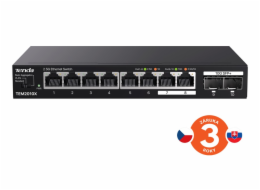
Tenda TEM2010X Tenda TEM2010X přepíná data pomocí 8mi portů RJ45 a 2x optického SFP+ slotu. 8 RJ45 portů 100/1000/2500 Mb/s a 2x SFP+ slot s rychlostí 100/1000/10 000 Mb/s. Switch má ochranu proti přepětí 6kV. Podpora přepojování uzlů v módu Store-and-Forward. Je vhodná jak do menších a středních firem, tak i do větších domácností. Přepínač Standard / VLAN / Static Aggregation mode Standard mode: V tomto módu pracuje jako klasický switch, veškeré porty mají auto-negaci, všechny porty spolu komunikují. VLAN mode: V tomto módu jsou Port1 až Port6 izolovány samy od sebe, každý port Port1 až Port6 může komunikovat jen s porty Port7 až Port10. Static Aggregation mode (NAS Dedicated mode): Group1 jsou porty Port7 a Port8. Group 2 jsou porty Port9 a Port10. Určeno pro např. dvouportové NAS. Technická specifikace Standardy a protokoly: IEEE802.3, IEEE802.3u, IEEE802.3ab, IEEE802.3x, IEEE802.3bz, IEEE802.3ae, IEEE802.3z Porty: 8x 100/1000/2500 Mbps porty RJ45 auto-negace Porty SFP+: 2x SFP+ 1000/2500/10 000 Mb/s Celková propustnost: 80 Gbps Velikost tabulky MAC adresace: 16K Mód přepínání: Store-And-Forward LED Indikace: 8x Aktivita portu, 8x Linka portu, 2x 1G/2,5 pro SFP, 2x 10G pro SFP, 1x Napájení Napájení: vstup 100 až 240 V, AC 50/60 Hz pro napájecí adaptér Paketová propustnost: 59,5 Mpps Spotřeba: max. 12 W Rozměry: 177 mm x 104 mm x 26 mm(L*W*H) Ochrana proti přepětí: 6 000 V Umístění: na stěnu, desktop Uchycení do Racku: ne Provozní teplota: 0° až 45 °C Vlhkost: 10%-90%RH (nekondenzující) Certifikace: FCC/CE/RoHS
Skladem, dodání 2-4 dní

Popis QNAP QSW-IM3216-8S8T QNAP switch 8x 10GbE RJ45, 8x 10GbE SFP+, bezvětrákový, řízený rack mount / wall mount design Detaily Typ správy Webově spravovaný Počet portů 16 10GbE SFP+ 8 (10G/1G) 10GbE BASE-T (RJ45) 8 (10G/5G/2.5G/1G/100M) Por
Dodání 3-5 dní
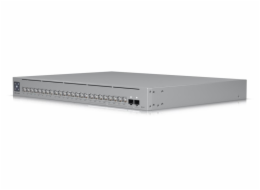
Ubiquiti UniFi Switch Pro Max 24 PoE 400 W; UniFi Switch (USW-Pro-Max-24-PoE) je ideální pro malé a střední firmy, které požadují spolehlivý L3 switch s managementem v profesionálním provedení určený pro montáž...
Skladem v eshopu
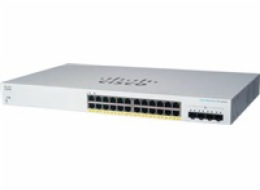
Cisco switch CBS220-24FP-4X - REFRESH CISCO REFRESH jsou repasované produkty, které společnost CISCO dodává s certifikací kvality, zárukou a servisní podporou odpovídající ekvivalentnímu novému produktu Řada Cisco Business 220 jsou jednoduché a cenově dostupné chytré switche pro sítě podnikové třídy. Díky podpoře mobilních aplikací, nástroji Cisco Business Dashboard a několika možnostem PoE+ poskytuje CBS220 robustní síť v rámci omezeného rozpočtu. Stránky produktu: CBS220-24FP-4X Quick start guide: Quick start guide Switching capacity Forwarding rate in millions of packets per second (mpps; 64-byte packets) 95,23 Switching capacity in Gigabits per second (Gbps) 128 Layer 2 switching MAC table Up to 8,192 Media Access Control (MAC) addresses Spanning Tree Protocol (STP) Standard 802.1d Spanning Tree support, enabled by default Fast convergence using 802.1w (Rapid Spanning Tree [RSTP]) Multiple Spanning Tree instances using 802.1s (MSTP) 16 instances are supported Port grouping Support for IEEE 802.3ad Link Aggregation Control Protocol (LACP) Up to 8 groups Up to 8 ports per group with 16 candidate ports for each (dynamic) 802.3ad link aggregation Load balance based on source and destination MAC address, or source and destination MAC/IP VLAN Support for up to 256 Virtual Local Area Networks (VLANs) simultaneously Port-based and 802.1Q tag-based VLANs Management VLAN Guest VLAN Auto voice VLAN Voice traffic is automatically assigned to a voice-specific VLAN and treated with appropriate levels of QoS QinQ VLAN VLANs transparently cross a service provider network while isolating traffic among customers Generic VLAN Registration Protocol (GVRP) and Generic Attribute Registration Protocol (GARP) Protocols for automatically propagating and configuring VLANs in a bridged domain Head-of-Line (HOL) blocking HOL blocking prevention Jumbo frame Frame sizes up to 9,216 supported Loopback detection Loopback detection provides protection against loops by transmitting loop protocol packets out of ports on which loop protection has been enabled. It operates independently of STP. Automatic Media-Dependent Interface Crossover (MDIX) Automatically adjusts transmit and receive pairs if an incorrect cable type (crossover or straight-through) is installed. Security ACLs Drop or rate limit based on source and destination MAC, VLAN ID or IP address, protocol, port, Differentiated Services Code Point (DSCP)/IP precedence, Transmission Control Protocol (TCP)/ User Datagram Protocol (UDP) source and destination ports, 802.1p priority, Ethernet type, Internet Control Message Protocol (ICMP) packets, Internet Group Management Protocol (IGMP) packets, TCP flag Support up to 512 rules Port security Creates the ability to lock source MAC addresses to ports; limits the number of learned MAC addresses IEEE 802.1X (authenticator role) 802.1X: Remote Authentication Dial-in User Service (RADIUS) authentication; guest VLAN; Single-host, multiple-host, and multisession mode RADIUS, TACACS+ Supports RADIUS and Terminal Access Controller Access Control System (TACACS) authentication; switch functions as a client MAC address filtering Supported Storm control Broadcast, multicast, and unknown unicast DoS protection DOS attack prevention STP Bridge Protocol Data Unit (BPDU) Guard This security mechanism protects the network from invalid configurations. A port enabled for BPDU Guard is shut down if a BPDU message is received on that port. Spanning Tree Loop Guard This feature provides additional protection against Layer 2 forwarding loops (STP loops). Secure Shell (SSH) Protocol SSH is a secure replacement for Telnet traffic. SCP also uses SSH. SSH v1 and v2 are supported. Secure Sockets Layer (SSL) SSL support: Encrypts all HTTPS traffic, allowing highly secure access to the browser-based management GUI in the switch QoS Priority levels 8 hardware queues per port Scheduling Strict priority and Weighted Round-Robin (WRR) queue assignment based on DSCP and class of service (802.1p/CoS) Class of service Port-based; 802.1p VLAN priority-based; IPv4/v6 IP precedence, Type of Service (ToS), and DSCP-based; Differentiated Services (DiffServ); classification and re-marking ACLs, trusted QoS Rate limiting Ingress policer; egress shaping and rate control; per VLAN, per port, and flow-based Congestion avoidance A TCP congestion avoidance algorithm is required to reduce and prevent global TCP loss synchronization. Multicast Internet Group Management Protocol (IGMP) Versions 1, 2, and 3 Snooping IGMP limits bandwidth-intensive multicast traffic to only the requesters; supports 256 multicast groups IGMP querier IGMP querier is used to support a Layer 2 multicast domain of snooping switches in the absence of a multicast router Standards Standards IEEE 802.3 10BASE-T Ethernet, IEEE 802.3u 100BASE-TX Fast Ethernet, IEEE 802.3ab 1000BASE-T Gigabit Ethernet, IEEE 802.3ad LACP, IEEE 802.3z Gigabit Ethernet, IEEE 802.3x Flow Control, IEEE 802.1D (STP, GARP, and GVRP), IEEE 802.1Q/p VLAN, IEEE 802.1w RSTP, IEEE 802.1s Multiple STP, IEEE 802.1X Port Access Authentication, IEEE 802.3af, IEEE 802.3at, RFC 768, Request for Comments (RFC) 783, RFC 791, RFC 792, RFC 793, RFC 813, RFC 879, RFC 896, RFC 826, RFC 854, RFC 855, RFC 856, RFC 858, RFC 894, RFC 919, RFC 922, RFC 920, RFC 950, RFC 1042, RFC 1071, RFC 1123, RFC 1141, RFC 1155, RFC 1157, RFC 1350, RFC 1533, RFC 1541, RFC 1624, RFC 1700, RFC 1867, RFC 2030, RFC 2616, RFC 2131, RFC 2132, RFC 3164, RFC 3411, RFC 3412, RFC 3413, RFC 3414, RFC 3415, RFC 2576, RFC 4330, RFC 1213, RFC 1215, RFC 1286, RFC 1442, RFC 1451, RFC 1493, RFC 1573, RFC 1643, RFC 1757, RFC 1907, RFC 2011, RFC 2012, RFC 2013, RFC 2233, RFC 2618, RFC 2665, RFC 2666, RFC 2674, RFC 2737, RFC 2819, RFC 2863, RFC 1157, RFC 1493, RFC 1215, RFC 3416 IPv6 IPv6 IPv6 host mode IPv6 over Ethernet IPv6/IPv4 Dual Stack IPv6 neighbor and router discovery (ND) IPv6 stateless address auto-configuration Path Maximum Transmission Unit (MTU) discovery Duplicate Address Detection (DAD) ICMP version 6 IPv6 ACL Drop or rate limit IPv6 packets in hardware IPv6 QoS Prioritize IPv6 packets in hardware Multicast Listener Discovery (MLD v1/2) Snooping Deliver IPv6 multicast packets only to the required receivers IPv6 applications Web/SSL, Telnet server/SSH, DHCP Client, DHCP Autoconfig, Cisco Discovery Protocol (CDP), Link Layer Discovery Protocol (LLDP) IPv6 Requests for Comments (RFCs) supported RFC 4443 (which obsoletes RFC2463) - ICMP version 6 RFC 4291 (which obsoletes RFC 3513) - IPv6 address architecture RFC 4291 - IPv6 addressing architecture RFC 2460 - IPv6 specification RFC 4861 (which obsoletes RFC 2461) - Neighbor discovery for IPv6 RFC 4862 (which obsoletes RFC 2462) - IPv6 stateless address auto-configuration RFC 1981 - Path MTU discovery RFC 4007 - IPv6 scoped address architecture RFC 3484 - Default address selection mechanism Management Cisco Business Dashboard Support direct management with Cisco Business Dashboard and mobile app. Eliminates the need to set up a separate hardware or virtual machine for the Cisco Business Dashboard Probe on site. Cisco Business mobile app Mobile app for Cisco Business Switch and Wireless products. Helps to set up a local network in minutes and provide easy management at your fingertips. Cisco Network Plug and Play (PnP) agent The Cisco Network Plug and Play solution provides a simple, secure, unified, and integrated offering to ease new branch or campus device rollouts or for provisioning updates to an existing network. The solution provides a unified approach to provision Cisco routers, switc
Skladem v eshopu
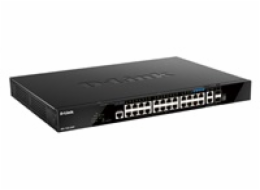
D-Link DGS-1520-28MP Smart Managed Switch 20 ports GE PoE + 4 ports 2.5 GE PoE + 2 10GE ports + 2 SFP+ D-Link DGS-1520-28MP je stohovatelný 28-portový L3 Gigabit Ethernet inteligentní řízený PoE přepínač s 20 Gigabit porty RJ-45 PoE+ (802.3at), 4 port
Dodání 3 dny
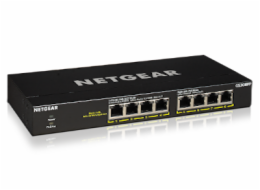
ETHERNET PORT CONFIGURATION 8 Gigabit ports PLUG-AND-PLAY Simple set up with no software to install or configuration needed and zero maintenance FULL PERFORMANCE Non-blocking switching architecture for maximum throughput at wire speed PHYSICAL SPE
Skladem-dodání 2-4 dní
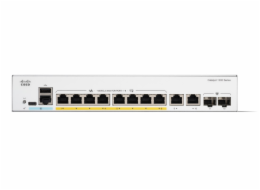
Cisco Catalyst switch C1300-8T-E-2G Sada pro montáž do racku není součástí balení. Cisco Catalyst řady 1300 jsou managovatelné switche Gigabit Ethernet Layer 3 podnikové třídy určené pro malé a střední podniky a pobočky. Tyto jednoduché, flexibilní a bezpečné switche jsou ideální pro nasazení mimo rozvodnou skříň. Řada Catalyst 1300 pracuje na přizpůsobeném softwaru operačního systému Linux s intuitivním grafickým rozhraním, který zjednodušuje nastavení sítě a pokročilými funkcemi, které urychlují digitální transformaci, zatímco všudypřítomné zabezpečení chrání kritické obchodní transakce. Přepínače řady 1300 poskytují ideální kombinaci cenové dostupnosti a možností pro malé a střední podniky a pomáhají vám vytvořit efektivnější a lépe propojenou pracovní sílu. Stránky produktu: C1300-8T-E-2G Performance Switching capacity and forwarding rate (All switches are wire-speed and nonblocking) Capacity in millions of packets per second (mpps) (64-byte packets) 14.88 Switching capacity in gigabits per second (Gbps) 20.0 Layer 2 switching Spanning Tree Protocol (STP) Standard 802.1d spanning tree support Fast convergence using 802.1w (Rapid Spanning Tree Protocol [RSTP]), enabled by default Multiple spanning tree instances using 802.1s (MSTP); 8 instances are supported Per-VLAN Spanning Tree Plus (PVST+); 126 instances are supported Rapid PVST+ (RPVST+); 126 instances are supported Port grouping/link aggregation Support for IEEE 802.3ad Link Aggregation Control Protocol (LACP) Up to 8 groups Up to 8 ports per group with 16 candidate ports for each (dynamic) 802.3ad link aggregation VLAN Support for up to 4093 VLANs simultaneously Port-based and 802.1Q tag-based VLANs, MAC-based VLAN, protocol-based VLAN, IP subnet-based VLAN Management VLAN Private VLAN with promiscuous, isolated, and community port Private VLAN Edge (PVE), also known as protected ports, with multiple uplinks Guest VLAN, unauthenticated VLAN Dynamic VLAN assignment via RADIUS server along with 802.1X client authentication Customer premises equipment (CPE) VLAN Auto surveillance VLAN (ASV) Voice VLAN Voice traffic is automatically assigned to a voice-specific VLAN and treated with appropriate levels of QoS. Voice Services Discovery Protocol (VSDP) delivers networkwide zero-touch deployment of voice endpoints and call control devices Multicast TV VLAN Multicast TV VLAN allows the single multicast VLAN to be shared in the network while subscribers remain in separate VLANs. This feature is also known as Multicast VLAN Registration (MVR) VLAN translation Support for VLAN one-to-one mapping, in which customer VLANs (C-VLANs) on an edge interface are mapped to service provider VLANs (S-VLANs), and the original C-VLAN tags are replaced by the specified S-VLAN Q-in-Q VLANs transparently cross a service provider network while isolating traffic among customers Selective Q-in-Q Selective Q-in-Q is an enhancement to the basic Q-in-Q feature and provides, per edge interface, multiple mappings of different C-VLANs to separate S-VLANs Selective Q-in-Q also allows configuring of the Ethertype (Tag Protocol Identifier [TPID]) of the S-VLAN tag Layer 2 protocol tunneling over Q-in-Q is also supported Generic VLAN Registration Protocol (GVRP)/Generic Attribute Registration Protocol (GARP) GVRP and GARP enable automatic propagation and configuration of VLANs in a bridged domain Unidirectional Link UDLD monitors physical connections to detect unidirectional links caused by incorrect Detection (UDLD) wiring or cable/port faults to prevent forwarding loops and blackholing of traffic in switched networks DHCP relay at Layer 2 Relay of DHCP traffic to a DHCP server in a different VLAN; works with DHCP Option 82 Internet Group Management Protocol (IGMP) versions 1, 2, and 3 snooping IGMP limits bandwidth-intensive multicast traffic to only the requesters; it supports 2000 multicast groups (source-specific multicasting is also supported) IGMP querier IGMP querier is used to support a Layer 2 multicast domain of snooping switches in the absence of a multicast router IGMP proxy The IGMP proxy provides a mechanism for multicast forwarding based on IGMP membership information without the need for more complicated multicast routing protocols Head-of-Line (HOL) blocking HOL blocking prevention Loopback detection Loopback detection provides protection against loops by transmitting loop protocol packets out of ports on which loop protection has been enabled. It operates independently of STP Layer 3 IPv4 routing Wire-speed routing of IPv4 packets Up to 990 static routes and up to 128 IP interfaces IPv6 routing Wire-speed routing of IPv6 packets Layer 3 interface Configuration of a Layer 3 interface on a physical port, LAG, VLAN interface, or loopback interface Classless Interdomain Routing (CIDR) Support for CIDR Routing Information Protocol (RIP) v2 Support for RIP v2 for dynamic routing Policy-Based Routing (PBR) Flexible routing control to direct packets to a different next hop based on an IPv4 or IPv6 Access Control List (ACL) DHCP server Switch functions as an IPv4 DHCP server, serving IP addresses for multiple DHCP pools or scopes Support for DHCP options DHCP relay at Layer 3 Relay of DHCP traffic across IP domains User Datagram Protocol (UDP) relay Relay of broadcast information across Layer 3 domains for application discovery or relaying of Bootstrap Protocol (BOOTP)/DHCP packets Security Secure Shell (SSH) Protocol SSH is a secure replacement for Telnet traffic. Secure Copy Protocol (SCP) also uses SSH. SSH v1 and v2 are supported Secure Sockets Layer (SSL) SSL support: Encrypts all HTTPS traffic, allowing highly secure access to the browser-based management GUI in the switch IEEE 802.1X (authenticator role) 802.1X: RADIUS authentication and accounting, MD5 hash, guest VLAN, unauthenticated VLAN, single/multiple host mode, and single/multiple sessions Supports time-based 802.1X, dynamic VLAN assignment, and MAC authentication IEEE 802.1X supplicant A switch can be configured to act as a supplicant to another switch. This enables extended secure access in areas outside the wiring closet (such as conference rooms) Web-based authentication Web-based authentication provides network admission control through a web browser to any host devices and operating systems STP Bridge Protocol Data Unit (BPDU) Guard A security mechanism to protect the network from invalid configurations. A port enabled for BPDU Guard is shut down if a BPDU message is received on that port. This avoids accidental topology loops STP Root Guard Prevents edge devices not in the network administrator’s control from becoming STP root nodes STP loopback guard Provides additional protection against Layer 2 forwarding loops (STP loops) DHCP snooping Filters out DHCP messages with unregistered IP addresses and/or from unexpected or untrusted interfaces. This prevents rogue devices from behaving as DHCP servers IP Source Guard (IPSG) When IPSG is enabled at a port, the switch filters out IP packets received from the port if the source IP addresses of the packets have not been statically configured or dynamically learned from DHCP snooping. This prevents IP address spoofing Dynamic ARP Inspection (DAI) The switch discards ARP packets from a port if there are no static or dynamic IP/MAC bindings or if there is a discrepancy between the source or destination addresses in the ARP packet. This prevents man-in-the-middle attacks IP/MAC/port binding (IPMB) The preceding features (DHCP snooping, IPSG, and DAI) work together to prevent Denial-of-Service (DoS) attacks in the network, thereby increasing network availability Secure Core Technol
Skladem-dodání 2-4 dní
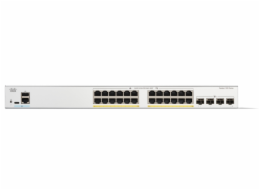
Cisco Catalyst switch C1200-24FP-4G Řada Cisco Catalyst 1200 je další generací cenově dostupných chytrých přepínačů, které kombinují vysoký výkon a spolehlivost s kompletní sadou funkcí, které potřebujete pro malé a středně velké podnikové sítě. Přepínače fungují na přizpůsobeném softwaru operačního systému Linux a poskytují flexibilní možnosti správy, komplexní možnosti zabezpečení a funkce statického směrování na 3. vrstvě, které daleko přesahují možnosti neřízeného nebo levného přepínače a to za nižší cenu než u plně spravovaných přepínačů. Když potřebujete spolehlivé řešení pro sdílení online zdrojů a připojení počítačů, telefonů a bezdrátových přístupových bodů, chytré přepínače Catalyst řady 1200 poskytují ideální řešení za dostupnou cenu. Stránky produktu: C1200-24FP-4G Performance Switching capacity and forwarding rate (All switches are wire-speed and nonblocking) Capacity in millions of packets per second (mpps) (64-byte packets) 41,66 Switching capacity in gigabits per second (Gbps) 56 Layer 2 switching Spanning Tree Protocol (STP) Standard 802.1d spanning tree support Fast convergence using 802.1w (Rapid Spanning Tree Protocol [RSTP]), enabled by default Multiple spanning tree instances using 802.1s (MSTP); 8 instances are supported Per-VLAN Spanning Tree Plus (PVST+); 126 instances are supported Rapid PVST+ (RPVST+); 126 instances are supported Port grouping/link aggregation Support for IEEE 802.3ad Link Aggregation Control Protocol (LACP) Up to 4 groups Up to 8 ports per group with 16 candidate ports for each (dynamic) 802.3ad Link Aggregation Group (LAG) VLAN Support for up to 255 active VLANs simultaneously Port-based and 802.1Q tag-based VLANs Management VLAN Guest VLAN Auto Surveillance VLAN (ASV) Voice VLAN Voice traffic is automatically assigned to a voice-specific VLAN and treated with appropriate levels of QoS. Voice Services Discovery Protocol (VSDP) delivers networkwide zero-touch deployment of voice endpoints and call control devices Generic VLAN Registration Protocol (GVRP) and Generic Attribute Registration Protocol (GARP) Enable automatically propagation and configuration of VLANs in a bridged domain Internet Group Management Protocol (IGMP) versions 1, 2, and 3 snooping Limits bandwidth-intensive multicast traffic to only the requesters; supports 255 multicast groups (source-specific multicasting is also supported) IGMP querier Used to support a Layer 2 multicast domain of snooping switches in the absence of a multicast router Head-of-Line (HOL) blocking HOL blocking prevention Loopback detection Provides protection against loops by transmitting loop protocol packets out of ports on which loop protection has been enabled. It operates independently of STP Layer 3 routing IPv4 routing Wire-speed routing of IPv4 packets Up to 32 static routes and up to 16 IP interfaces IPv6 routing Wire-speed routing of IPv6 packets Layer 3 interface Configuration of Layer 3 interface on physical port, LAG, VLAN interface, or loopback interface Classless Interdomain Routing (CIDR) Support for CIDR Dynamic Host Configuration Protocol (DHCP) relay at Layer 3 Relay of DHCP traffic across IP domains User Datagram Protocol (UDP) relay Relay of broadcast information across Layer 3 domains for application discovery or relaying of Bootstrap Protocol (BootP)/DHCP packets Security Secure Sockets Layer (SSL) Encrypts all HTTPS traffic, allowing secure access to the browser-based management GUI in the switch SSH Protocol SSH is a secure replacement for Telnet traffic. Secure Copy (SCP) also uses SSH. SSH v1 and v2 are supported. IEEE 802.1X (authenticator role) RADIUS authentication, guest VLAN, single/multiple host mode, and single/multiple sessions STP loopback guard Provides additional protection against Layer 2 forwarding loops (STP loops) Secure Core Technology (SCT) Ensures that the switch will receive and process management and protocol traffic no matter how much traffic is received Secure Sensitive Data (SSD) A mechanism to manage sensitive data (such as passwords, keys, and so on) securely on the switch, populating this data to other devices and a secure auto-configuration. Access to view the sensitive data as plain text or encrypted is provided according to the user-configured access level and the access method of the user Trustworthy systems Trustworthy systems provide a highly secure foundation for Cisco products Run-time defenses (Executable Space Protection [X-Space], Address Space Layout Randomization [ASLR], Built-In Object Size Checking [BOSC]) Port security Ability to lock source MAC addresses to ports and limit the number of learned MAC addresses RADIUS Supports RADIUS authentication for management access. Switch functions as a client Storm control Broadcast, multicast, and unknown unicast DoS prevention DoS attack prevention Multiple user privilege levels in CLI Level 1, 7, and 15 privilege levels ACLs Support for up to 512 rules Drop or rate limit based on source and destination MAC, VLAN ID, IPv4 or IPv6 address, IPv6 flow label, protocol, port, Differentiated Services Code Point (DSCP)/IP precedence, TCP/UDP source and destination ports, 802.1p priority, Ethernet type, Internet Control Message Protocol (ICMP) packets, IGMP packets, TCP flag; ACL can be applied on both ingress and egress sides Time-based ACLs supported Quality of service Priority levels 8 hardware queues Scheduling Strict priority and Weighted Round-Robin (WRR) queue assignment based on DSCP and Class of Service (802.1p/CoS) Class of service Port based, 802.1p VLAN priority based, IPv4/v6 IP precedence/Type of Service (ToS)/DSCP based, Differentiated Services (DiffServ), classification and re-marking ACLs, trusted QoS Rate limiting Ingress policer, egress shaping and rate control per VLAN, per port, and flow based Congestion avoidance A TCP congestion avoidance algorithm is required to reduce and prevent global TCP loss synchronization Standards Standards IEEE 802.3 10BASE-T Ethernet, IEEE 802.3u 100BASE-TX Fast Ethernet, IEEE 802.3ab 1000BASE-T Gigabit Ethernet, IEEE 802.3ad Link Aggregation Control Protocol, IEEE 802.3z Gigabit Ethernet, IEEE 802.3x Flow Control, IEEE 802.3 ad LACP, IEEE 802.1D (STP), IEEE 802.1Q/p VLAN, IEEE 802.1w RSTP, IEEE 802.1s Multiple STP, IEEE 802.1X Port Access Authentication, IEEE 802.3af, IEEE 802.3at, RFC 768, RFC 783, RFC 791, RFC 792, RFC 793, RFC 813, RFC 879, RFC 896, RFC 826, RFC 854, RFC 855, RFC 856, RFC 858, RFC 894, RFC 919, RFC 920, RFC 922, RFC 950, RFC 951, RFC 1042, RFC 1071, RFC 1123, RFC 1141, RFC 1155, RFC 1157, RFC 1213, RFC 1215, RFC 1286, RFC 1350, RFC 1442, RFC 1451, RFC 1493, RFC 1533, RFC 1541, RFC 1542, RFC 1573, RFC 1624, RFC 1643, RFC 1700, RFC 1757, RFC 1867, RFC 1907, RFC 2011, RFC 2012, RFC 2013, RFC 2030, RFC 2131, RFC 2132, RFC 2233, RFC 2576, RFC 2616, RFC 2618, RFC 2665, RFC 2666, RFC 2674, RFC 2737, RFC 2819, RFC 2863, RFC 3164, RFC 3411, RFC 3412, RFC 3413, RFC 3414, RFC 3415, RFC 3416, RFC 4330 IPv6 IPv6 IPv6 host mode IPv6 over Ethernet Dual IPv6/IPv4 stack IPv6 Neighbor Discovery (ND) IPv6 stateless address auto-configuration Path Maximum Transmission Unit (MTU) discovery Duplicate Address Detection (DAD) ICMP version 6 IPv6 over IPv4 network with Intrasite Automatic Tunnel Addressing Protocol (ISATAP) support IPv6 QoS Prioritizes IPv6 packets in hardware IPv6 ACL Drop or rate-limit IPv6 packets in hardware Multicast Listener Discovery (MLD v1/2) snooping Delivers IPv6 multicast packets only to the required receivers IPv6 applications Web/SSL, Telnet server/SSH, Ping, Traceroute, Simple Network Time Protocol (SNTP), Trivial File Transfer Protocol
Skladem-dodání 2-4 dní

8portový unmanaged ethernetový přepínač s možností flexibilního nastavení power budgetu PoE. 8x Gbit PoE/PoE+ port, PoE budget 60W. Led ukazatele informující o současné aktivitě každého portu. Možnost montáže do racku.
Skladem-dodání 2-4 dní
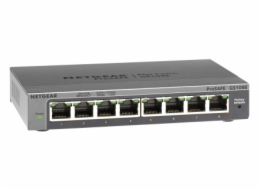
8PT GIGABIT PLUS SWITCH GS108E
Skladem-dodání 2-4 dní
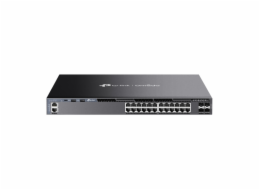
TP-Link SG6428X Omada 24 portový switch
Skladem, dodání 2-4 dní
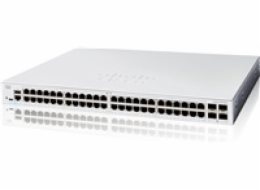
Cisco Catalyst switch C1300-48T-4X - REFRESH CISCO REFRESH jsou repasované produkty, které společnost CISCO dodává s certifikací kvality, zárukou a servisní podporou odpovídající ekvivalentnímu novému produktu Cisco Catalyst řady 1300 jsou managovatelné switche Gigabit Ethernet Layer 3 podnikové třídy určené pro malé a střední podniky a pobočky. Tyto jednoduché, flexibilní a bezpečné switche jsou ideální pro nasazení mimo rozvodnou skříň. Řada Catalyst 1300 pracuje na přizpůsobeném softwaru operačního systému Linux s intuitivním grafickým rozhraním, který zjednodušuje nastavení sítě a pokročilými funkcemi, které urychlují digitální transformaci, zatímco všudypřítomné zabezpečení chrání kritické obchodní transakce. Přepínače řady 1300 poskytují ideální kombinaci cenové dostupnosti a možností pro malé a střední podniky a pomáhají vám vytvořit efektivnější a lépe propojenou pracovní sílu. Stránky produktu: C1300-48T-4X Performance Switching capacity and forwarding rate (All switches are wire-speed and nonblocking) Capacity in millions of packets per second (mpps) (64-byte packets) 130.94 Switching capacity in gigabits per second (Gbps) 176.0 Layer 2 switching Spanning Tree Protocol (STP) Standard 802.1d spanning tree support Fast convergence using 802.1w (Rapid Spanning Tree Protocol [RSTP]), enabled by default Multiple spanning tree instances using 802.1s (MSTP); 8 instances are supported Per-VLAN Spanning Tree Plus (PVST+); 126 instances are supported Rapid PVST+ (RPVST+); 126 instances are supported Port grouping/link aggregation Support for IEEE 802.3ad Link Aggregation Control Protocol (LACP) Up to 8 groups Up to 8 ports per group with 16 candidate ports for each (dynamic) 802.3ad link aggregation VLAN Support for up to 4093 VLANs simultaneously Port-based and 802.1Q tag-based VLANs, MAC-based VLAN, protocol-based VLAN, IP subnet-based VLAN Management VLAN Private VLAN with promiscuous, isolated, and community port Private VLAN Edge (PVE), also known as protected ports, with multiple uplinks Guest VLAN, unauthenticated VLAN Dynamic VLAN assignment via RADIUS server along with 802.1X client authentication Customer premises equipment (CPE) VLAN Auto surveillance VLAN (ASV) Voice VLAN Voice traffic is automatically assigned to a voice-specific VLAN and treated with appropriate levels of QoS. Voice Services Discovery Protocol (VSDP) delivers networkwide zero-touch deployment of voice endpoints and call control devices Multicast TV VLAN Multicast TV VLAN allows the single multicast VLAN to be shared in the network while subscribers remain in separate VLANs. This feature is also known as Multicast VLAN Registration (MVR) VLAN translation Support for VLAN one-to-one mapping, in which customer VLANs (C-VLANs) on an edge interface are mapped to service provider VLANs (S-VLANs), and the original C-VLAN tags are replaced by the specified S-VLAN Q-in-Q VLANs transparently cross a service provider network while isolating traffic among customers Selective Q-in-Q Selective Q-in-Q is an enhancement to the basic Q-in-Q feature and provides, per edge interface, multiple mappings of different C-VLANs to separate S-VLANs Selective Q-in-Q also allows configuring of the Ethertype (Tag Protocol Identifier [TPID]) of the S-VLAN tag Layer 2 protocol tunneling over Q-in-Q is also supported Generic VLAN Registration Protocol (GVRP)/Generic Attribute Registration Protocol (GARP) GVRP and GARP enable automatic propagation and configuration of VLANs in a bridged domain Unidirectional Link UDLD monitors physical connections to detect unidirectional links caused by incorrect Detection (UDLD) wiring or cable/port faults to prevent forwarding loops and blackholing of traffic in switched networks DHCP relay at Layer 2 Relay of DHCP traffic to a DHCP server in a different VLAN; works with DHCP Option 82 Internet Group Management Protocol (IGMP) versions 1, 2, and 3 snooping IGMP limits bandwidth-intensive multicast traffic to only the requesters; it supports 2000 multicast groups (source-specific multicasting is also supported) IGMP querier IGMP querier is used to support a Layer 2 multicast domain of snooping switches in the absence of a multicast router IGMP proxy The IGMP proxy provides a mechanism for multicast forwarding based on IGMP membership information without the need for more complicated multicast routing protocols Head-of-Line (HOL) blocking HOL blocking prevention Loopback detection Loopback detection provides protection against loops by transmitting loop protocol packets out of ports on which loop protection has been enabled. It operates independently of STP Layer 3 IPv4 routing Wire-speed routing of IPv4 packets Up to 990 static routes and up to 128 IP interfaces IPv6 routing Wire-speed routing of IPv6 packets Layer 3 interface Configuration of a Layer 3 interface on a physical port, LAG, VLAN interface, or loopback interface Classless Interdomain Routing (CIDR) Support for CIDR Routing Information Protocol (RIP) v2 Support for RIP v2 for dynamic routing Policy-Based Routing (PBR) Flexible routing control to direct packets to a different next hop based on an IPv4 or IPv6 Access Control List (ACL) DHCP server Switch functions as an IPv4 DHCP server, serving IP addresses for multiple DHCP pools or scopes Support for DHCP options DHCP relay at Layer 3 Relay of DHCP traffic across IP domains User Datagram Protocol (UDP) relay Relay of broadcast information across Layer 3 domains for application discovery or relaying of Bootstrap Protocol (BOOTP)/DHCP packets Stacking Hardware stacking Up to 8 switches in a stack. Up to 200 ports managed as a single system with hardware failover Stacking is supported on the following models: Family 1: C1300-16P-4X, C1300-24T-4X, C1300-24P-4X, C1300-24FP-4X, C1300-48T-4X, C1300-48P-4X, C1300-48FP-4X, C1300-8MGP-2X, C1300-24MGP-4X, C1300-48MGP-4X Family 2: C1300-12XT-2X, C1300-12XS, C1300-16XTS, C1300-24XS, C1300-24XT, C1300-24XTS PIDs from the same Family can be stacked together. Cross-stacking between Families is not supported. High availability Fast stack failover delivers minimal traffic loss. Support for LAG across multiple units in a stack Plug-and-play stacking configuration/management Active/standby for resilient stack control Auto-numbering Hot swap of units in stack Ring and chain stacking options, auto stacking port speed, flexible stacking port options High-speed stack interconnects Cost-effective high-speed 10 Gigabit Ethernet fiber interfaces Security Secure Shell (SSH) Protocol SSH is a secure replacement for Telnet traffic. Secure Copy Protocol (SCP) also uses SSH. SSH v1 and v2 are supported Secure Sockets Layer (SSL) SSL support: Encrypts all HTTPS traffic, allowing highly secure access to the browser-based management GUI in the switch IEEE 802.1X (authenticator role) 802.1X: RADIUS authentication and accounting, MD5 hash, guest VLAN, unauthenticated VLAN, single/multiple host mode, and single/multiple sessions Supports time-based 802.1X, dynamic VLAN assignment, and MAC authentication IEEE 802.1X supplicant A switch can be configured to act as a supplicant to another switch. This enables extended secure access in areas outside the wiring closet (such as conference rooms) Web-based authentication Web-based authentication provides network admission control through a web browser to any host devices and operating systems STP Bridge Protocol Data Unit (BPDU) Guard A security mechanism to protect the network from invalid configurations. A port enabled for BPDU Guard is shut down if a BPDU message is received on that port. This avoids accidental topology loops STP Root Guard Prevents edge devices n
Skladem v eshopu

2x PCIe 8-pin to 1x CEM5 16-pin
Skladem-dodání 2-4 dní
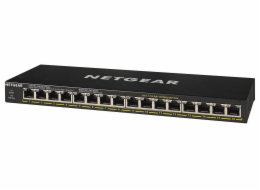
NETGEAR 16-Port GB PoE+ unmanaged Switch 183W FlexPoE
Skladem, dodání 2-4 dní
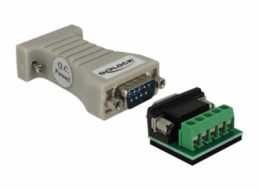
Delock Converter 1 x Serial RS-232 DB9 female to 1 x Serial RS-422/485 DB9 male with ESD protection 15 kV
Skladem-dodání 2-4 dní
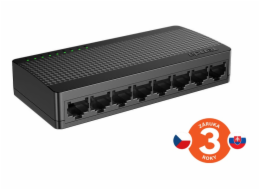
Tenda SG108M síťový přepínač Nespravované Gigabit Ethernet (10/100/1000) Černá Síťové standardy: IEEE 802.3abIEEE 802.3uIEEE 802.3x Podpora 10G: Ne Vstupní střídavé napětí: 100 - 240 V Napájecí zdroj
Skladem, dodání 2-4 dní
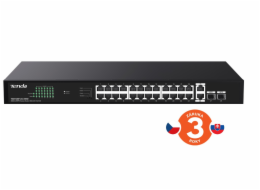
Tenda TEG1128P-24-410W Přepíná data pomocí 26ti portů RJ45 a 2x SFP slotů, 24 portů 10/100/1000 Mb/s podporuje PoE802.3af/at. Switch má ochranu proti přepětí 6kV. Podpora přepojování uzlů v módu Store-and-Forward. Full-duplex kontrola toku 802.3x, half-duplex kontrola toku v režimu Back-Pressure. Je vhodná jak do menších a středních firem, tak i do větších domácností. Napájení portů pomocí PoE 802.3af (15,4W) a 802.3at (30W). Max. celkem 370 Wattů na 24 PoE portů, využití pro venkovní i vnitřní IP kamery, Access Pointy/Routery, IP telefony, apod. Přepínač Standard / Priority / Extend / VLAN mode Standard mode: V tomto módu pracuje jako klasický switch, veškeré porty mají auto-negaci, všechny porty spolu komunikují, Port1 až Port26 rychlost 10/100/1000 Mb/s, SFP port rychlost 100/1000 Mb/s. Priority mode: Port1 až Port8 mají nastavenou velmi vysokou QoS prioritu. Extend mode: PoE porty Port17 až Port24 mají navýšen dosah ke koncovému zařízení až na 250m (záleží také na koncovém zařízení, kabeláži, apod.). Všechny porty switche spolu navzájem komunikují. VLAN mode: V tomto módu jsou Port1 až Port24 izolovány samy od sebe, každý port Port1 až Port24 může komunikovat jen s uplink porty Port25, Port26, SFP1 (27), SFP2 (28). Tento mód zabraňuje velkému šíření broadcastů a DHCP spoofingu. Technická specifikace Standardy a protokoly: IEEE802.3, IEEE802.3u, IEEE802.3ab, IEEE802.3x, IEEE802.3af, IEEE802.3at Porty PoE: 24x 10/100/1000 Mbps porty RJ45 auto-negace a s podporou PoE IEEE802.3 at/af PoE standart Porty Uplink: 2x 10/100/1000 Mbps porty RJ45 auto-negace, 2x 100/1000 Mbps SFP Celková propustnost: 56 Gbps Velikost tabulky MAC adresace: 8K Mód přepínání: Store-And-Forward LED Indikace: 28x Linka/Aktivita portu, 1x PoE-Max, 1x Napájení PoE napájení: Port 1 to Port 24 support standard IEEE802.3at/af power (maximum power for each port is 30W),PoE power type is (1 and 2 +, 3 and 6 - line pair), totally 370 Watt for PoE Level přepěťové ochrany: - pro porty: 6kV, - pro napájení: 6kV, ESD: vzduch: ±10kV, kontakt: ±8kV Buffer: 4M Packet forwarding rate: 41,7 Mpps Napájení: 100 až 240 V, AC 50/60 Hz Spotřeba: 15 W (bez PoE napájení), 410 W (s připojenými PoE zařízeními max. 370 W) Rozměry: 440mm x 240mm x 44mm(L*W*H) Celkem max. napájení PoE: 370 W Umístění: rackmount 19", na stěnu, desktop MTBF: 50 000 hodin+ Provozní teplota: 0° až 45 °C Vlhkost: 10%-90%RH (nekondenzující) Certifikace: FCC/CE/RoHS
Dodání 3-5 dní
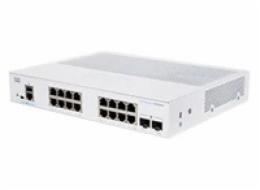
Cisco switch CBS250-16T-2G - REFRESH CISCO REFRESH jsou repasované produkty, které společnost CISCO dodává s certifikací kvality, zárukou a servisní podporou odpovídající ekvivalentnímu novému produktu Řada Cisco Business 250 představuje novou generaci cenově dostupných inteligentních switchů, které kombinují vysoký síťový výkon, zabezpečení a spolehlivost s komplexní sadou síťových funkcí potřebných pro spolehlivou síť malých firem. Záruka platná do End of Support 31. 10. 2029. Oznámení End of Life pro CISCO CBS250 Stránky produktu: CBS250-16T-2G Quick start guide: Quick start guide Switching capacity (All switches are wire-speed and nonblocking) Forwarding rate in millions of packets per second (mpps; 64-byte packets) 26,78 Switching capacity in Gigabits per second (Gbps) 36 Layer 2 switching Spanning Tree Protocol (STP) Standard 802.1d spanning tree support Fast convergence using 802.1w (Rapid Spanning Tree Protocol [RSTP]), enabled by default Multiple spanning tree instances using 802.1s (MSTP); 8 instances are supported Per-VLAN Spanning Tree Plus (PVST+); 126 instances are supported Rapid PVST+ (RPVST+); 126 instances are supported Port grouping/link aggregation Support for IEEE 802.3ad Link Aggregation Control Protocol (LACP) Up to 4 groups Up to 8 ports per group with 16 candidate ports for each (dynamic) 802.3ad Link Aggregation Group (LAG) VLAN Support for up to 255 active VLANs simultaneously Port-based and 802.1Q tag-based VLANs Management VLAN Guest VLAN Voice VLAN Voice traffic is automatically assigned to a voice-specific VLAN and treated with appropriate levels of QoS. Voice Services Discovery Protocol (VSDP) delivers networkwide zero-touch deployment of voice endpoints and call control devices Generic VLAN Registration Protocol (GVRP) and Generic Attribute Registration Protocol (GARP) Protocols for automatically propagating and configuring VLANs in a bridged domain IGMP (versions 1, 2, and 3) snooping Internet Group Management Protocol (IGMP) limits bandwidth-intensive multicast traffic to only the requesters; supports 255 multicast groups (source-specific multicasting is also supported) IGMP querier Used to support a Layer 2 multicast domain of snooping switches in the absence of a multicast router HOL blocking Head-of-Line (HOL) blocking prevention Loopback detection Provides protection against loops by transmitting loop protocol packets out of ports on which loop protection has been enabled. It operates independently of STP. Layer 3 routing IPv4 routing Wire-speed routing of IPv4 packets Up to 32 static routes and up to 16 IP interfaces IPv6 routing Wire-speed routing of IPv6 packets Layer 3 interface Configuration of Layer 3 interface on physical port, LAG, VLAN interface, or loopback interface Classless Interdomain Routing (CIDR) Support for CIDR Dynamic Host Configuration Protocol (DHCP) relay at Layer 3 Relay of DHCP traffic across IP domains User Datagram Protocol (UDP) relay Relay of broadcast information across Layer 3 domains for application discovery or relaying of Bootstrap Protocol (BootP)/DHCP packets Security Secure Sockets Layer (SSL) SSL encrypts all HTTPS traffic, allowing secure access to the browser-based management GUI in the switch Secure Shell (SSH) Protocol SSH is a secure replacement for Telnet traffic. Secure Copy (SCP) also uses SSH. SSH v1 and v2 are supported. IEEE 802.1X (authenticator role) Remote Authentication Dial-In User Service (RADIUS) authentication, guest VLAN, single/multiple host mode, and single/multiple sessions STP loopback guard Provides additional protection against Layer 2 forwarding loops (STP loops) Secure Core Technology (SCT) Ensures that the switch will receive and process management and protocol traffic no matter how much traffic is received Secure Sensitive Data (SSD) A mechanism to manage sensitive data (such as passwords, keys, and so on) securely on the switch, populating this data to other devices, and secure autoconfig. Access to view the sensitive data as plain text or encrypted is provided according to the user-configured access level and the access method of the user Trustworthy systems Trustworthy systems provide a highly secure foundation for Cisco products Run-time defenses (Executable Space Protection [X-Space], Address Space Layout Randomization [ASLR], Built-In Object Size Checking [BOSC]) Port security Ability to lock source MAC addresses to ports and limit the number of learned MAC addresses RADIUS Supports RADIUS authentication for management access. Switch functions as a client. Storm control Broadcast, multicast, and unknown unicast DoS prevention Denial-of-Service (DoS) attack prevention Multiple user privilege levels in CLI Level 1, 7, and 15 privilege levels Access Control Lists (ACLs) Support for up to 512 rules Drop or rate limit based on source and destination MAC, VLAN ID or IPv4 or IPv6 address, IPv6 flow label, protocol, port, Differentiated Services Code Point (DSCP)/IP precedence, TCP/UDP source and destination ports, 802.1p priority, Ethernet type, Internet Control Message Protocol (ICMP) packets, IGMP packets, TCP flag; ACL can be applied on both ingress and egress sides Time-based ACLs supported QoS Priority levels 8 hardware queues Scheduling Strict priority and Weighted Round-Robin (WRR) queue assignment based on DSCP and class of service (802.1p/CoS) Class of service Port based; 802.1p VLAN priority based; IPv4/v6 IP precedence/Type of Service (ToS)/DSCP based; Differentiated Services (DiffServ); classification and re-marking ACLs, trusted QoS Rate limiting Ingress policer; egress shaping and rate control; per VLAN, per port, and flow based Congestion avoidance A TCP congestion avoidance algorithm is required to reduce and prevent global TCP loss synchronization Standards Standards IEEE 802.3 10BASE-T Ethernet, IEEE 802.3u 100BASE-TX Fast Ethernet, IEEE 802.3ab 1000BASE-T Gigabit Ethernet, IEEE 802.3ad Link Aggregation Control Protocol, IEEE 802.3z Gigabit Ethernet, IEEE 802.3x Flow Control, IEEE 802.3 ad LACP, IEEE 802.1D (STP), IEEE 802.1Q/p VLAN, IEEE 802.1w RSTP, IEEE 802.1s Multiple STP, IEEE 802.1X Port Access Authentication, IEEE 802.3af, IEEE 802.3at, RFC 768, RFC 783, RFC 791, RFC 792, RFC 793, RFC 813, RFC 879, RFC 896, RFC 826, RFC 854, RFC 855, RFC 856, RFC 858, RFC 894, RFC 919, RFC 920, RFC 922, RFC 950, RFC 951, RFC 1042, RFC 1071, RFC 1123, RFC 1141, RFC 1155, RFC 1157, RFC 1213, RFC 1215, RFC 1286, RFC 1350, RFC 1442, RFC 1451, RFC 1493, RFC 1533, RFC 1541, RFC 1542, RFC 1573, RFC 1624, RFC 1643, RFC 1700, RFC 1757, RFC 1867, RFC 1907, RFC 2011, RFC 2012, RFC 2013, RFC 2030, RFC 2131, RFC 2132, RFC 2233, RFC 2576, RFC 2616, RFC 2618, RFC 2665, RFC 2666, RFC 2674, RFC 2737, RFC 2819, RFC 2863, RFC 3164, RFC 3411, RFC 3412, RFC 3413, RFC 3414, RFC 3415, RFC 3416, RFC 4330 IPv6 IPv6 IPv6 host mode IPv6 over Ethernet IPv6/IPv4 Dual Stack IPv6 Neighbor Discovery (ND) IPv6 stateless address auto configuration Path Maximum Transmission Unit (MTU) discovery Duplicate Address Detection (DAD) Internet Control Message Protocol (ICMP) version 6 IPv6 over IPv4 network with Intrasite Automatic Tunnel Addressing Protocol (ISATAP) support USGv6 and IPv6 Gold Logo certified IPv6 QoS Prioritize IPv6 packets in hardware IPv6 ACL Drop or rate limit IPv6 packets in hardware Multicast Listener Discovery (MLD v1/2) snooping Deliver IPv6 multicast packets only to the required receivers IPv6 applications Web/SSL, Telnet server/SSH, Ping, Traceroute, Simple Network Time Protocol (SNTP), Trivial File Transfer Protocol (TFTP), Simple Network Management Protocol (SNMP), Remote Authentication Dia
Skladem v eshopu
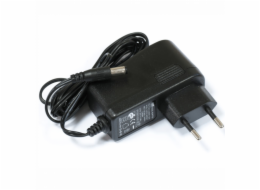
OEM napájecí adaptér s přímou instalací do zásuvky se standardním 5.5 / 2.1mm konektorem určeným ...
Skladem, dodání 2-4 dní
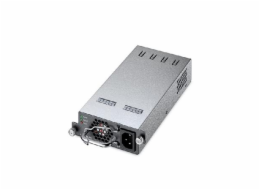
Napájecí modul / zdroj pro převod vstupního napětí na výstupní napětí 12 V DC s maximálním výkonem 150 W, kompatibilita s produkty DS-P7001-08, DS-P7001-16, LED signalizace, vyměnitelný za provozu.
Skladem v eshopu
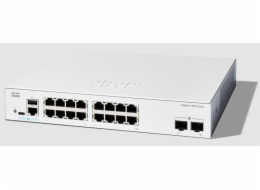
Cisco Catalyst switch C1200-16T-2G Sada pro montáž do racku není součástí balení. Řada Cisco Catalyst 1200 je další generací cenově dostupných chytrých přepínačů, které kombinují vysoký výkon a spolehlivost s kompletní sadou funkcí, které potřebujete pro malé a středně velké podnikové sítě. Přepínače fungují na přizpůsobeném softwaru operačního systému Linux a poskytují flexibilní možnosti správy, komplexní možnosti zabezpečení a funkce statického směrování na 3. vrstvě, které daleko přesahují možnosti neřízeného nebo levného přepínače a to za nižší cenu než u plně spravovaných přepínačů. Když potřebujete spolehlivé řešení pro sdílení online zdrojů a připojení počítačů, telefonů a bezdrátových přístupových bodů, chytré přepínače Catalyst řady 1200 poskytují ideální řešení za dostupnou cenu. Stránky produktu: C1200-16T-2G Performance Switching capacity and forwarding rate (All switches are wire-speed and nonblocking) Capacity in millions of packets per second (mpps) (64-byte packets) 26,78 Switching capacity in gigabits per second (Gbps) 36 Layer 2 switching Spanning Tree Protocol (STP) Standard 802.1d spanning tree support Fast convergence using 802.1w (Rapid Spanning Tree Protocol [RSTP]), enabled by default Multiple spanning tree instances using 802.1s (MSTP); 8 instances are supported Per-VLAN Spanning Tree Plus (PVST+); 126 instances are supported Rapid PVST+ (RPVST+); 126 instances are supported Port grouping/link aggregation Support for IEEE 802.3ad Link Aggregation Control Protocol (LACP) Up to 4 groups Up to 8 ports per group with 16 candidate ports for each (dynamic) 802.3ad Link Aggregation Group (LAG) VLAN Support for up to 255 active VLANs simultaneously Port-based and 802.1Q tag-based VLANs Management VLAN Guest VLAN Auto Surveillance VLAN (ASV) Voice VLAN Voice traffic is automatically assigned to a voice-specific VLAN and treated with appropriate levels of QoS. Voice Services Discovery Protocol (VSDP) delivers networkwide zero-touch deployment of voice endpoints and call control devices Generic VLAN Registration Protocol (GVRP) and Generic Attribute Registration Protocol (GARP) Enable automatically propagation and configuration of VLANs in a bridged domain Internet Group Management Protocol (IGMP) versions 1, 2, and 3 snooping Limits bandwidth-intensive multicast traffic to only the requesters; supports 255 multicast groups (source-specific multicasting is also supported) IGMP querier Used to support a Layer 2 multicast domain of snooping switches in the absence of a multicast router Head-of-Line (HOL) blocking HOL blocking prevention Loopback detection Provides protection against loops by transmitting loop protocol packets out of ports on which loop protection has been enabled. It operates independently of STP Layer 3 routing IPv4 routing Wire-speed routing of IPv4 packets Up to 32 static routes and up to 16 IP interfaces IPv6 routing Wire-speed routing of IPv6 packets Layer 3 interface Configuration of Layer 3 interface on physical port, LAG, VLAN interface, or loopback interface Classless Interdomain Routing (CIDR) Support for CIDR Dynamic Host Configuration Protocol (DHCP) relay at Layer 3 Relay of DHCP traffic across IP domains User Datagram Protocol (UDP) relay Relay of broadcast information across Layer 3 domains for application discovery or relaying of Bootstrap Protocol (BootP)/DHCP packets Security Secure Sockets Layer (SSL) Encrypts all HTTPS traffic, allowing secure access to the browser-based management GUI in the switch SSH Protocol SSH is a secure replacement for Telnet traffic. Secure Copy (SCP) also uses SSH. SSH v1 and v2 are supported. IEEE 802.1X (authenticator role) RADIUS authentication, guest VLAN, single/multiple host mode, and single/multiple sessions STP loopback guard Provides additional protection against Layer 2 forwarding loops (STP loops) Secure Core Technology (SCT) Ensures that the switch will receive and process management and protocol traffic no matter how much traffic is received Secure Sensitive Data (SSD) A mechanism to manage sensitive data (such as passwords, keys, and so on) securely on the switch, populating this data to other devices and a secure auto-configuration. Access to view the sensitive data as plain text or encrypted is provided according to the user-configured access level and the access method of the user Trustworthy systems Trustworthy systems provide a highly secure foundation for Cisco products Run-time defenses (Executable Space Protection [X-Space], Address Space Layout Randomization [ASLR], Built-In Object Size Checking [BOSC]) Port security Ability to lock source MAC addresses to ports and limit the number of learned MAC addresses RADIUS Supports RADIUS authentication for management access. Switch functions as a client Storm control Broadcast, multicast, and unknown unicast DoS prevention DoS attack prevention Multiple user privilege levels in CLI Level 1, 7, and 15 privilege levels ACLs Support for up to 512 rules Drop or rate limit based on source and destination MAC, VLAN ID, IPv4 or IPv6 address, IPv6 flow label, protocol, port, Differentiated Services Code Point (DSCP)/IP precedence, TCP/UDP source and destination ports, 802.1p priority, Ethernet type, Internet Control Message Protocol (ICMP) packets, IGMP packets, TCP flag; ACL can be applied on both ingress and egress sides Time-based ACLs supported Quality of service Priority levels 8 hardware queues Scheduling Strict priority and Weighted Round-Robin (WRR) queue assignment based on DSCP and Class of Service (802.1p/CoS) Class of service Port based, 802.1p VLAN priority based, IPv4/v6 IP precedence/Type of Service (ToS)/DSCP based, Differentiated Services (DiffServ), classification and re-marking ACLs, trusted QoS Rate limiting Ingress policer, egress shaping and rate control per VLAN, per port, and flow based Congestion avoidance A TCP congestion avoidance algorithm is required to reduce and prevent global TCP loss synchronization Standards Standards IEEE 802.3 10BASE-T Ethernet, IEEE 802.3u 100BASE-TX Fast Ethernet, IEEE 802.3ab 1000BASE-T Gigabit Ethernet, IEEE 802.3ad Link Aggregation Control Protocol, IEEE 802.3z Gigabit Ethernet, IEEE 802.3x Flow Control, IEEE 802.3 ad LACP, IEEE 802.1D (STP), IEEE 802.1Q/p VLAN, IEEE 802.1w RSTP, IEEE 802.1s Multiple STP, IEEE 802.1X Port Access Authentication, IEEE 802.3af, IEEE 802.3at, RFC 768, RFC 783, RFC 791, RFC 792, RFC 793, RFC 813, RFC 879, RFC 896, RFC 826, RFC 854, RFC 855, RFC 856, RFC 858, RFC 894, RFC 919, RFC 920, RFC 922, RFC 950, RFC 951, RFC 1042, RFC 1071, RFC 1123, RFC 1141, RFC 1155, RFC 1157, RFC 1213, RFC 1215, RFC 1286, RFC 1350, RFC 1442, RFC 1451, RFC 1493, RFC 1533, RFC 1541, RFC 1542, RFC 1573, RFC 1624, RFC 1643, RFC 1700, RFC 1757, RFC 1867, RFC 1907, RFC 2011, RFC 2012, RFC 2013, RFC 2030, RFC 2131, RFC 2132, RFC 2233, RFC 2576, RFC 2616, RFC 2618, RFC 2665, RFC 2666, RFC 2674, RFC 2737, RFC 2819, RFC 2863, RFC 3164, RFC 3411, RFC 3412, RFC 3413, RFC 3414, RFC 3415, RFC 3416, RFC 4330 IPv6 IPv6 IPv6 host mode IPv6 over Ethernet Dual IPv6/IPv4 stack IPv6 Neighbor Discovery (ND) IPv6 stateless address auto-configuration Path Maximum Transmission Unit (MTU) discovery Duplicate Address Detection (DAD) ICMP version 6 IPv6 over IPv4 network with Intrasite Automatic Tunnel Addressing Protocol (ISATAP) support IPv6 QoS Prioritizes IPv6 packets in hardware IPv6 ACL Drop or rate-limit IPv6 packets in hardware Multicast Listener Discovery (MLD v1/2) snooping Delivers IPv6 multicast packets only to the required receivers IPv6 applications Web/SSL, Telnet server/SSH, Ping, Traceroute, Simple Network Ti
Skladem-dodání 2-4 dní

Ubiquiti UniFi SmartPower Redundant Power System; USP-RPS je záložní napájecí systém určený k ochraně až šesti zařízení s podporou UniFi SmartPower v případě selhání napájecího modulu. Tento redundantní napájec...
Skladem, dodání 2-4 dní
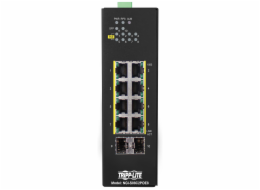
Switch: Ano Fanless: Ano Drátový datový přenos: 10/100/1000 Mbps Podporované standard...
Dodání 3-5 dní
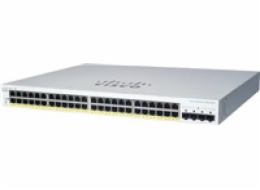
Cisco switch CBS220-48P-4G - REFRESH CISCO REFRESH jsou repasované produkty, které společnost CISCO dodává s certifikací kvality, zárukou a servisní podporou odpovídající ekvivalentnímu novému produktu Řada Cisco Business 220 jsou jednoduché a cenově dostupné chytré switche pro sítě podnikové třídy. Díky podpoře mobilních aplikací, nástroji Cisco Business Dashboard a několika možnostem PoE+ poskytuje CBS220 robustní síť v rámci omezeného rozpočtu. Stránky produktu: CBS220-48P-4G Quick start guide: Quick start guide Switching capacity Forwarding rate in millions of packets per second (mpps; 64-byte packets) 74,38 Switching capacity in Gigabits per second (Gbps) 104 Layer 2 switching MAC table Up to 8,192 Media Access Control (MAC) addresses Spanning Tree Protocol (STP) Standard 802.1d Spanning Tree support, enabled by default Fast convergence using 802.1w (Rapid Spanning Tree [RSTP]) Multiple Spanning Tree instances using 802.1s (MSTP) 16 instances are supported Port grouping Support for IEEE 802.3ad Link Aggregation Control Protocol (LACP) Up to 8 groups Up to 8 ports per group with 16 candidate ports for each (dynamic) 802.3ad link aggregation Load balance based on source and destination MAC address, or source and destination MAC/IP VLAN Support for up to 256 Virtual Local Area Networks (VLANs) simultaneously Port-based and 802.1Q tag-based VLANs Management VLAN Guest VLAN Auto voice VLAN Voice traffic is automatically assigned to a voice-specific VLAN and treated with appropriate levels of QoS QinQ VLAN VLANs transparently cross a service provider network while isolating traffic among customers Generic VLAN Registration Protocol (GVRP) and Generic Attribute Registration Protocol (GARP) Protocols for automatically propagating and configuring VLANs in a bridged domain Head-of-Line (HOL) blocking HOL blocking prevention Jumbo frame Frame sizes up to 9,216 supported Loopback detection Loopback detection provides protection against loops by transmitting loop protocol packets out of ports on which loop protection has been enabled. It operates independently of STP. Automatic Media-Dependent Interface Crossover (MDIX) Automatically adjusts transmit and receive pairs if an incorrect cable type (crossover or straight-through) is installed. Security ACLs Drop or rate limit based on source and destination MAC, VLAN ID or IP address, protocol, port, Differentiated Services Code Point (DSCP)/IP precedence, Transmission Control Protocol (TCP)/ User Datagram Protocol (UDP) source and destination ports, 802.1p priority, Ethernet type, Internet Control Message Protocol (ICMP) packets, Internet Group Management Protocol (IGMP) packets, TCP flag Support up to 512 rules Port security Creates the ability to lock source MAC addresses to ports; limits the number of learned MAC addresses IEEE 802.1X (authenticator role) 802.1X: Remote Authentication Dial-in User Service (RADIUS) authentication; guest VLAN; Single-host, multiple-host, and multisession mode RADIUS, TACACS+ Supports RADIUS and Terminal Access Controller Access Control System (TACACS) authentication; switch functions as a client MAC address filtering Supported Storm control Broadcast, multicast, and unknown unicast DoS protection DOS attack prevention STP Bridge Protocol Data Unit (BPDU) Guard This security mechanism protects the network from invalid configurations. A port enabled for BPDU Guard is shut down if a BPDU message is received on that port. Spanning Tree Loop Guard This feature provides additional protection against Layer 2 forwarding loops (STP loops). Secure Shell (SSH) Protocol SSH is a secure replacement for Telnet traffic. SCP also uses SSH. SSH v1 and v2 are supported. Secure Sockets Layer (SSL) SSL support: Encrypts all HTTPS traffic, allowing highly secure access to the browser-based management GUI in the switch QoS Priority levels 8 hardware queues per port Scheduling Strict priority and Weighted Round-Robin (WRR) queue assignment based on DSCP and class of service (802.1p/CoS) Class of service Port-based; 802.1p VLAN priority-based; IPv4/v6 IP precedence, Type of Service (ToS), and DSCP-based; Differentiated Services (DiffServ); classification and re-marking ACLs, trusted QoS Rate limiting Ingress policer; egress shaping and rate control; per VLAN, per port, and flow-based Congestion avoidance A TCP congestion avoidance algorithm is required to reduce and prevent global TCP loss synchronization. Multicast Internet Group Management Protocol (IGMP) Versions 1, 2, and 3 Snooping IGMP limits bandwidth-intensive multicast traffic to only the requesters; supports 256 multicast groups IGMP querier IGMP querier is used to support a Layer 2 multicast domain of snooping switches in the absence of a multicast router Standards Standards IEEE 802.3 10BASE-T Ethernet, IEEE 802.3u 100BASE-TX Fast Ethernet, IEEE 802.3ab 1000BASE-T Gigabit Ethernet, IEEE 802.3ad LACP, IEEE 802.3z Gigabit Ethernet, IEEE 802.3x Flow Control, IEEE 802.1D (STP, GARP, and GVRP), IEEE 802.1Q/p VLAN, IEEE 802.1w RSTP, IEEE 802.1s Multiple STP, IEEE 802.1X Port Access Authentication, IEEE 802.3af, IEEE 802.3at, RFC 768, Request for Comments (RFC) 783, RFC 791, RFC 792, RFC 793, RFC 813, RFC 879, RFC 896, RFC 826, RFC 854, RFC 855, RFC 856, RFC 858, RFC 894, RFC 919, RFC 922, RFC 920, RFC 950, RFC 1042, RFC 1071, RFC 1123, RFC 1141, RFC 1155, RFC 1157, RFC 1350, RFC 1533, RFC 1541, RFC 1624, RFC 1700, RFC 1867, RFC 2030, RFC 2616, RFC 2131, RFC 2132, RFC 3164, RFC 3411, RFC 3412, RFC 3413, RFC 3414, RFC 3415, RFC 2576, RFC 4330, RFC 1213, RFC 1215, RFC 1286, RFC 1442, RFC 1451, RFC 1493, RFC 1573, RFC 1643, RFC 1757, RFC 1907, RFC 2011, RFC 2012, RFC 2013, RFC 2233, RFC 2618, RFC 2665, RFC 2666, RFC 2674, RFC 2737, RFC 2819, RFC 2863, RFC 1157, RFC 1493, RFC 1215, RFC 3416 IPv6 IPv6 IPv6 host mode IPv6 over Ethernet IPv6/IPv4 Dual Stack IPv6 neighbor and router discovery (ND) IPv6 stateless address auto-configuration Path Maximum Transmission Unit (MTU) discovery Duplicate Address Detection (DAD) ICMP version 6 IPv6 ACL Drop or rate limit IPv6 packets in hardware IPv6 QoS Prioritize IPv6 packets in hardware Multicast Listener Discovery (MLD v1/2) Snooping Deliver IPv6 multicast packets only to the required receivers IPv6 applications Web/SSL, Telnet server/SSH, DHCP Client, DHCP Autoconfig, Cisco Discovery Protocol (CDP), Link Layer Discovery Protocol (LLDP) IPv6 Requests for Comments (RFCs) supported RFC 4443 (which obsoletes RFC2463) - ICMP version 6 RFC 4291 (which obsoletes RFC 3513) - IPv6 address architecture RFC 4291 - IPv6 addressing architecture RFC 2460 - IPv6 specification RFC 4861 (which obsoletes RFC 2461) - Neighbor discovery for IPv6 RFC 4862 (which obsoletes RFC 2462) - IPv6 stateless address auto-configuration RFC 1981 - Path MTU discovery RFC 4007 - IPv6 scoped address architecture RFC 3484 - Default address selection mechanism Management Cisco Business Dashboard Support direct management with Cisco Business Dashboard and mobile app. Eliminates the need to set up a separate hardware or virtual machine for the Cisco Business Dashboard Probe on site. Cisco Business mobile app Mobile app for Cisco Business Switch and Wireless products. Helps to set up a local network in minutes and provide easy management at your fingertips. Cisco Network Plug and Play (PnP) agent The Cisco Network Plug and Play solution provides a simple, secure, unified, and integrated offering to ease new branch or campus device rollouts or for provisioning updates to an existing network. The solution provides a unified approach to provision Cisco routers, switche
Skladem v eshopu
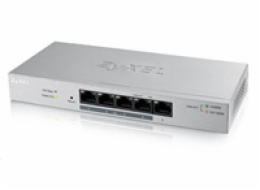
5-port Desktop Gigabit Web Smart switch: 5x Gigabit metal, 4x PoE (802.3at, 30W), PoE Power budget 60W, IPv6, 802.3az (Green), Easy set up wizard, fanless
Skladem, dodání 2-4 dní
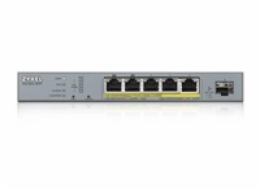
Stvořen k zajištění dohledu Zyxel představuje novinku v podobě inteligentního řízeného přepínače GS1350 pro provoz bezpečnostních kamerových systémů. PoE přepínače standardně napájení a přenos dat zajišťují na vzdálenost maximálně 100 metrů. To však neplatí pro řadu GS1350, která po aktivaci rozšířeného dosahu umožňuje při použití stávajícího kabelu Cat 5e instalovat IP kamery a napájená zařízení ve vzdálenosti až 250 metrů. Neplýtvejte penězi ani energií, když vše vyřeší jeden PoE přepínač. Configurable extended range ports 5 PoE ports 5 Total PoE budget (watt) 60 PoE Standard 802.3af/at 802.3bt (port 1-2)
Skladem-dodání 2-4 dní

NIC/PCiE up to 10Gb RJ45 x 4 OEM
Skladem-dodání 2-4 dní
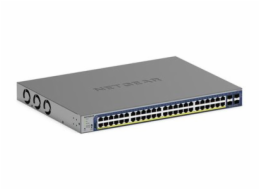
Přepínač Netgear GS752TXv3 52p Managed Gigabit/10G Síťové standardy: IEEE 802.3iIEEE 802.3azIEEE 802.3abIEEE 802.3zIEEE 802.3anIEEE 802.3uIEEE 802.3IEEE 802.3xIEEE 802.3aeIEEE 802.3aq Funkce virtuální
Skladem v eshopu
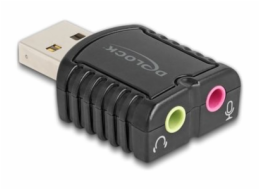
External USB Sound Card 24 bit/96 kHz
Skladem-dodání 2-4 dní
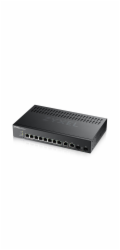
GS2220-10,EU region,8-port GbE L2 Switch with GbE Uplink (1 year NCC Pro pack license bundled) První přepínač se třemi režimy řízení GS2220 je první přepínač na trhu, který lze spravovat pomocí cloudové platformy Nebula, v samostatném režimu a přes p
Skladem, dodání 2-4 dní
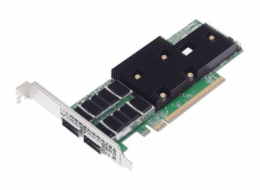
Broadcom NetXtreme P2200G - 2x 200GbE PCIe NIC
Skladem-dodání 2-4 dní
Model: Aruba 6000 Switch: Ano Typ Switche: Managed Podporované standardy: *IEEE 802...
Skladem, dodání 2-4 dní
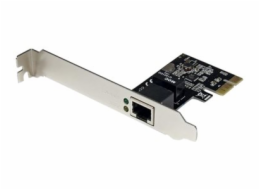
StarTech Síťová karta ST1000SPEX2 Výrobce: StarTech
Skladem-dodání 2-4 dní

Stvořen k zajištění dohledu Zyxel představuje novinku v podobě inteligentního řízeného přepínače GS1350 pro provoz bezpečnostních kamerových systémů. PoE přepínače standardně napájení a přenos dat zajišťují na vzdálenost maximálně 100 metrů. To však neplatí pro řadu GS1350, která po aktivaci rozšířeného dosahu umožňuje při použití stávajícího kabelu Cat 5e instalovat IP kamery a napájená zařízení ve vzdálenosti až 250 metrů. Neplýtvejte penězi ani energií, když vše vyřeší jeden PoE přepínač. Configurable extended range ports 8
Skladem, dodání 2-4 dní
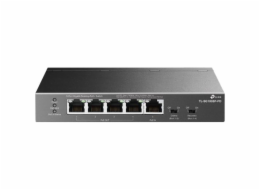
Switch, 5x 10Mbps/100Mbps/1Gbps RJ45 port, podpora napájení a přenosu dat až na vzdálenost 250 m, funkce PoE Auto Recovery, Plug and Play pro snadnou instalaci, odolný kovový kryt, tichý chod.
Skladem, dodání 2-4 dní
USB LAN Cable USB Type-A to RJ45 Gigabit
Skladem-dodání 2-4 dní
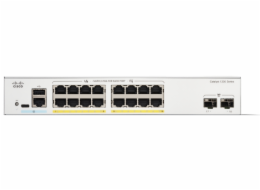
Cisco Catalyst switch C1200-16P-2G Sada pro montáž do racku není součástí balení. Řada Cisco Catalyst 1200 je další generací cenově dostupných chytrých přepínačů, které kombinují vysoký výkon a spolehlivost s kompletní sadou funkcí, které potřebujete pro malé a středně velké podnikové sítě. Přepínače fungují na přizpůsobeném softwaru operačního systému Linux a poskytují flexibilní možnosti správy, komplexní možnosti zabezpečení a funkce statického směrování na 3. vrstvě, které daleko přesahují možnosti neřízeného nebo levného přepínače a to za nižší cenu než u plně spravovaných přepínačů. Když potřebujete spolehlivé řešení pro sdílení online zdrojů a připojení počítačů, telefonů a bezdrátových přístupových bodů, chytré přepínače Catalyst řady 1200 poskytují ideální řešení za dostupnou cenu. Stránky produktu: C1200-16P-2G Performance Switching capacity and forwarding rate (All switches are wire-speed and nonblocking) Capacity in millions of packets per second (mpps) (64-byte packets) 26,78 Switching capacity in gigabits per second (Gbps) 36 Layer 2 switching Spanning Tree Protocol (STP) Standard 802.1d spanning tree support Fast convergence using 802.1w (Rapid Spanning Tree Protocol [RSTP]), enabled by default Multiple spanning tree instances using 802.1s (MSTP); 8 instances are supported Per-VLAN Spanning Tree Plus (PVST+); 126 instances are supported Rapid PVST+ (RPVST+); 126 instances are supported Port grouping/link aggregation Support for IEEE 802.3ad Link Aggregation Control Protocol (LACP) Up to 4 groups Up to 8 ports per group with 16 candidate ports for each (dynamic) 802.3ad Link Aggregation Group (LAG) VLAN Support for up to 255 active VLANs simultaneously Port-based and 802.1Q tag-based VLANs Management VLAN Guest VLAN Auto Surveillance VLAN (ASV) Voice VLAN Voice traffic is automatically assigned to a voice-specific VLAN and treated with appropriate levels of QoS. Voice Services Discovery Protocol (VSDP) delivers networkwide zero-touch deployment of voice endpoints and call control devices Generic VLAN Registration Protocol (GVRP) and Generic Attribute Registration Protocol (GARP) Enable automatically propagation and configuration of VLANs in a bridged domain Internet Group Management Protocol (IGMP) versions 1, 2, and 3 snooping Limits bandwidth-intensive multicast traffic to only the requesters; supports 255 multicast groups (source-specific multicasting is also supported) IGMP querier Used to support a Layer 2 multicast domain of snooping switches in the absence of a multicast router Head-of-Line (HOL) blocking HOL blocking prevention Loopback detection Provides protection against loops by transmitting loop protocol packets out of ports on which loop protection has been enabled. It operates independently of STP Layer 3 routing IPv4 routing Wire-speed routing of IPv4 packets Up to 32 static routes and up to 16 IP interfaces IPv6 routing Wire-speed routing of IPv6 packets Layer 3 interface Configuration of Layer 3 interface on physical port, LAG, VLAN interface, or loopback interface Classless Interdomain Routing (CIDR) Support for CIDR Dynamic Host Configuration Protocol (DHCP) relay at Layer 3 Relay of DHCP traffic across IP domains User Datagram Protocol (UDP) relay Relay of broadcast information across Layer 3 domains for application discovery or relaying of Bootstrap Protocol (BootP)/DHCP packets Security Secure Sockets Layer (SSL) Encrypts all HTTPS traffic, allowing secure access to the browser-based management GUI in the switch SSH Protocol SSH is a secure replacement for Telnet traffic. Secure Copy (SCP) also uses SSH. SSH v1 and v2 are supported. IEEE 802.1X (authenticator role) RADIUS authentication, guest VLAN, single/multiple host mode, and single/multiple sessions STP loopback guard Provides additional protection against Layer 2 forwarding loops (STP loops) Secure Core Technology (SCT) Ensures that the switch will receive and process management and protocol traffic no matter how much traffic is received Secure Sensitive Data (SSD) A mechanism to manage sensitive data (such as passwords, keys, and so on) securely on the switch, populating this data to other devices and a secure auto-configuration. Access to view the sensitive data as plain text or encrypted is provided according to the user-configured access level and the access method of the user Trustworthy systems Trustworthy systems provide a highly secure foundation for Cisco products Run-time defenses (Executable Space Protection [X-Space], Address Space Layout Randomization [ASLR], Built-In Object Size Checking [BOSC]) Port security Ability to lock source MAC addresses to ports and limit the number of learned MAC addresses RADIUS Supports RADIUS authentication for management access. Switch functions as a client Storm control Broadcast, multicast, and unknown unicast DoS prevention DoS attack prevention Multiple user privilege levels in CLI Level 1, 7, and 15 privilege levels ACLs Support for up to 512 rules Drop or rate limit based on source and destination MAC, VLAN ID, IPv4 or IPv6 address, IPv6 flow label, protocol, port, Differentiated Services Code Point (DSCP)/IP precedence, TCP/UDP source and destination ports, 802.1p priority, Ethernet type, Internet Control Message Protocol (ICMP) packets, IGMP packets, TCP flag; ACL can be applied on both ingress and egress sides Time-based ACLs supported Quality of service Priority levels 8 hardware queues Scheduling Strict priority and Weighted Round-Robin (WRR) queue assignment based on DSCP and Class of Service (802.1p/CoS) Class of service Port based, 802.1p VLAN priority based, IPv4/v6 IP precedence/Type of Service (ToS)/DSCP based, Differentiated Services (DiffServ), classification and re-marking ACLs, trusted QoS Rate limiting Ingress policer, egress shaping and rate control per VLAN, per port, and flow based Congestion avoidance A TCP congestion avoidance algorithm is required to reduce and prevent global TCP loss synchronization Standards Standards IEEE 802.3 10BASE-T Ethernet, IEEE 802.3u 100BASE-TX Fast Ethernet, IEEE 802.3ab 1000BASE-T Gigabit Ethernet, IEEE 802.3ad Link Aggregation Control Protocol, IEEE 802.3z Gigabit Ethernet, IEEE 802.3x Flow Control, IEEE 802.3 ad LACP, IEEE 802.1D (STP), IEEE 802.1Q/p VLAN, IEEE 802.1w RSTP, IEEE 802.1s Multiple STP, IEEE 802.1X Port Access Authentication, IEEE 802.3af, IEEE 802.3at, RFC 768, RFC 783, RFC 791, RFC 792, RFC 793, RFC 813, RFC 879, RFC 896, RFC 826, RFC 854, RFC 855, RFC 856, RFC 858, RFC 894, RFC 919, RFC 920, RFC 922, RFC 950, RFC 951, RFC 1042, RFC 1071, RFC 1123, RFC 1141, RFC 1155, RFC 1157, RFC 1213, RFC 1215, RFC 1286, RFC 1350, RFC 1442, RFC 1451, RFC 1493, RFC 1533, RFC 1541, RFC 1542, RFC 1573, RFC 1624, RFC 1643, RFC 1700, RFC 1757, RFC 1867, RFC 1907, RFC 2011, RFC 2012, RFC 2013, RFC 2030, RFC 2131, RFC 2132, RFC 2233, RFC 2576, RFC 2616, RFC 2618, RFC 2665, RFC 2666, RFC 2674, RFC 2737, RFC 2819, RFC 2863, RFC 3164, RFC 3411, RFC 3412, RFC 3413, RFC 3414, RFC 3415, RFC 3416, RFC 4330 IPv6 IPv6 IPv6 host mode IPv6 over Ethernet Dual IPv6/IPv4 stack IPv6 Neighbor Discovery (ND) IPv6 stateless address auto-configuration Path Maximum Transmission Unit (MTU) discovery Duplicate Address Detection (DAD) ICMP version 6 IPv6 over IPv4 network with Intrasite Automatic Tunnel Addressing Protocol (ISATAP) support IPv6 QoS Prioritizes IPv6 packets in hardware IPv6 ACL Drop or rate-limit IPv6 packets in hardware Multicast Listener Discovery (MLD v1/2) snooping Delivers IPv6 multicast packets only to the required receivers IPv6 applications Web/SSL, Telnet server/SSH, Ping, Traceroute, Simple Network Ti
Skladem, dodání 2-4 dní
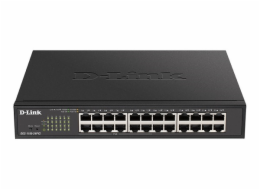
24-portový gigabitový spravovaný prepínač PoE Smart - 12-portový 1000BaseTX s automatickým vyjednávaním 10/100/1000Mb/s + 12-portový PoE prepínač - kapacita prepínača 48Gb/s. - Maximálna rýchlosť presmerovania 35.7 Mpps - 512Kbytes Packet Buffer - MAC Address Table Size - 64 Entries - Power over Ethernet 802.3af Porty 1-12 - Rozpočet PoE 100 W - 802.1Q VLAN,Port-based VLAN, 802.1Q Tagged VLAN, Surveillance VLAN, Voice VLAN a Management VLAN - VLAN Group - Podporuje 128 statických skupín VLAN s maximálne 4094 VID - 802.1p QoS - IGMP snooping - detekcia spätnej slučky - zrkadlenie portov - riadenie šírky pásma - riadenie búrok - 802.3, 802.3u, 802.3x - webová správa - diagnostika káblov - TLS1.1/1.2 - PoE PD alive - 802.3, 802.3u, 802.3x - Duálne obrazy - Agregácia prepojení - SNMP - 11-palcová veľkosť pre stolný počítač/stojan.
Skladem v eshopu
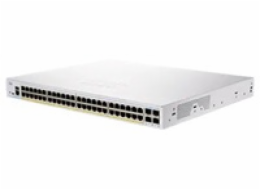
Cisco switch CBS350-48FP-4X-EU - REFRESH CISCO REFRESH jsou repasované produkty, které společnost CISCO dodává s certifikací kvality, zárukou a servisní podporou odpovídající ekvivalentnímu novému produktu Řízené switche řady Cisco Business 350 jsou spolehlivými stavebními prvky pro sítě malých firem. Díky intuitivnímu ovládacímu panelu, pokročilým funkcím a všudypřítomnému zabezpečení urychlují spravované switche řady Cisco Business 350 vaši digitální transformaci. Záruka platná do End of Support 31. 10. 2029. Oznámení End of Life pro CISCO CBS350 Stránky produktu: CBS350-48FP-4X-EU Quick start guide: Quick start guide Switching capacity and forwarding rate (All switches are wire speed and nonblocking) Capacity in Millions of Packets per Second (mpps) (64-byte packets) 130,94 Switching Capacity in Gigabits per Second (Gbps) 176 Layer 2 switching Spanning Tree Protocol (STP) Standard 802.1d Spanning Tree support Fast convergence using 802.1w (Rapid Spanning Tree [RSTP]), enabled by default Multiple Spanning Tree instances using 802.1s (MSTP); 8 instances are supported Per-VLAN Spanning Tree Plus (PVST+) and Rapid PVST+ (RPVST+); 126 instances are supported Port grouping/link aggregation Support for IEEE 802.3ad Link Aggregation Control Protocol (LACP) Up to 8 groups Up to 8 ports per group with 16 candidate ports for each (dynamic) 802.3ad link aggregation VLAN Support for up to 4,094 VLANs simultaneously Port-based and 802.1Q tag-based VLANs; MAC-based VLAN; protocol-based VLAN; IP subnet-based VLAN Management VLAN Private VLAN with promiscuous, isolated, and community port Private VLAN Edge (PVE), also known as protected ports, with multiple uplinks Guest VLAN, unauthenticated VLAN Dynamic VLAN assignment via RADIUS server along with 802.1x client authentication CPE VLAN Voice VLAN Voice traffic is automatically assigned to a voice-specific VLAN and treated with appropriate levels of QoS. Voice Services Discovery Protocol (VSDP) delivers network wide zero-touch deployment of voice endpoints and call control devices Multicast TV VLAN Multicast TV VLAN allows the single multicast VLAN to be shared in the network while subscribers remain in separate VLANs. This feature is also known as Multicast VLAN Registration (MVR) VLAN Translation Support for VLAN One-to-One Mapping. In VLAN One-to-One Mapping, on an edge interface customer VLANs (C-VLANs) are mapped to service provider VLANs (S-VLANs) and the original C-VLAN tags are replaced by the specified S-VLAN Q-in-Q VLANs transparently cross a service provider network while isolating traffic among customers Selective Q-in-Q Selective Q-in-Q is an enhancement to the basic Q-in-Q feature and provides, per edge interface, multiple mappings of different C-VLANs to separate S-VLANs Selective Q-in-Q also allows configuring of Ethertype (Tag Protocol Identifier [TPID]) of the S-VLAN tag Layer 2 protocol tunneling over Q-in-Q is also supported Generic VLAN Registration Protocol (GVRP)/Generic Attribute Registration Protocol (GARP) Generic VLAN Registration Protocol (GVRP) and Generic Attribute Registration Protocol (GARP) enable automatic propagation and configuration of VLANs in a bridged domain Unidirectional Link Detection (UDLD) UDLD monitors physical connection to detect unidirectional links caused by incorrect wiring or cable/port faults to prevent forwarding loops and black holing of traffic in switched networks Dynamic Host Configuration Protocol (DHCP) Relay at Layer 2 Relay of DHCP traffic to DHCP server in different VLAN; works with DHCP Option 82 Internet Group Management Protocol (IGMP) versions 1, 2, and 3 snooping IGMP limits bandwidth-intensive multicast traffic to only the requesters; supports 2K multicast groups (source-specific multicasting is also supported) IGMP Querier IGMP querier is used to support a Layer 2 multicast domain of snooping switches in the absence of a multicast router IGMP proxy The IGMP proxy provides a mechanism for multicast forwarding based on IGMP membership information without the need for more complicated multicast routing protocols. Head-of-Line (HOL) blocking HOL blocking prevention Loopback Detection Loopback detection provides protection against loops by transmitting loop protocol packets out of ports on which loop protection has been enabled. It operates independently of STP Layer 3 IPv4 routing Wirespeed routing of IPv4 packets Up to 990 static routes and up to 128 IP interfaces IPv6 routing Wirespeed routing of IPv6 packets Layer 3 Interface Configuration of Layer 3 interface on physical port, Link Aggregation (LAG), VLAN interface, or loopback interface Classless Interdomain Routing (CIDR) Support for classless interdomain routing RIP v2 Support for Routing Information Protocol version 2 for dynamic routing Policy-Based Routing (PBR) Flexible routing control to direct packets to different next hop based on IPv4 or IPv6 Access Control List (ACL) DHCP Server Switch functions as an IPv4 DHCP server serving IP addresses for multiple DHCP pools/scopes Support for DHCP options DHCP relay at Layer 3 Relay of DHCP traffic across IP domains User Datagram Protocol (UDP) relay Relay of broadcast information across Layer 3 domains for application discovery or relaying of Bootstrap Protocol (BOOTP)/DHCP packets Stacking Hardware stacking Up to 4 units in a stack. Up to 200 ports managed as a single system with hardware failover High availability Fast stack failover delivers minimal traffic loss. Support link aggregation across multiple units in a stack Plug-and-play stacking configuration/management Active/standby for resilient stack control Autonumbering Hot swap of units in stack Ring and chain stacking options, auto stacking port speed, flexible stacking port options High-speed stack interconnects Cost-effective high-speed 10G fiber interfaces. Security ecure Shell (SSH) Protocol SSH is a secure replacement for Telnet traffic. Secure Copy Protocol (SCP) also uses SSH. SSH v1 and v2 are supported Secure Sockets Layer (SSL) SSL support: Encrypts all HTTPS traffic, allowing highly secure access to the browser-based management GUI in the switch IEEE 802.1X (Authenticator role) 802.1X: Remote Authentication Dial-In User Service (RADIUS) authentication and accounting, MD5 hash; guest VLAN; unauthenticated VLAN, single/multiple host mode and single/multiple sessions Supports time-based 802.1X; dynamic VLAN assignment; MAC authentication IEEE 802.1X supplicant A switch can be configured to act as a supplicant to another switch. This enables extended secure access in areas outside the wiring closet (such as conference rooms) Web-based authentication Web-based authentication provides network admission control through web browser to any host devices and operating systems STP Bridge Protocol Data Unit (BPDU) Guard A security mechanism to protect the network from invalid configurations. A port enabled for BPDU Guard is shut down if a BPDU message is received on that port. This avoids accidental topology loops STP Root Guard This prevents edge devices not in the network administrator’s control from becoming Spanning Tree Protocol root nodes STP loopback guard Provides additional protection against Layer 2 forwarding loops (STP loops) DHCP snooping Filters out DHCP messages with unregistered IP addresses and/or from unexpected or untrusted interfaces. This prevents rogue devices from behaving as DHCP Servers. IP Source Guard (IPSG) When IP Source Guard is enabled at a port, the switch filters out IP packets received from the port if the source IP addresses of the packets have not been statically configured or dynamically learned from DHCP
Skladem v eshopu
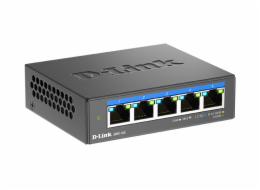
D-Link DMS-105/E 5-port 2.5G Multi-Gigabit QoS IGMP Snooping Switch
Skladem, dodání 2-4 dní
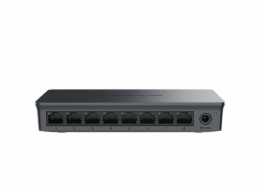
GWN7711 je lite managed L2 switch, který umožňuje budovat škálovatelné, bezpečné a chytré sítě, které lze spravovat v cloudu. Díky možnosti instalace na stůl i na stěnu jsou vhodné pro nasazení do malých a středních podniků, hotelů, škol, zdravotnictví, ale také pro domácnosti. Řada GWN7711(P) podporuje VLAN pro flexibilní a sofistikovanou segmentaci provozu, QoS pro upřednostňování síťového provozu, IGMP Snooping pro optimalizaci výkonu sítě a komplexní možnosti zabezpečení proti potenciálním útokům. Sérii GWN7711(P) lze snadno spravovat prostřednictvím místního webového uživatelského rozhraní a cloudu pomocí systému správy zařízení Grandstream (GDMS). Díky komplexní sadě přizpůsobitelných přepínacích funkcí, dostupnému pasivnímu PoE režimu 24V DC a snadné správě cloudu jsou řady GWN7711(P) ideálními spravovanými síťovými přepínači pro malá až středně velká nasazení. Klíčové parametry: 8 portů Gigabit Ethernet Podporuje Loop Detection, Cable Test a Port Mirror pro rychlou lokalizaci síťových závad LED indikátory; Per Port: Link/Activity/PoE power state & Per Device: Power Whisper Quiet: bez ventilátoru Pohodlná a inteligentní správa prostřednictvím webového uživatelského rozhraní a cloudu (GDMS) Broadcast/Multicast/Unicast Storm Control pro sledování úrovně provozu Vestavěná QoS umožňuje prioritizaci síťového provozu
Skladem, dodání 2-4 dní
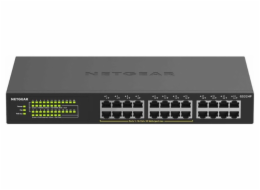
Přepínač NETGEAR GS324P v robustním kovovém provedení nabízí snadné, výkonné a cenově dostupné přepínací řešení určené pro firmy i domácnosti. Zařízení je vybaveno 24 gigabitovými ethernetovými porty, z toho 16 s podporou PoE/PoE+ s celkovým PoE budgetem
Skladem-dodání 2-4 dní
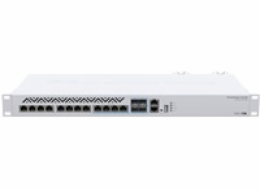
MikroTik CloudRouterSwitch CRS312-4C+8XG-RM CRS317-1G-16S+RM je zcela nový Cloud Router Switch s L3 funkcemi s montáží do 19" racku. Switch je vybaven 16x SFP+ porty s rychlostí 10Gbps se zpětnou kompatibilitou i pro 1Gbps moduly, dále gigabitovým ethernetovým portem pro management a jedním sériovým portem. CRS317-1G-16S+RM je poháněn novou generací chipů , která dává dostatečně vysoký výkon pro všech šestnáct 10G portů při použití s kteroukoliv velikostí Ethernetových rámců. Nové funkce jako hadwarový spanning-tree protokol nebo Link Aggregation (LACP) poskytnou vaší síti dostatečnou ochranu, spolehlivost a zvýší úroveň na opravdu profesionální úroveň. Switch má kromě 2 napájecích plně redundantních zdrojů také velké pasivní chlazení, kterému v případě teplého prostředí vypomůže dvojice ventilátorů. Klíčové vlastnosti Volba operačního systému - RouterOS nebo SwOS Non-blocking Layer 2 switching capacity 16K host table IEEE 802.1Q VLAN Až 4K simultaneous VLAN Port isolation and Port security MSTP HW MPLS forwarding coming in future software update Podpora SFP 1.25 a SFP+ 10Gbit modulů 800 MHz dual core CPU Dvojice napájecích zdrojů Broadcast storm control Port mirroring of ingress/egress traffic Rapid Spanning Tree Protocol (RSTP) Link Aggregation (LACP) Access Control List MikroTik neighbour discovery SNMP v2/v3 Rackmount and tabletop Velké teplotní rozpětí -20 až +60 C Pasivní chlazení s dvěma záložními ventilátory Obsah balení Zařízení Úchyty do racku (2) Napájecí kabel Technické specifikace: CPU 800MHz Typ CPU 98DX8216B0 RAM 1GB Počet LAN portů 1 Gigabitové porty Ano (1) SFP+ porty Ano (16) Počet Mini-PCI 0 Integr. bezdrátová karta Ne Podpora 802.3af Ne PoE Ne Senzor napětí Ne Senzor teploty CPU Ano Senzor teploty PCB Ne Rozměry 443 x 224 x 44 mm Operační systém RouterOS Rozsah pracovních teplot -40C až 70C Licence L6 Užitečné odkazy: Diagnostika vadné jednotky Jak se bránit ESD veškeré informace o produktech společnosti MikroTik aktuální verze RouterOS ke stažení aktuální verze WinBoxu výpočet parametrů bezdrátového spoje
Skladem v eshopu
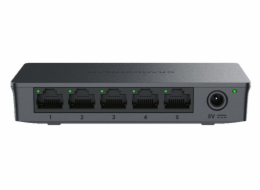
Switch Grandstream GWN7700 (5x 10/100/1000Mbps) Síťové standardy: IEEE 802.1pIEEE 802.3afIEEE 802.3uIEEE 802.3atIEEE 802.3iIEEE 802.3xIEEE 802.3ab Podpora 10G: Ne Přenosová rychlost sítě Ethernet: 10,
Skladem, dodání 2-4 dní
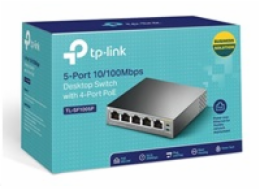
TL-SF1005P je 5portový 10 / 100M PoE switch s funkcí priority portů, který umožňuje napájet na dálku zařízení s podporou normy 802.3af /48 V. Pro napájení slouží první 4 porty, plus další 1 port pak slouží jako klasický switch.
Skladem-dodání 2-4 dní
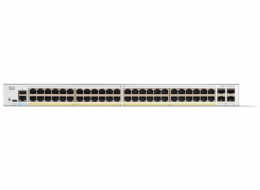
Cisco Catalyst switch C1200-48P-4G Řada Cisco Catalyst 1200 je další generací cenově dostupných chytrých přepínačů, které kombinují vysoký výkon a spolehlivost s kompletní sadou funkcí, které potřebujete pro malé a středně velké podnikové sítě. Přepínače fungují na přizpůsobeném softwaru operačního systému Linux a poskytují flexibilní možnosti správy, komplexní možnosti zabezpečení a funkce statického směrování na 3. vrstvě, které daleko přesahují možnosti neřízeného nebo levného přepínače a to za nižší cenu než u plně spravovaných přepínačů. Když potřebujete spolehlivé řešení pro sdílení online zdrojů a připojení počítačů, telefonů a bezdrátových přístupových bodů, chytré přepínače Catalyst řady 1200 poskytují ideální řešení za dostupnou cenu. Stránky produktu: C1200-48P-4G Performance Switching capacity and forwarding rate (All switches are wire-speed and nonblocking) Capacity in millions of packets per second (mpps) (64-byte packets) 77,38 Switching capacity in gigabits per second (Gbps) 104 Layer 2 switching Spanning Tree Protocol (STP) Standard 802.1d spanning tree support Fast convergence using 802.1w (Rapid Spanning Tree Protocol [RSTP]), enabled by default Multiple spanning tree instances using 802.1s (MSTP); 8 instances are supported Per-VLAN Spanning Tree Plus (PVST+); 126 instances are supported Rapid PVST+ (RPVST+); 126 instances are supported Port grouping/link aggregation Support for IEEE 802.3ad Link Aggregation Control Protocol (LACP) Up to 4 groups Up to 8 ports per group with 16 candidate ports for each (dynamic) 802.3ad Link Aggregation Group (LAG) VLAN Support for up to 255 active VLANs simultaneously Port-based and 802.1Q tag-based VLANs Management VLAN Guest VLAN Auto Surveillance VLAN (ASV) Voice VLAN Voice traffic is automatically assigned to a voice-specific VLAN and treated with appropriate levels of QoS. Voice Services Discovery Protocol (VSDP) delivers networkwide zero-touch deployment of voice endpoints and call control devices Generic VLAN Registration Protocol (GVRP) and Generic Attribute Registration Protocol (GARP) Enable automatically propagation and configuration of VLANs in a bridged domain Internet Group Management Protocol (IGMP) versions 1, 2, and 3 snooping Limits bandwidth-intensive multicast traffic to only the requesters; supports 255 multicast groups (source-specific multicasting is also supported) IGMP querier Used to support a Layer 2 multicast domain of snooping switches in the absence of a multicast router Head-of-Line (HOL) blocking HOL blocking prevention Loopback detection Provides protection against loops by transmitting loop protocol packets out of ports on which loop protection has been enabled. It operates independently of STP Layer 3 routing IPv4 routing Wire-speed routing of IPv4 packets Up to 32 static routes and up to 16 IP interfaces IPv6 routing Wire-speed routing of IPv6 packets Layer 3 interface Configuration of Layer 3 interface on physical port, LAG, VLAN interface, or loopback interface Classless Interdomain Routing (CIDR) Support for CIDR Dynamic Host Configuration Protocol (DHCP) relay at Layer 3 Relay of DHCP traffic across IP domains User Datagram Protocol (UDP) relay Relay of broadcast information across Layer 3 domains for application discovery or relaying of Bootstrap Protocol (BootP)/DHCP packets Security Secure Sockets Layer (SSL) Encrypts all HTTPS traffic, allowing secure access to the browser-based management GUI in the switch SSH Protocol SSH is a secure replacement for Telnet traffic. Secure Copy (SCP) also uses SSH. SSH v1 and v2 are supported. IEEE 802.1X (authenticator role) RADIUS authentication, guest VLAN, single/multiple host mode, and single/multiple sessions STP loopback guard Provides additional protection against Layer 2 forwarding loops (STP loops) Secure Core Technology (SCT) Ensures that the switch will receive and process management and protocol traffic no matter how much traffic is received Secure Sensitive Data (SSD) A mechanism to manage sensitive data (such as passwords, keys, and so on) securely on the switch, populating this data to other devices and a secure auto-configuration. Access to view the sensitive data as plain text or encrypted is provided according to the user-configured access level and the access method of the user Trustworthy systems Trustworthy systems provide a highly secure foundation for Cisco products Run-time defenses (Executable Space Protection [X-Space], Address Space Layout Randomization [ASLR], Built-In Object Size Checking [BOSC]) Port security Ability to lock source MAC addresses to ports and limit the number of learned MAC addresses RADIUS Supports RADIUS authentication for management access. Switch functions as a client Storm control Broadcast, multicast, and unknown unicast DoS prevention DoS attack prevention Multiple user privilege levels in CLI Level 1, 7, and 15 privilege levels ACLs Support for up to 512 rules Drop or rate limit based on source and destination MAC, VLAN ID, IPv4 or IPv6 address, IPv6 flow label, protocol, port, Differentiated Services Code Point (DSCP)/IP precedence, TCP/UDP source and destination ports, 802.1p priority, Ethernet type, Internet Control Message Protocol (ICMP) packets, IGMP packets, TCP flag; ACL can be applied on both ingress and egress sides Time-based ACLs supported Quality of service Priority levels 8 hardware queues Scheduling Strict priority and Weighted Round-Robin (WRR) queue assignment based on DSCP and Class of Service (802.1p/CoS) Class of service Port based, 802.1p VLAN priority based, IPv4/v6 IP precedence/Type of Service (ToS)/DSCP based, Differentiated Services (DiffServ), classification and re-marking ACLs, trusted QoS Rate limiting Ingress policer, egress shaping and rate control per VLAN, per port, and flow based Congestion avoidance A TCP congestion avoidance algorithm is required to reduce and prevent global TCP loss synchronization Standards Standards IEEE 802.3 10BASE-T Ethernet, IEEE 802.3u 100BASE-TX Fast Ethernet, IEEE 802.3ab 1000BASE-T Gigabit Ethernet, IEEE 802.3ad Link Aggregation Control Protocol, IEEE 802.3z Gigabit Ethernet, IEEE 802.3x Flow Control, IEEE 802.3 ad LACP, IEEE 802.1D (STP), IEEE 802.1Q/p VLAN, IEEE 802.1w RSTP, IEEE 802.1s Multiple STP, IEEE 802.1X Port Access Authentication, IEEE 802.3af, IEEE 802.3at, RFC 768, RFC 783, RFC 791, RFC 792, RFC 793, RFC 813, RFC 879, RFC 896, RFC 826, RFC 854, RFC 855, RFC 856, RFC 858, RFC 894, RFC 919, RFC 920, RFC 922, RFC 950, RFC 951, RFC 1042, RFC 1071, RFC 1123, RFC 1141, RFC 1155, RFC 1157, RFC 1213, RFC 1215, RFC 1286, RFC 1350, RFC 1442, RFC 1451, RFC 1493, RFC 1533, RFC 1541, RFC 1542, RFC 1573, RFC 1624, RFC 1643, RFC 1700, RFC 1757, RFC 1867, RFC 1907, RFC 2011, RFC 2012, RFC 2013, RFC 2030, RFC 2131, RFC 2132, RFC 2233, RFC 2576, RFC 2616, RFC 2618, RFC 2665, RFC 2666, RFC 2674, RFC 2737, RFC 2819, RFC 2863, RFC 3164, RFC 3411, RFC 3412, RFC 3413, RFC 3414, RFC 3415, RFC 3416, RFC 4330 IPv6 IPv6 IPv6 host mode IPv6 over Ethernet Dual IPv6/IPv4 stack IPv6 Neighbor Discovery (ND) IPv6 stateless address auto-configuration Path Maximum Transmission Unit (MTU) discovery Duplicate Address Detection (DAD) ICMP version 6 IPv6 over IPv4 network with Intrasite Automatic Tunnel Addressing Protocol (ISATAP) support IPv6 QoS Prioritizes IPv6 packets in hardware IPv6 ACL Drop or rate-limit IPv6 packets in hardware Multicast Listener Discovery (MLD v1/2) snooping Delivers IPv6 multicast packets only to the required receivers IPv6 applications Web/SSL, Telnet server/SSH, Ping, Traceroute, Simple Network Time Protocol (SNTP), Trivial File Transfer Protocol (
Skladem-dodání 2-4 dní
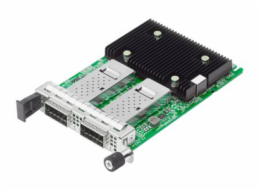
Broadcom NetXtreme N2200G - 2x 200GbE OCP 3.0
Skladem-dodání 2-4 dní
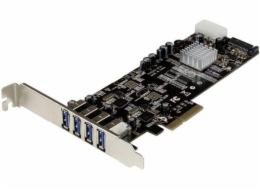
StarTech PCIe 2.0 x4 řadič – 4x USB 3.0 (PEXUSB3S44V)
Skladem-dodání 2-4 dní
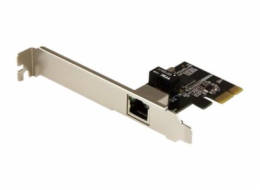
StarTech Síťová karta ST1000SPEXI Výrobce: StarTech
Skladem-dodání 2-4 dní
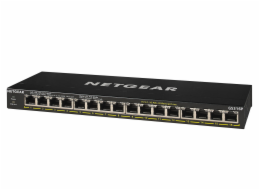
ETHERNET PORT CONFIGURATION: 16 Gigabit ports PLUG-AND-PLAY: Simple set up with no software to install or configuration needed and zero maintenance FULL PERFORMANCE: Non-blocking switching architecture for maximum throughput at wire speed PHYS
Skladem, dodání 2-4 dní
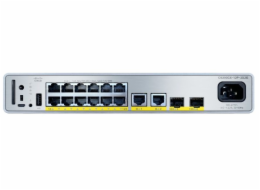
Cisco Catalyst 9200CX
Skladem-dodání 2-4 dní
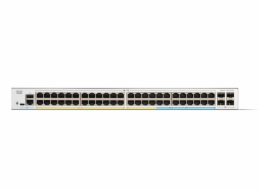
Cisco Catalyst switch C1300-48P-4X Cisco Catalyst řady 1300 jsou managovatelné switche Gigabit Ethernet Layer 3 podnikové třídy určené pro malé a střední podniky a pobočky. Tyto jednoduché, flexibilní a bezpečné switche jsou ideální pro nasazení mimo rozvodnou skříň. Řada Catalyst 1300 pracuje na přizpůsobeném softwaru operačního systému Linux s intuitivním grafickým rozhraním, který zjednodušuje nastavení sítě a pokročilými funkcemi, které urychlují digitální transformaci, zatímco všudypřítomné zabezpečení chrání kritické obchodní transakce. Přepínače řady 1300 poskytují ideální kombinaci cenové dostupnosti a možností pro malé a střední podniky a pomáhají vám vytvořit efektivnější a lépe propojenou pracovní sílu. Stránky produktu: C1300-48P-4X Performance Switching capacity and forwarding rate (All switches are wire-speed and nonblocking) Capacity in millions of packets per second (mpps) (64-byte packets) 130.94 Switching capacity in gigabits per second (Gbps) 176.0 Layer 2 switching Spanning Tree Protocol (STP) Standard 802.1d spanning tree support Fast convergence using 802.1w (Rapid Spanning Tree Protocol [RSTP]), enabled by default Multiple spanning tree instances using 802.1s (MSTP); 8 instances are supported Per-VLAN Spanning Tree Plus (PVST+); 126 instances are supported Rapid PVST+ (RPVST+); 126 instances are supported Port grouping/link aggregation Support for IEEE 802.3ad Link Aggregation Control Protocol (LACP) Up to 8 groups Up to 8 ports per group with 16 candidate ports for each (dynamic) 802.3ad link aggregation VLAN Support for up to 4093 VLANs simultaneously Port-based and 802.1Q tag-based VLANs, MAC-based VLAN, protocol-based VLAN, IP subnet-based VLAN Management VLAN Private VLAN with promiscuous, isolated, and community port Private VLAN Edge (PVE), also known as protected ports, with multiple uplinks Guest VLAN, unauthenticated VLAN Dynamic VLAN assignment via RADIUS server along with 802.1X client authentication Customer premises equipment (CPE) VLAN Auto surveillance VLAN (ASV) Voice VLAN Voice traffic is automatically assigned to a voice-specific VLAN and treated with appropriate levels of QoS. Voice Services Discovery Protocol (VSDP) delivers networkwide zero-touch deployment of voice endpoints and call control devices Multicast TV VLAN Multicast TV VLAN allows the single multicast VLAN to be shared in the network while subscribers remain in separate VLANs. This feature is also known as Multicast VLAN Registration (MVR) VLAN translation Support for VLAN one-to-one mapping, in which customer VLANs (C-VLANs) on an edge interface are mapped to service provider VLANs (S-VLANs), and the original C-VLAN tags are replaced by the specified S-VLAN Q-in-Q VLANs transparently cross a service provider network while isolating traffic among customers Selective Q-in-Q Selective Q-in-Q is an enhancement to the basic Q-in-Q feature and provides, per edge interface, multiple mappings of different C-VLANs to separate S-VLANs Selective Q-in-Q also allows configuring of the Ethertype (Tag Protocol Identifier [TPID]) of the S-VLAN tag Layer 2 protocol tunneling over Q-in-Q is also supported Generic VLAN Registration Protocol (GVRP)/Generic Attribute Registration Protocol (GARP) GVRP and GARP enable automatic propagation and configuration of VLANs in a bridged domain Unidirectional Link UDLD monitors physical connections to detect unidirectional links caused by incorrect Detection (UDLD) wiring or cable/port faults to prevent forwarding loops and blackholing of traffic in switched networks DHCP relay at Layer 2 Relay of DHCP traffic to a DHCP server in a different VLAN; works with DHCP Option 82 Internet Group Management Protocol (IGMP) versions 1, 2, and 3 snooping IGMP limits bandwidth-intensive multicast traffic to only the requesters; it supports 2000 multicast groups (source-specific multicasting is also supported) IGMP querier IGMP querier is used to support a Layer 2 multicast domain of snooping switches in the absence of a multicast router IGMP proxy The IGMP proxy provides a mechanism for multicast forwarding based on IGMP membership information without the need for more complicated multicast routing protocols Head-of-Line (HOL) blocking HOL blocking prevention Loopback detection Loopback detection provides protection against loops by transmitting loop protocol packets out of ports on which loop protection has been enabled. It operates independently of STP Layer 3 IPv4 routing Wire-speed routing of IPv4 packets Up to 990 static routes and up to 128 IP interfaces IPv6 routing Wire-speed routing of IPv6 packets Layer 3 interface Configuration of a Layer 3 interface on a physical port, LAG, VLAN interface, or loopback interface Classless Interdomain Routing (CIDR) Support for CIDR Routing Information Protocol (RIP) v2 Support for RIP v2 for dynamic routing Policy-Based Routing (PBR) Flexible routing control to direct packets to a different next hop based on an IPv4 or IPv6 Access Control List (ACL) DHCP server Switch functions as an IPv4 DHCP server, serving IP addresses for multiple DHCP pools or scopes Support for DHCP options DHCP relay at Layer 3 Relay of DHCP traffic across IP domains User Datagram Protocol (UDP) relay Relay of broadcast information across Layer 3 domains for application discovery or relaying of Bootstrap Protocol (BOOTP)/DHCP packets Stacking Hardware stacking Up to 8 switches in a stack. Up to 200 ports managed as a single system with hardware failover Stacking is supported on the following models: Family 1: C1300-16P-4X, C1300-24T-4X, C1300-24P-4X, C1300-24FP-4X, C1300-48T-4X, C1300-48P-4X, C1300-48FP-4X, C1300-8MGP-2X, C1300-24MGP-4X, C1300-48MGP-4X Family 2: C1300-12XT-2X, C1300-12XS, C1300-16XTS, C1300-24XS, C1300-24XT, C1300-24XTS PIDs from the same Family can be stacked together. Cross-stacking between Families is not supported. High availability Fast stack failover delivers minimal traffic loss. Support for LAG across multiple units in a stack Plug-and-play stacking configuration/management Active/standby for resilient stack control Auto-numbering Hot swap of units in stack Ring and chain stacking options, auto stacking port speed, flexible stacking port options High-speed stack interconnects Cost-effective high-speed 10 Gigabit Ethernet fiber interfaces Security Secure Shell (SSH) Protocol SSH is a secure replacement for Telnet traffic. Secure Copy Protocol (SCP) also uses SSH. SSH v1 and v2 are supported Secure Sockets Layer (SSL) SSL support: Encrypts all HTTPS traffic, allowing highly secure access to the browser-based management GUI in the switch IEEE 802.1X (authenticator role) 802.1X: RADIUS authentication and accounting, MD5 hash, guest VLAN, unauthenticated VLAN, single/multiple host mode, and single/multiple sessions Supports time-based 802.1X, dynamic VLAN assignment, and MAC authentication IEEE 802.1X supplicant A switch can be configured to act as a supplicant to another switch. This enables extended secure access in areas outside the wiring closet (such as conference rooms) Web-based authentication Web-based authentication provides network admission control through a web browser to any host devices and operating systems STP Bridge Protocol Data Unit (BPDU) Guard A security mechanism to protect the network from invalid configurations. A port enabled for BPDU Guard is shut down if a BPDU message is received on that port. This avoids accidental topology loops STP Root Guard Prevents edge devices not in the network administrator’s control from becoming STP root nodes STP loopback guard Provides additional protection against Layer 2 forwarding loops (STP loops) D
Skladem-dodání 2-4 dní

Rozhraní: 8x 10/100/1000 porty s podporou PoE+ (energetický rozpočet 120 W), 2x měděný/SFP kombo port.
Skladem-dodání 2-4 dní
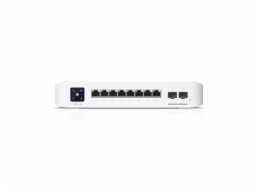
Popis produktu Ubiquiti USW-Pro-8-PoE je novým switchem, který nabízí až 6 POE/POE+ portů, schopných dodávat až 30 W, a také 2 POE++ porty, které dokážou dodávat až 60 W. Celkový maximální výstupní výkon je 120 W. Switch má 2 SFP+ porty s rychlostí až 10 Gb/s, což je ideální pro přenos i větších souborů. Na přední straně switche najdete dotykový ovládací panel i s AR nastavením. Switch lze také upevnit na zeď pomocí příslušného držáku. Klíčové vlastnosti • Podpora nejnovější POE++ • Velmi rychlé SFP+ porty až 10 Gb/s • Podpora L3 • Dostupnost až 120W pro POE • Možnost připevnění na zeď Technické parametry Konektory a rozhraní Rychlost LAN:(8) 10/100/1000Mbps Optické rozhraní:(2) 1G/10Gbps Ostatní:Dotykový displej Napájení Typ napájení:Ze sítě (230V) Typy PoE:PoE-Out (pouze) Podporované PoE-Out standardy:802.3af, 802.3at, 802.3at - ultra PoE (60W) Počet PoE Out portů:8 PoE budget [W]:120 Max. spotřeba energie [W]:150 Napájení přes konektor/svorkovnici:230V AC (přímo do zásuvky) Fyzické charakteristiky Provedení:Desktop Ventilátory:Bez ventilátoru Šasi:Plastové Tlačítka:Reset Provozní teplota [°C]:-5 až 45 Šířka [mm]:248 Výška [mm]:200 Hloubka [mm]:44 Obecné Rychlost přepínání [Gbps]:56 Software Management:UniFi controller Funkce:L3 Výchozí IP adresa:Dynamická z DHCP
Skladem, dodání 2-4 dní
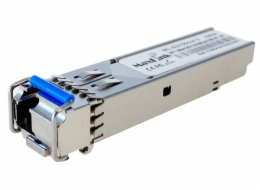
WDM SFP moduly používají pro obousměrné spojení jen jednoho optického vlákna, umožňují tím dvojná...
Skladem, dodání 2-4 dní
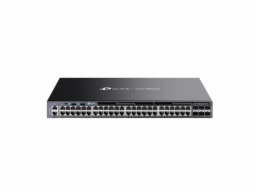
Switch, 48x 10/100/1000 Mbps RJ45 Port, 6x 10G SFP+ Slot, spotřeba energie 39,8 W, L3 funkce, stohování, Omada SDN, redundantní napájení.
Skladem v eshopu
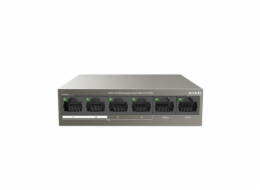
Popis produktu Tenda TEF1006P-4-63W přepíná data pomocí 6ti portů RJ45 s přenosovou rychlostí 10/100 Mb/s s automatickou detekcí rychlosti. Dva porty slouží jako Uplink a 4 PoE porty podporují PoE 802.3af a 802.3at. Switch podporuje stabilní 8 jádrové PoE napájení, ochrana proti přepětí 6kV. Podpora přepojování uzlů v módu Store-and-Forward. Full-duplex kontrola toku 802.3x, half-duplex kontrola toku v režimu Back-Pressure. Dva Uplink porty je možné využít na připojení switche do sítě a druhý na připojení dalšího zařízení bez PoE, např. NVR a další. TEF1106P-4-63W je vhodná jak do menších a středních firem, tak i do domácností. Přepínač Default/Extend mode Default mode: V tomto módu pracuje jako klasický switch, veškeré porty mají auto-negaci a rychlost 10/100 Mb/s. Extend mode: V tomto módu pracuje také jako klasický switch, ale rychlost je max. 10 Mb/s, auto-negace aktivní. Je navýšen dosah ke koncovému zařízení až na 250m (záleží také na koncovém zařízení, kabeláži, apod.) Možnosti napájení PoE - Power over Ethernet Napájení portů pomocí PoE 802.3af (15,4W) a 802.3at (30W). Max. celkem 63 Wattů na 4 PoE porty, příklad využití: 4 porty, každý 15,4 W(PoE 802.3af) 2 porty, každý 30 W(PoE 802.3at) 1port 30W Venkovní IP kamera + 1 port 20W Access Point + 1 port 10W vnitřní IP kamera + 1 port 5W IP telefon Vždy celkem max. 63 W Technické parametry Standarty&protokoly: IEEE 802.3, IEEE 802.3u, IEEE 802.3x, IEEE 802.3af, IEEE 802.3at Porty: 6x 10/100Mbps RJ45 auto-negace, Port1 až Port4 podporuje IEEE802.3 at/af PoE standart Kabeláž pro připojení koncových zařízení: 10BASE-TX: UTP kategorie 5, 5E (?250m), 100BASE-TX: UTP kategorie 5, 5E (?150m) PPS/PORT: 10BASE-T: 14880pps/port, 100BASE-TX: 148800pps/port Celková propustnost: 1,2 Gbps Velikost tabulky MAC adresace: 1K Mód přepínání: Store-And-Forward LED Indikace: 6x Linka/Aktivita, 1x Napájení Napájecí adaptér: DC 51V/1.25A Spotřeba: 2 W (bez PoE napájení), 63 W (s připojenými PoE zařízeními max. 58W) Rozměry zařízení: 100mm x 100mm x 26mm(L*W*H) Hmotnost zařízení: 0,27kg Rozměry balení: 240mm x 140mm x 80mm(L*W*H) Hmotnost kompletního balení: 0,7kg Celkem max. napájení PoE: 58W Pracovní teplota: -10oC ~ 45oC Vlhkost: 10%-90%RH (nekondenzující) Certifikace: CE,RoHS a další Obsah balení 1x Tenda TEF1106P-4-63W 1x Stručná instalační příručka (CZ, SK, PL, EN) 1x Napájecí adaptér (51V DC, 1250 mA)
Skladem, dodání 2-4 dní
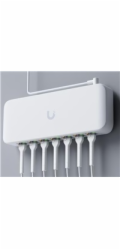
Ubiquiti Ultra Řízený L2 Gigabit Ethernet (10/100/1000) Podpora napájení po Ethernetu (PoE) Bílá Podpora 10G: Ne Napájecí zdroj v ceně: Ne Napájecí zdroj: DC/PoE Stejnosměrné vstupní napětí: 44 - 57 V
Dodání 3 dny

Traffic Management Auto Negotiation of speed and duplex modes IEEE 802.3x Flow Control Dynamic MAC address management IEEE 802.1Q-based VLAN Auto Voice VLAN Auto Video VLAN (selected models) VLAN routing (selected models) QoS based o
Skladem-dodání 2-4 dní

50portový Gigabit WebManaged switch: 44x Gigabit metalických portů + 4x Gigabit combo portů (metal/SFP) + 2x SFP, IPv6, 802.3az (Green), Layer 2-4 bezpečnostní nastavení, L2 Multicast, do 19" racku
Skladem-dodání 2-4 dní
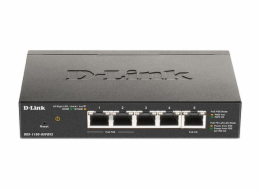
5-portový gigabitový PoE Smart Managed Switch s 1 PD portom - 3 x 1000Base-T Auto-Negotiating 10/100/1000Mbps - 2 x 1000Base-T PoE Auto-Negotiating 10/100/1000Mbps - porty 1 až 2 sú PoE, port 5 je PD port - priepustný 18W s 802.3at - DGS-1100-05PD nemá napájací adaptér. - Port 1 a 2 sú porty PoE, port 5 je port PD - Bez ventilátora - 802.1Q VLAN - Statická hlasová VLAN - Surveillance VLAN - 802.1p QoS - IGMP snooping - detekcia spätnej slučky - zrkadlenie portov - riadenie šírky pásma - riadenie búrok - TLS1.1/1.2 - PoE PD alive - Dual Images - Link Aggregation - SNMP - 802.3, 802.3u, 802.3x - webová správa - diagnostika káblov.
Skladem, dodání 2-4 dní

Allied Telesis AT-X250-18XS-50
Dodání 3-5 dní
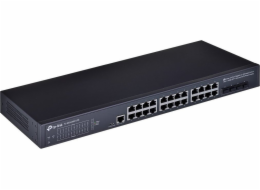
TP-Link JetStream switch TL-SG3428X-UPS Řízený switch JetStream L2+ s 24 gigabitovými porty a 4 10GE SFP+ sloty a možností napájení z UPS TL-SG3428X-UPS poskytuje 24 portů LAN 10/100/1000 Mb/s . Kromě toho jsou k dispozici také 4 sloty 10GE SFP+ . Pro správu a monitoring je možné využít běžný přístup přes webové rozhraní a protokoly, kupř. CLI, SNMP, RMO, ale také centralizovaná správa cloudu a softwarový kontroler. Podporován je také hardwarový ovladač Omada (OC200/OC300). Oproti klasické verzi má tento switch kromě standardního napájení 230V AC možnost UPS , tedy připojení baterie (min. 4,5Ah) pro případ výpadku primárního zdroje 230V AC včetně dobíjení baterie. Switch lze připojit i odpojením 230V AC a připojením switche pouze ke zdroji 12V DC na svorky určené pro baterii. 10G Lightning-Fast Uplink: 4× 10 Gbps SFP+ sloty umožňují širokopásmové připojení a neblokující přepínací kapacitu. Gigabitové rychlosti: 24× gigabitové porty RJ45 nabízejí vysokorychlostní a spolehlivé připojení k dalším switchům a zařízením. Static routing: Pomáhá směrovat interní provoz pro efektivnější využití síťových zdrojů. Robustní bezpečnostní strategie: IP-MAC-Port Binding, ACL, Port Security, DoS Defend, Storm control, DHCP Snooping, 802.1X, Radius Authentication a další. Optimalizujte hlasové a video aplikace: L2/L3/L4 QoS a IGMP snooping. Samostatná správa: Web, CLI (konzolový port, Telnet, SSH), SNMP, RMON a duální obraz přinášejí výkonné možnosti správy Learn more about Omada Cloud SDN>? Learn more about TP-Link 10G Multi-Gig technology > Stránky produktu: https://www.tp-link.com/no/business-networking/managed-switch/tl-sg3428x-ups/ Technické specifikace HARDWARE FEATURES Interface • 24× 10/100/1000 Mbps RJ45 Ports • 4× 10G SFP+ Slots • 1× RJ45 Console Port • 1× Micro-USB Console Port Fan Quantity Fanless Power Supply 100-240 V AC~50/60 Hz and 12 V lead-acid battery Dimensions ( W x D x H ) 17.3 × 7.1 × 1.7 in (440 × 180 × 44 mm) Mounting Rack Mountable Max Power Consumption 31.9 W (110 V/60 Hz) (AC powered with 12 V battery charging) 24.0 W (110 V/60 Hz) (AC powered without 12 V battery charging) 20.0 W (12 V battery powered) Max Heat Dissipation 108.84 BTU/hr (110 V/60 Hz) (AC powered with 12 V battery charging) 81.88 BTU/hr (110 V/60 Hz) (AC powered without 12 V battery charging) 68.24 BTU/hr (12 V battery powered) PERFORMANCE Switching Capacity 128 Gbps Packet Forwarding Rate 95.23 Mpps MAC Address Table 16 K Packet Buffer Memory 12 Mbit Jumbo Frame 9 KB SOFTWARE FEATURES Quality of Service • 8 priority queues • 802.1p CoS/DSCP priority • Queue scheduling - SP (Strict Priority) - WRR (Weighted Round Robin) - SP+WRR • Bandwidth Control - Port/Flow based Rating Limiting • Smoother Performance • Action for Flows - Mirror (to supported interface) - Redirect (to supported interface) - Rate Limit - QoS Remark L2 and L2+ Features • Link Aggregation - static link aggregation - 802.3ad LACP - Up to 8 aggregation groups, containing 8 ports per group • Spanning Tree Protocol - 802.1d STP - 802.1w RSTP - 802.1s MSTP - STP Security: TC Protect, BPDU Filter, Root Protect • Loopback Detection - Port based - VLAN based • Flow Control - 802.3x Flow Control - HOL Blocking Prevention • Mirroring - Port Mirroring - CPU Mirroring - One-to-One - Many-to-One - Tx/Rx/Both L2 Multicast • IGMP Snooping - IGMP v1/v2/v3 Snooping - Fast Leave - IGMP Snooping Querier - IGMP Authentication • IGMP Authentication • MLD Snooping - MLD v1/v2 Snooping - Fast Leave - MLD Snooping Querier - Static Group Config - Limited IP Multicast • MVR • Multicast Filtering: 256 profiles and 16 entries per profile VLAN • VLAN Group - Max 4K VLAN Groups • 802.1Q Tagged VLAN • MAC VLAN: 30 Entries • Protocol VLAN: Protocol Template 16, Protocol VLAN 16 • Private VLAN • GVRP • VLAN VPN (QinQ) - Port-Based QinQ - Selective QinQ • Voice VLAN Access Control List • Time-based ACL • MAC ACL - Source MAC - Destination MAC - VLAN ID - User Priority - Ether Type • IP ACL -Source IP - Destination IP - Fragment - IP Protocol - TCP Flag - TCP/UDP Port - DSCP/IP TOS - User Priority • Combined ACL • Packet Content ACL • IPv6 ACL • Policy - Mirroring - Redirect - Rate Limit - QoS Remark • ACL apply to Port/VLAN Security • IP-MAC-Port Binding - 512 Entries - DHCP Snooping - ARP Inspection - IPv4 Source Guard: 100 Entries • IPv6-MAC-Port Binding - 512 Entries - DHCPv6 Snooping - ND Detection - IPv6 Source Guard: 100 Entries • DoS Defend • Static/Dynamic Port Security - Up to 64 MAC addresses per port • Broadcast/Multicast/Unicast Storm Control - kbps/ratio control mode • 802.1X - Port base authentication - Mac base authentication - VLAN Assignment - MAB - Guest VLAN - Support Radius authentication andaccountability • AAA (including TACACS+) • Port Isolation • Secure web management through HTTPS with SSLv3/TLS 1.2 • Secure Command Line Interface (CLI) management with SSHv1/SSHv2 • IP/Port/MAC based access control IPv6 • IPv6 Dual IPv4/IPv6 • Multicast Listener Discovery (MLD) Snooping • IPv6 ACL • IPv6 Interface • Static IPv6 Routing • IPv6 neighbor discovery (ND) • Path maximum transmission unit (MTU) discovery • Internet Control Message Protocol (ICMP) version 6 • TCPv6/UDPv6 • IPv6 applications - DHCPv6 Client - Ping6 - Tracert6 - Telnet (v6) - IPv6 SNMP - IPv6 SSH - IPv6 SSL - Http/Https - IPv6 TFTP L3 Features • 16 IPv4/IPv6 Interfaces • Static Routing - 48 static routes • Static ARP - 128 Static Entries • Proxy ARP • Gratuitous ARP • DHCP Server • DHCP Relay - DHCP Interface Relay - DHCP VLAN Relay • DHCP L2 Relay Advanced Features • Automatic Device Discovery • Batch Configuration • Batch Firmware Upgrading • Intelligent Network Monitoring • Abnormal Event Warnings • Unified Configuration • Reboot Schedule MIBs • MIB II (RFC1213) • Interface MIB (RFC2233) • Ethernet Interface MIB (RFC1643) • Bridge MIB (RFC1493) • P/Q-Bridge MIB (RFC2674) • RMON MIB (RFC2819) • RMON2 MIB (RFC2021) • Radius Accounting Client MIB (RFC2620) • Radius Authentication Client MIB (RFC2618) • Remote Ping, Traceroute MIB (RFC2925) • Support TP-Link private MIB MANAGEMENT Management Features • Web-based GUI • Command Line Interface (CLI) through the console port, telnet • SNMP v1/v2c/v3 - Trap/Inform - RMON (1,2,3,9 groups) • SDM Template • DHCP/BOOTP Client • 802.1ab LLDP/LLDP-MED • DHCP AutoInstall • Dual Image, Dual Configuration • CPU Monitoring • Cable Diagnostics • EEE • Password Recovery • SNTP • System Log OTHERS Certification CE, FCC, RoHS Package Contents • TL-SG3428X-UPS Switch • Power Cord • Quick Installation Guide • Rackmount Kit • Rubber Feet System Requirements Microsoft Windows 98SE, NT, 2000, XP, Vista™ or Windows 7/8/10/11, MAC OS, NetWare, UNIX or Linux. Environment • Operating Temperature: 0–45 °C (32–113 °F); • Storage Temperature: -40–70 °C (-40–158 °F) • Operating Humidity: 10–90% RH non-condensing • Storage Humidity: 5–90% RH non-condensing
Skladem, dodání 2-4 dní
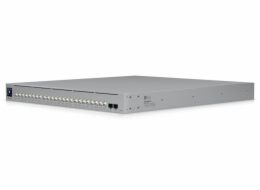
Ubiquiti UniFi Enterprise Campus 24 PoE 24portový L3 switch Etherlightning s podporou PoE+++ disponující vysokokapacitními připojeními 10G RJ-45 a 25G SFP28 pro systém s vysokou dostupností. Zařízení je vybaveno dvěma hot-swap napájecími mod...
Skladem, dodání 2-4 dní
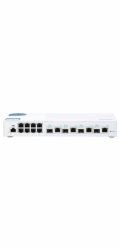
QSW-M408-4C je webově spravovaný přepínač Layer 2 vybavený čtyřmi kombinovanými porty 10GbE SFP+/RJ45 a osmi gigabitovými porty. QSW-M408-4C podporuje přepínání Layer 2 a správu sítě prostřednictvím uživatelsky přívětivého webového rozhraní, což nabízí flexibilní nasazení v hybridních vysokorychlos
Skladem, dodání 2-4 dní
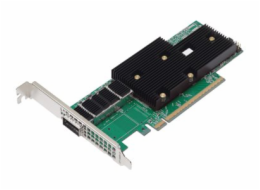
Broadcom NetXtreme P1400G - 1x 400GbE PCIe NIC
Skladem-dodání 2-4 dní
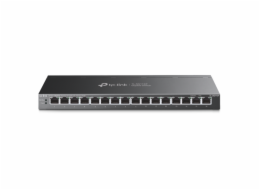
TP-Link TL-SG116P 16-Portový Gigabitový Desktop Switch, 16 Portů PoE+ 120 W PoE Budget : 16 × 802.3af/at-kompatibilní PoE+ porty s celkovým napájením 120 W. Gigabitové ethernetové porty : 16 x gigabitové PoE+ RJ45 porty poskytují vysokorychlostní připojení. Přenos na delší vzdálenost : Dosah přenosu dat a energie až 250 m v režimu Extend. Prioritní režim : Prioritní režim zajišťuje vysokou prioritu portů 1–4, aby byla zaručena kvalita citlivých aplikací Režim izolace : Režim izolace umožňuje oddělení klientského provozu jedním kliknutím pro vyšší zabezpečení a výkon. PoE Auto Recovery : Automaticky restartuje vaše spadlá nebo nereagující zařízení s napájením PoE pomocí funkce PoE Auto Recovery Plug and Play : Plug and Play bez nutnosti konfigurace Learn more about TP-Link PoE technology > Stránky produktu: https://www.tp-link.com/us/business-networking/unmanaged-switch/tl-sg116p/ Technické specifikace HARDWARE FEATURES Interface • 16× 10/100/1000Mbps RJ45 Ports • AUTO Negotiation • AUTO MDI/MDIX Network Media • 10BASE-T: UTP category 3, 4, 5 cable (maximum 100m) • EIA/TIA-568 100? STP (maximum 100m) • 100BASE-TX: UTP category 5, 5e cable (maximum 100m) • EIA/TIA-568 100? STP (maximum 100m) • 1000BASE-T: UTP category 5, 5e, 6 or above cable (maximum 100m) • EIA/TIA-568 100? STP (maximum 100m) Fan Quantity Fanless External Power Supply External Power Adapter (Output: 53.5 VDC / 2.43 A) Packet Forwarding Rate 23.8 Mpps PoE Ports (RJ45) • Standard: 802.3 af/at compliant • PoE Ports: Ports 1–16 • Power Supply: 120 W Mac Address Table 8K, Auto-learning, Auto-aging Switching Capacity 32 Gbps Dimensions ( W x D x H ) 11.3 × 4.4 × 1.0 in (286 × 111.7 × 25.4 mm) Max Power Consumption • 11.72 W (220 V / 50 Hz no PD connected) / 11.56 W (110 V / 60 Hz no PD connected) • 142.51 W (220 V / 50 Hz with 120 W* PD connected) / 144.28 W (110 V / 60 Hz with 120 W* PD connected) Max Heat Dissipation • 39.85 BTU/h (220 V / 50 Hz no PD connected) / 39.31 BTU/h (110 V / 60 Hz no PD connected) • 484.53 BTU/h (220 V / 50 Hz with 120 W* PD connected) / 490.55 BTU/h (110 V / 60 Hz with 120 W* PD connected) SOFTWARE FEATURES Advanced Features • Compatible With IEEE 802.3af/at Compliant PDs • Extend Mode Button (Ports 1–4, Up to 250 m PoE power supply and data transmission) • Priority Mode Button (Ports 1–4) • Isolation Mode Button (Ports 1–7 / 8-14) • PoE Auto Recovery (Ports 1-16) • Mac Address Auto-Learning And Auto-Aging • IEEE 802.3x Flow Control • 802.1p/DSCP QoS • IGMP Snooping Transfer Method Store-And-Forward OTHERS Certification FCC, CE, RoHS Package Contents • TL-SG116P • Power Adapter • Installation Guide Environment • Operating Temperature: 0–40 °C (32–104 °F); • Storage Temperature: -40–70 °C (-40–158 °F) • Operating Humidity: 10–90% RH non-condensing • Storage Humidity: 5–90% RH non-condensing
Skladem, dodání 2-4 dní
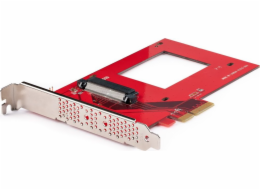
KARTA ADAPTÉRU StarTech U.3 TO PCIE Kategorie zboží: Příslušenství pro pouzdra a komponenty
Skladem-dodání 2-4 dní
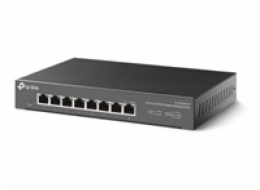
Plug-and-play switch, 8 RJ45 portů s podporou rychlostí 100Base-T / 1000Base-T / 2.5GBase-T, přepínací kapacita 40 GB/s, tabulka MAC adres o velikosti 16K, Auto MDI/MDI-X, Auto-Negotiation, Flow Control, DCB, Prioritní režim, IGMP Snooping. Černá.
Skladem-dodání 2-4 dní
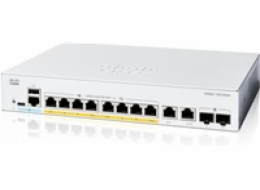
Cisco Catalyst switch C1300-8FP-2G - REFRESH CISCO REFRESH jsou repasované produkty, které společnost CISCO dodává s certifikací kvality, zárukou a servisní podporou odpovídající ekvivalentnímu novému produktu Sada pro montáž do racku není součástí balení. Cisco Catalyst řady 1300 jsou managovatelné switche Gigabit Ethernet Layer 3 podnikové třídy určené pro malé a střední podniky a pobočky. Tyto jednoduché, flexibilní a bezpečné switche jsou ideální pro nasazení mimo rozvodnou skříň. Řada Catalyst 1300 pracuje na přizpůsobeném softwaru operačního systému Linux s intuitivním grafickým rozhraním, který zjednodušuje nastavení sítě a pokročilými funkcemi, které urychlují digitální transformaci, zatímco všudypřítomné zabezpečení chrání kritické obchodní transakce. Přepínače řady 1300 poskytují ideální kombinaci cenové dostupnosti a možností pro malé a střední podniky a pomáhají vám vytvořit efektivnější a lépe propojenou pracovní sílu. Stránky produktu: C1300-8FP-2G Performance Switching capacity and forwarding rate (All switches are wire-speed and nonblocking) Capacity in millions of packets per second (mpps) (64-byte packets) 14.88 Switching capacity in gigabits per second (Gbps) 20.0 Layer 2 switching Spanning Tree Protocol (STP) Standard 802.1d spanning tree support Fast convergence using 802.1w (Rapid Spanning Tree Protocol [RSTP]), enabled by default Multiple spanning tree instances using 802.1s (MSTP); 8 instances are supported Per-VLAN Spanning Tree Plus (PVST+); 126 instances are supported Rapid PVST+ (RPVST+); 126 instances are supported Port grouping/link aggregation Support for IEEE 802.3ad Link Aggregation Control Protocol (LACP) Up to 8 groups Up to 8 ports per group with 16 candidate ports for each (dynamic) 802.3ad link aggregation VLAN Support for up to 4093 VLANs simultaneously Port-based and 802.1Q tag-based VLANs, MAC-based VLAN, protocol-based VLAN, IP subnet-based VLAN Management VLAN Private VLAN with promiscuous, isolated, and community port Private VLAN Edge (PVE), also known as protected ports, with multiple uplinks Guest VLAN, unauthenticated VLAN Dynamic VLAN assignment via RADIUS server along with 802.1X client authentication Customer premises equipment (CPE) VLAN Auto surveillance VLAN (ASV) Voice VLAN Voice traffic is automatically assigned to a voice-specific VLAN and treated with appropriate levels of QoS. Voice Services Discovery Protocol (VSDP) delivers networkwide zero-touch deployment of voice endpoints and call control devices Multicast TV VLAN Multicast TV VLAN allows the single multicast VLAN to be shared in the network while subscribers remain in separate VLANs. This feature is also known as Multicast VLAN Registration (MVR) VLAN translation Support for VLAN one-to-one mapping, in which customer VLANs (C-VLANs) on an edge interface are mapped to service provider VLANs (S-VLANs), and the original C-VLAN tags are replaced by the specified S-VLAN Q-in-Q VLANs transparently cross a service provider network while isolating traffic among customers Selective Q-in-Q Selective Q-in-Q is an enhancement to the basic Q-in-Q feature and provides, per edge interface, multiple mappings of different C-VLANs to separate S-VLANs Selective Q-in-Q also allows configuring of the Ethertype (Tag Protocol Identifier [TPID]) of the S-VLAN tag Layer 2 protocol tunneling over Q-in-Q is also supported Generic VLAN Registration Protocol (GVRP)/Generic Attribute Registration Protocol (GARP) GVRP and GARP enable automatic propagation and configuration of VLANs in a bridged domain Unidirectional Link UDLD monitors physical connections to detect unidirectional links caused by incorrect Detection (UDLD) wiring or cable/port faults to prevent forwarding loops and blackholing of traffic in switched networks DHCP relay at Layer 2 Relay of DHCP traffic to a DHCP server in a different VLAN; works with DHCP Option 82 Internet Group Management Protocol (IGMP) versions 1, 2, and 3 snooping IGMP limits bandwidth-intensive multicast traffic to only the requesters; it supports 2000 multicast groups (source-specific multicasting is also supported) IGMP querier IGMP querier is used to support a Layer 2 multicast domain of snooping switches in the absence of a multicast router IGMP proxy The IGMP proxy provides a mechanism for multicast forwarding based on IGMP membership information without the need for more complicated multicast routing protocols Head-of-Line (HOL) blocking HOL blocking prevention Loopback detection Loopback detection provides protection against loops by transmitting loop protocol packets out of ports on which loop protection has been enabled. It operates independently of STP Layer 3 IPv4 routing Wire-speed routing of IPv4 packets Up to 990 static routes and up to 128 IP interfaces IPv6 routing Wire-speed routing of IPv6 packets Layer 3 interface Configuration of a Layer 3 interface on a physical port, LAG, VLAN interface, or loopback interface Classless Interdomain Routing (CIDR) Support for CIDR Routing Information Protocol (RIP) v2 Support for RIP v2 for dynamic routing Policy-Based Routing (PBR) Flexible routing control to direct packets to a different next hop based on an IPv4 or IPv6 Access Control List (ACL) DHCP server Switch functions as an IPv4 DHCP server, serving IP addresses for multiple DHCP pools or scopes Support for DHCP options DHCP relay at Layer 3 Relay of DHCP traffic across IP domains User Datagram Protocol (UDP) relay Relay of broadcast information across Layer 3 domains for application discovery or relaying of Bootstrap Protocol (BOOTP)/DHCP packets Security Secure Shell (SSH) Protocol SSH is a secure replacement for Telnet traffic. Secure Copy Protocol (SCP) also uses SSH. SSH v1 and v2 are supported Secure Sockets Layer (SSL) SSL support: Encrypts all HTTPS traffic, allowing highly secure access to the browser-based management GUI in the switch IEEE 802.1X (authenticator role) 802.1X: RADIUS authentication and accounting, MD5 hash, guest VLAN, unauthenticated VLAN, single/multiple host mode, and single/multiple sessions Supports time-based 802.1X, dynamic VLAN assignment, and MAC authentication IEEE 802.1X supplicant A switch can be configured to act as a supplicant to another switch. This enables extended secure access in areas outside the wiring closet (such as conference rooms) Web-based authentication Web-based authentication provides network admission control through a web browser to any host devices and operating systems STP Bridge Protocol Data Unit (BPDU) Guard A security mechanism to protect the network from invalid configurations. A port enabled for BPDU Guard is shut down if a BPDU message is received on that port. This avoids accidental topology loops STP Root Guard Prevents edge devices not in the network administrator’s control from becoming STP root nodes STP loopback guard Provides additional protection against Layer 2 forwarding loops (STP loops) DHCP snooping Filters out DHCP messages with unregistered IP addresses and/or from unexpected or untrusted interfaces. This prevents rogue devices from behaving as DHCP servers IP Source Guard (IPSG) When IPSG is enabled at a port, the switch filters out IP packets received from the port if the source IP addresses of the packets have not been statically configured or dynamically learned from DHCP snooping. This prevents IP address spoofing Dynamic ARP Inspection (DAI) The switch discards ARP packets from a port if there are no static or dynamic IP/MAC bindings or if there is a discrepancy between the source or destination addresses in the ARP packet. This prevents man-in-the-middle attacks IP/MAC/port binding (IPMB) The preceding featur...
Skladem v eshopu
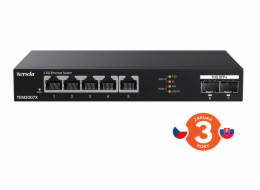
Tenda TEM2007X Přepíná data pomocí 5ti portů RJ45 a 2x optického SFP+ slotu. 5 RJ45 portů 100/1000/2500 Mb/s a 2x SFP+ slot s rychlostí 100/1000/10 000 Mb/s. Switch má ochranu proti přepětí 6kV. Podpora přepojování uzlů v módu Store-and-Forward. Je vhodná jak do menších a středních firem, tak i do větších domácností. Technická specifikace Standardy a protokoly: IEEE802.3, IEEE802.3u, IEEE802.3ab, IEEE802.3x, IEEE802.3bz, IEEE802.3ae, IEEE802.3z Porty: 5x 100/1000/2500 Mbps porty RJ45 auto-negace Porty SFP+: 2x SFP+ 1000/2500/10 000 Mb/s Celková propustnost: 65 Gbps Velikost tabulky MAC adresace: 16K Mód přepínání: Store-And-Forward LED Indikace: 5x Aktivita portu, 5x Linka portu, 2x 1G/2,5 pro SFP, 2x 10G pro SFP, 1x Napájení Napájení: vstup 100 až 240 V, AC 50/60 Hz pro napájecí adaptér Paketová propustnost: 48,4 Mpps Spotřeba: max. 12 W Rozměry: 177 mm x 104 mm x 26 mm(L*W*H) Ochrana proti přepětí: 6 000 V Umístění: na stěnu, desktop Uchycení do Racku: ne Provozní teplota: 0° až 45 °C Vlhkost: 10%-90%RH (nekondenzující) Certifikace: FCC/CE/RoHS
Dodání 3-5 dní
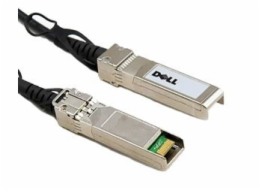
Dell SFP+ 10 Gbit 3 m; Twinaxiální kabel od společnosti Dell slouží k propojování na krátké vzdálenosti v rámci racku a mezi sousedními racky. Kabel má délku 3 m. ZÁKLADNÍ SPECIFIKACE; For...
Skladem v eshopu
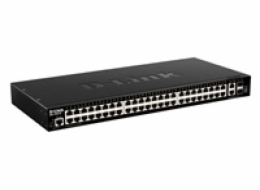
D-Link DGS-1520-52 Smart Managed Switch 48 ports GE + 2 10GE ports + 2 SFP+ D-Link DGS-1520-52 je stohovatelný 52-portový L3 Gigabit Ethernet inteligentní řízený přepínač s 48 Gigabit porty RJ-45 a 4x 10G porty (2x RJ-45 a 2x SFP+) pro uplink nebo HW
Dodání 3 dny
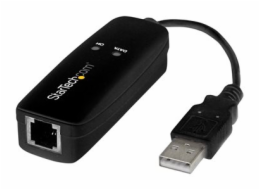
StarTech USB 2.0 Fax Modem, 56K External Hardware Dial Up V.92 Modem/Dongle/Adapter, Computer/Laptop Fax Modem, USB to Telephone Jack, USB Data Modem, Network Fax/CMR/POS
Skladem-dodání 2-4 dní
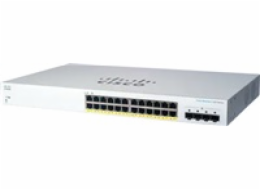
Cisco switch CBS220-24P-4G - REFRESH CISCO REFRESH jsou repasované produkty, které společnost CISCO dodává s certifikací kvality, zárukou a servisní podporou odpovídající ekvivalentnímu novému produktu Řada Cisco Business 220 jsou jednoduché a cenově dostupné chytré switche pro sítě podnikové třídy. Díky podpoře mobilních aplikací, nástroji Cisco Business Dashboard a několika možnostem PoE+ poskytuje CBS220 robustní síť v rámci omezeného rozpočtu. Stránky produktu: CBS220-24P-4G Quick start guide: Quick start guide Switching capacity Forwarding rate in millions of packets per second (mpps; 64-byte packets) 41,66 Switching capacity in Gigabits per second (Gbps) 56 Layer 2 switching MAC table Up to 8,192 Media Access Control (MAC) addresses Spanning Tree Protocol (STP) Standard 802.1d Spanning Tree support, enabled by default Fast convergence using 802.1w (Rapid Spanning Tree [RSTP]) Multiple Spanning Tree instances using 802.1s (MSTP) 16 instances are supported Port grouping Support for IEEE 802.3ad Link Aggregation Control Protocol (LACP) Up to 8 groups Up to 8 ports per group with 16 candidate ports for each (dynamic) 802.3ad link aggregation Load balance based on source and destination MAC address, or source and destination MAC/IP VLAN Support for up to 256 Virtual Local Area Networks (VLANs) simultaneously Port-based and 802.1Q tag-based VLANs Management VLAN Guest VLAN Auto voice VLAN Voice traffic is automatically assigned to a voice-specific VLAN and treated with appropriate levels of QoS QinQ VLAN VLANs transparently cross a service provider network while isolating traffic among customers Generic VLAN Registration Protocol (GVRP) and Generic Attribute Registration Protocol (GARP) Protocols for automatically propagating and configuring VLANs in a bridged domain Head-of-Line (HOL) blocking HOL blocking prevention Jumbo frame Frame sizes up to 9,216 supported Loopback detection Loopback detection provides protection against loops by transmitting loop protocol packets out of ports on which loop protection has been enabled. It operates independently of STP. Automatic Media-Dependent Interface Crossover (MDIX) Automatically adjusts transmit and receive pairs if an incorrect cable type (crossover or straight-through) is installed. Security ACLs Drop or rate limit based on source and destination MAC, VLAN ID or IP address, protocol, port, Differentiated Services Code Point (DSCP)/IP precedence, Transmission Control Protocol (TCP)/ User Datagram Protocol (UDP) source and destination ports, 802.1p priority, Ethernet type, Internet Control Message Protocol (ICMP) packets, Internet Group Management Protocol (IGMP) packets, TCP flag Support up to 512 rules Port security Creates the ability to lock source MAC addresses to ports; limits the number of learned MAC addresses IEEE 802.1X (authenticator role) 802.1X: Remote Authentication Dial-in User Service (RADIUS) authentication; guest VLAN; Single-host, multiple-host, and multisession mode RADIUS, TACACS+ Supports RADIUS and Terminal Access Controller Access Control System (TACACS) authentication; switch functions as a client MAC address filtering Supported Storm control Broadcast, multicast, and unknown unicast DoS protection DOS attack prevention STP Bridge Protocol Data Unit (BPDU) Guard This security mechanism protects the network from invalid configurations. A port enabled for BPDU Guard is shut down if a BPDU message is received on that port. Spanning Tree Loop Guard This feature provides additional protection against Layer 2 forwarding loops (STP loops). Secure Shell (SSH) Protocol SSH is a secure replacement for Telnet traffic. SCP also uses SSH. SSH v1 and v2 are supported. Secure Sockets Layer (SSL) SSL support: Encrypts all HTTPS traffic, allowing highly secure access to the browser-based management GUI in the switch QoS Priority levels 8 hardware queues per port Scheduling Strict priority and Weighted Round-Robin (WRR) queue assignment based on DSCP and class of service (802.1p/CoS) Class of service Port-based; 802.1p VLAN priority-based; IPv4/v6 IP precedence, Type of Service (ToS), and DSCP-based; Differentiated Services (DiffServ); classification and re-marking ACLs, trusted QoS Rate limiting Ingress policer; egress shaping and rate control; per VLAN, per port, and flow-based Congestion avoidance A TCP congestion avoidance algorithm is required to reduce and prevent global TCP loss synchronization. Multicast Internet Group Management Protocol (IGMP) Versions 1, 2, and 3 Snooping IGMP limits bandwidth-intensive multicast traffic to only the requesters; supports 256 multicast groups IGMP querier IGMP querier is used to support a Layer 2 multicast domain of snooping switches in the absence of a multicast router Standards Standards IEEE 802.3 10BASE-T Ethernet, IEEE 802.3u 100BASE-TX Fast Ethernet, IEEE 802.3ab 1000BASE-T Gigabit Ethernet, IEEE 802.3ad LACP, IEEE 802.3z Gigabit Ethernet, IEEE 802.3x Flow Control, IEEE 802.1D (STP, GARP, and GVRP), IEEE 802.1Q/p VLAN, IEEE 802.1w RSTP, IEEE 802.1s Multiple STP, IEEE 802.1X Port Access Authentication, IEEE 802.3af, IEEE 802.3at, RFC 768, Request for Comments (RFC) 783, RFC 791, RFC 792, RFC 793, RFC 813, RFC 879, RFC 896, RFC 826, RFC 854, RFC 855, RFC 856, RFC 858, RFC 894, RFC 919, RFC 922, RFC 920, RFC 950, RFC 1042, RFC 1071, RFC 1123, RFC 1141, RFC 1155, RFC 1157, RFC 1350, RFC 1533, RFC 1541, RFC 1624, RFC 1700, RFC 1867, RFC 2030, RFC 2616, RFC 2131, RFC 2132, RFC 3164, RFC 3411, RFC 3412, RFC 3413, RFC 3414, RFC 3415, RFC 2576, RFC 4330, RFC 1213, RFC 1215, RFC 1286, RFC 1442, RFC 1451, RFC 1493, RFC 1573, RFC 1643, RFC 1757, RFC 1907, RFC 2011, RFC 2012, RFC 2013, RFC 2233, RFC 2618, RFC 2665, RFC 2666, RFC 2674, RFC 2737, RFC 2819, RFC 2863, RFC 1157, RFC 1493, RFC 1215, RFC 3416 IPv6 IPv6 IPv6 host mode IPv6 over Ethernet IPv6/IPv4 Dual Stack IPv6 neighbor and router discovery (ND) IPv6 stateless address auto-configuration Path Maximum Transmission Unit (MTU) discovery Duplicate Address Detection (DAD) ICMP version 6 IPv6 ACL Drop or rate limit IPv6 packets in hardware IPv6 QoS Prioritize IPv6 packets in hardware Multicast Listener Discovery (MLD v1/2) Snooping Deliver IPv6 multicast packets only to the required receivers IPv6 applications Web/SSL, Telnet server/SSH, DHCP Client, DHCP Autoconfig, Cisco Discovery Protocol (CDP), Link Layer Discovery Protocol (LLDP) IPv6 Requests for Comments (RFCs) supported RFC 4443 (which obsoletes RFC2463) - ICMP version 6 RFC 4291 (which obsoletes RFC 3513) - IPv6 address architecture RFC 4291 - IPv6 addressing architecture RFC 2460 - IPv6 specification RFC 4861 (which obsoletes RFC 2461) - Neighbor discovery for IPv6 RFC 4862 (which obsoletes RFC 2462) - IPv6 stateless address auto-configuration RFC 1981 - Path MTU discovery RFC 4007 - IPv6 scoped address architecture RFC 3484 - Default address selection mechanism Management Cisco Business Dashboard Support direct management with Cisco Business Dashboard and mobile app. Eliminates the need to set up a separate hardware or virtual machine for the Cisco Business Dashboard Probe on site. Cisco Business mobile app Mobile app for Cisco Business Switch and Wireless products. Helps to set up a local network in minutes and provide easy management at your fingertips. Cisco Network Plug and Play (PnP) agent The Cisco Network Plug and Play solution provides a simple, secure, unified, and integrated offering to ease new branch or campus device rollouts or for provisioning updates to an existing network. The solution provides a unified approach to provision Cisco routers, switches
Skladem v eshopu
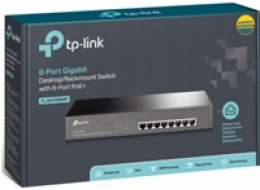
TP-Link switch TL-SG1008MP 8portový gigabitový stolní switch s 8 porty PoE + TL-SG1008MP je 8portový gigabitový stolní/rackový switch, přičemž všech 8 portů podporuje standard napájení PoE+. Zařízení představuje snadné řešení, jak rozšířit kabelovou síť, neboť umožňuje přenášet napájení i data pomocí jediného ethernetovém kabelu. S celkovým rozpočtem napájení 153 W, tzn. až 30 W na každý port, switch TL-SG1008MP dokáže napájet větší počet zařízení s vysokým odběrem, jako jsou přístupové body, IP kamery nebo IP telefony. Navíc s inovativní technologií úspory energie je switch TL-SG1008MP schopen snížit spotřebu energie, což z něj činí ekologické řešení pro vaši podnikovou síť. 8x 10/100/1000Mb/s RJ45 porty Je vybaven 8 podporovanými porty PoE + pro přenos dat a napájení přes jediný kabel Pracuje s IEEE 802.3af / na kompatibilních zařízeních, rozšiřuje domácí a kancelářské sítě Inovativní a efektivní technologie úspory energie snižuje spotřebu energie Podporuje standard PoE + s celkovou spotřebou 153W a až 30W na port Zapojení typu Plug and play design, bez nutnosi konfigurace Více informací o TP-LINK PoE technologii >? Stránky produktu: https://www.tp-link.com/cz/business-networking/unmanaged-switch/tl-sg1008mp/ Technické specifikace HARDWARE FEATURES Interface 8 10/100/1000Mbps RJ45 Ports AUTO Negotiation/AUTO MDI/MDIX Network Media 10BASE-T: UTP category 3, 4, 5 cable (maximum 100m) EIA/TIA-568 100? STP (maximum 100m) 100BASE-TX: UTP category 5, 5e cable (maximum 100m) EIA/TIA-568 100? STP (maximum 100m) 1000BASE-T: UTP category 5, 5e, 6 or above cable (maximum 100m) EIA/TIA-568 100? STP (maximum 100m) Fan Quantity 1 Physical Security Lock No Power Supply 100-240VAC, 50/60Hz Packet Forwarding Rate 11.904 Mpps PoE+ Ports(RJ45) Standard: 802.3af/at compliant PoE+ Ports: 8 Ports Power Supply: 153W Mac Address Table 4K Buffer Size 1.5Mbits Jumbo Frame 16 KB Switching Capacity 16Gbps Dimensions ( W x D x H ) 11.6*7.1*1.7 in. (294*180*44 mm) Mounting Desktop/Rack Mountable Max Power Consumption 8.57W(220V/50Hz. no PD connected) 173.65W(110V/60Hz. with 153W PD connected) Max Heat Dissipation 29.22BTU/h(no PD connected) 592.15BTU/h(with 153W PD connected) SOFTWARE FEATURES Advanced Features Compatible With IEEE 802.3af/at Compliant PDs Priority Function Mac Address Auto-Learning And Auto-Aging IEEE802.3x Flow Control For Full-Duplex Mode And Backpressure For Half-Duplex Mode Transfer Method Store-And-Forward OTHERS Certification FCC, CE, RoHS Package Contents TL-SG1008MP, Power Cord, Installation Guide, Rackmount Kit, Rubber Feet Environment Operating Temperature: 0°C~50°C (32°F~122°F) Storage Temperature: -40°C~70°C (-40°F~158°F) Operating Humidity: 10%~90% non-condensing Storage Humidity: 5%~90% non-condensing
Skladem, dodání 2-4 dní
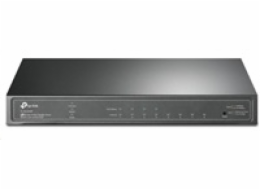
TP-Link JetStream switch TL-SG2008P 8portový gigabitový smart switch JetStream se 4 porty PoE+ TL-SG2008P je plně kompatibilní se zařízeními PoE, jako jsou IP kamery, přístupové body a IP telefony. Lze také použít s kabelovými zařízeními bez PoE k zajištění gigabitových připojení pro zařízení, jako jsou počítače, tiskárny a IPTV. PoE s rozpočtem napájení 62 W - 4 porty PoE+ vyhovující standardu 802.3at/af s celkovým napájecím výkonem 62 W. Plně gigabitové porty - 4 gigabitové porty PoE+ a 4 gigabitové porty bez PoE poskytují vysokorychlostní připojení. Integrováno do platformy Omada SDN - Funkce ZTP (Zero-Touch Provisioning), centralizovaná cloudová správa a inteligentní monitorování Centralizovaná správa - Cloudový přístup a aplikace Omada pro maximální pohodlí a snadnou správu. Robustní strategie zabezpečení - Funkce vázání na adresu IP-MAC, ACL, zabezpečení portů, ochrana proti útokům DoS, funkce Storm Control, funkce DHCP Snooping, ověřování protokolem 802.1X a Radius a další funkce. Optimalizovaný přenos hlasu a videa v aplikacích - L2/L3/L4 QoS a funkce IGMP Snooping. Více informací o technologii TP-Link PoE > Více informací o Omada Cloud SDN>? Stránky produktu: https://www.tp-link.com/cz/business-networking/omada-sdn-switch/tl-sg2008p/ Technické specifikace HARDWARE FEATURES Standards and Protocols IEEE 802.3i, IEEE 802.3u, IEEE 802.3ab, IEEE 802.3ad, IEEE 802.3af, IEEE 802.3at, IEEE 802.3x, IEEE 802.1d, IEEE 802.1s, IEEE 802.1w, IEEE 802.1q, IEEE 802.1p, IEEE 802.1x Interface • 8× 10/100/1000 Mbps RJ45 Ports (Ports 1–4 Support 802.3at/af PoE+) • Auto-Negotiation/Auto MDI/MDIX Network Media • 10BASE-T: UTP category 3, 4, 5 cable (maximum 100m) • 100BASE-TX/1000Base-T: UTP category 5, 5e or above cable (maximum 100m) Fan Quantity Fanless Power Supply • External Power Adapter (Output: 53.5 VDC/ 1.31 A) Power Consumption • 7.9 W (220 V/50 Hz) (no PD connected) • 79.2 W (220 V/50 Hz) (with 62 W PD connected) PoE Ports (RJ45) • Standard: 802.3af/at compliant • PoE Ports: 4 Ports • Power Supply: 62 W Dimensions ( W x D x H ) 8.2 x 4.9 x 1.0 in (209 x 126 x 26mm) Max Power Consumption • V1: 69.7 W (220 V/50 Hz) (with 62 W PD connected); 7.9 W (220 V/50 Hz) (no PD connected) • V2: 73.8 W (220 V/50 Hz) (with 62 W PD connected) • V3: 77.3 W (110 V/60 Hz) (with 62 W PD connected) Max Heat Dissipation • V1: 237.82 BTU/hr (220 V/50 Hz) (with 62 W PD connected); 26.95 BTU/hr (220 V/50 Hz) (no PD connected) • V2: 251.84 BTU/hr (220 V/50 Hz) (with 62 W PD connected) • V3: 263.6 BTU/hr (110 V/60 Hz) (with 62 W PD connected) PERFORMANCE Bandwidth/Backplane 16 Gbps MAC Address Table 8k Packet Buffer Memory 4.1 Mbit Jumbo Frame 9 KB SOFTWARE FEATURES Quality of Service • 802.1p CoS/DSCP priority • 8 priority queues • Priority Schedule Mode - SP (Strict Priority) - WRR (Weighted Round Robin) • Queue Weight Config • Bandwidth Control - Port/Flow-based Rating Limit • Smoother Performance • Storm Control - Multiple Control Modes(kbps/ratio) - Broadcast/Multicast/Unknown-Unicast Control L2 and L2+ Features • DHCP Relay - DHCP VLAN Relay • DHCP L2 Relay • Link Aggregation - Static link aggregation - 802.3ad LACP - Up to 8 aggregation groups and up to 8 ports per group • Spanning Tree Protocol - 802.1D STP - 802.1w RSTP - 802.1s MSTP - STP Security: TC Protect, BPDU Filter/Protect, Root Protect • Loopback Detection • Flow Control - 802.3x Flow Control • Mirroring - Port Mirroring - CPU Mirroring - One-to-One - Many-to-One - Flow-Based - Ingress/Egress/Both • Device Link Detect Protocol (DLDP) • 802.1ab LLDP/ LLDP-MED L2 Multicast • 511 IPv4, IPv6 shared multicast groups • IGMP Snooping - IGMP v1/v2/v3 Snooping - Fast Leave - IGMP Snooping Querier - Static Group Config • Multicast VLAN Registration (MVR) • Multicast Filtering • MLD Snooping - MLD v1/v2 Snooping - Fast Leave - MLD Snooping Querier - Static Group Config • Limited IP Multicast (256 profiles and 16 entries per profile) IPv6 Support • IPv6 Dual IPv4/IPv6 • Multicast Listener Discovery (MLD) Snooping • IPv6 neighbor discovery (ND) • Path maximum transmission unit (MTU) discovery • Internet Control Message Protocol (ICMP) version 6 • TCPv6/UDPv6 • IPv6 applications - DHCPv6 Client - Ping6 - Tracert6 - Telnet (v6) - IPv6 SNMP - IPv6 SSH - IPv6 SSL - Http/Https - IPv6 TFTP VLAN • VLAN Group - Max. 4K VLAN Groups • 802.1Q tag VLAN • MAC VLAN • Protocol VLAN • GVRP • Voice VLAN Access Control List • Support up to 230 entries • Time-Range - Time Slice - Week Time-Range - Absolute Time-Range - Holiday • Time-based ACL • MAC ACL - Source MAC - Destination MAC - VLAN ID - User Priority - Ether Type • IP ACL - Source IP - Destination IP - IP Protocol - TCP Flag - TCP/UDP Source Port - TCP/UDP Destination Port - DSCP/IP TOS • IPv6 ACL • Combined ACL • Rule Operation - Permit/Deny • Policy Action - Mirror - Rate Limit - Redirect - QoS Remark • ACL Rules Binding - Port Binding - VLAN Binding • Actions for flows - Mirror (to supported interface) - Redirect (to supported interface) - Rate Limit - QoS Remark Security • AAA • 802.1X - Port-based authentication - MAC (Host) based authentication - Authentication Method includes PAP/EAP-MD5 - MAB - Guest VLAN - Support Radius authentication and accountability • IP/IPv6-MAC Binding - 512 Binding Entries - DHCP Snooping - DHCPv6 Snooping - ARP Inspection - ND Detection • IP Source Guard - 253 Entries - Source IP+Source MAC • IPv6 Source Guard - 183 Entries - Source IPv6 Address+Source MAC • DoS Defend • Static/Dynamic/Permanent Port Security - Up to 64 MAC addresses per port • Broadcast/Multicast/Unicast Storm Control - kbps/ratio control mode • Port Isolation • Secure web management through HTTPS with SSLv3/TLS 1.2 • Secure Command Line Interface (CLI) management with SSHv1/SSHv2 • IP/Port/MAC-based access control Advanced Features • Automatic Device Discovery • Batch Configuration • Batch Firmware Upgrading • Intelligent Network Monitoring • Abnormal Event Warnings • Unified Configuration • Reboot Schedule MIBs • MIB II (RFC1213) • Bridge MIB (RFC1493) • P/Q-Bridge MIB (RFC2674) • Radius Accounting Client MIB (RFC2620) • Radius Authentication Client MIB (RFC2618) • Remote Ping, Traceroute MIB (RFC2925) • Support TP-Link private MIBs • RMON MIB(RFC1757, rmon 1,2,3,9) MANAGEMENT Omada App Yes Centralized Management • Omada Cloud-Based Controller • Omada Hardware Controller (OC300) • Omada Hardware Controller (OC200) • Omada Software Controller Cloud Access Yes (Through OC300, OC200, Omada Cloud-Based Controller, or Omada Software Controller) Zero-Touch Provisioning Yes. Requiring the use of Omada Cloud-Based Controller (Supported by TL-SG2008P v1, v3 and above, while is not supported by TL-SG2008P v2) Management Features • Web-based GUI • Command Line Interface (CLI) through telnet • SNMPv1/v2c/v3 • SNMP Trap/Inform • RMON (1,2,3,9 groups) • SDM Template • DHCP/BOOTP Client • Dual Image, Dual Configuration • CPU Monitoring • Cable Diagnostics • EEE • SNTP • System Log OTHERS Certification CE, FCC, RoHS Package Contents • TL-SG2008P • Power Adapter • Installation Guide • Rubber Feet System Requirements Microsoft Windows 98SE, NT, 2000, XP, Vista™ or Windows 7/8/10, MAC OS, NetWare, UNIX or Linux. Environment • Operating Temperature:
Skladem, dodání 2-4 dní

Cisco switch CBS350-24NGP-4X-EU - REFRESH CISCO REFRESH jsou repasované produkty, které společnost CISCO dodává s certifikací kvality, zárukou a servisní podporou odpovídající ekvivalentnímu novému produktu Řízené switche řady Cisco Business 350 jsou spolehlivými stavebními prvky pro sítě malých firem. Díky intuitivnímu ovládacímu panelu, pokročilým funkcím a všudypřítomnému zabezpečení urychlují spravované switche řady Cisco Business 350 vaši digitální transformaci. Záruka platná do End of Support 31. 10. 2029. Oznámení End of Life pro CISCO CBS350 Stránky produktu: CBS350-24NGP-4X-EU Quick start guide: Quick start guide Switching capacity and forwarding rate (All switches are wire speed and nonblocking) Capacity in Millions of Packets per Second (mpps) (64-byte packets) 142,85 Switching Capacity in Gigabits per Second (Gbps) 192 Layer 2 switching Spanning Tree Protocol (STP) Standard 802.1d Spanning Tree support Fast convergence using 802.1w (Rapid Spanning Tree [RSTP]), enabled by default Multiple Spanning Tree instances using 802.1s (MSTP); 8 instances are supported Per-VLAN Spanning Tree Plus (PVST+) and Rapid PVST+ (RPVST+); 126 instances are supported Port grouping/link aggregation Support for IEEE 802.3ad Link Aggregation Control Protocol (LACP) Up to 8 groups Up to 8 ports per group with 16 candidate ports for each (dynamic) 802.3ad link aggregation VLAN Support for up to 4,094 VLANs simultaneously Port-based and 802.1Q tag-based VLANs; MAC-based VLAN; protocol-based VLAN; IP subnet-based VLAN Management VLAN Private VLAN with promiscuous, isolated, and community port Private VLAN Edge (PVE), also known as protected ports, with multiple uplinks Guest VLAN, unauthenticated VLAN Dynamic VLAN assignment via RADIUS server along with 802.1x client authentication CPE VLAN Voice VLAN Voice traffic is automatically assigned to a voice-specific VLAN and treated with appropriate levels of QoS. Voice Services Discovery Protocol (VSDP) delivers network wide zero-touch deployment of voice endpoints and call control devices Multicast TV VLAN Multicast TV VLAN allows the single multicast VLAN to be shared in the network while subscribers remain in separate VLANs. This feature is also known as Multicast VLAN Registration (MVR) VLAN Translation Support for VLAN One-to-One Mapping. In VLAN One-to-One Mapping, on an edge interface customer VLANs (C-VLANs) are mapped to service provider VLANs (S-VLANs) and the original C-VLAN tags are replaced by the specified S-VLAN Q-in-Q VLANs transparently cross a service provider network while isolating traffic among customers Selective Q-in-Q Selective Q-in-Q is an enhancement to the basic Q-in-Q feature and provides, per edge interface, multiple mappings of different C-VLANs to separate S-VLANs Selective Q-in-Q also allows configuring of Ethertype (Tag Protocol Identifier [TPID]) of the S-VLAN tag Layer 2 protocol tunneling over Q-in-Q is also supported Generic VLAN Registration Protocol (GVRP)/Generic Attribute Registration Protocol (GARP) Generic VLAN Registration Protocol (GVRP) and Generic Attribute Registration Protocol (GARP) enable automatic propagation and configuration of VLANs in a bridged domain Unidirectional Link Detection (UDLD) UDLD monitors physical connection to detect unidirectional links caused by incorrect wiring or cable/port faults to prevent forwarding loops and black holing of traffic in switched networks Dynamic Host Configuration Protocol (DHCP) Relay at Layer 2 Relay of DHCP traffic to DHCP server in different VLAN; works with DHCP Option 82 Internet Group Management Protocol (IGMP) versions 1, 2, and 3 snooping IGMP limits bandwidth-intensive multicast traffic to only the requesters; supports 2K multicast groups (source-specific multicasting is also supported) IGMP Querier IGMP querier is used to support a Layer 2 multicast domain of snooping switches in the absence of a multicast router IGMP proxy The IGMP proxy provides a mechanism for multicast forwarding based on IGMP membership information without the need for more complicated multicast routing protocols. Head-of-Line (HOL) blocking HOL blocking prevention Loopback Detection Loopback detection provides protection against loops by transmitting loop protocol packets out of ports on which loop protection has been enabled. It operates independently of STP Layer 3 IPv4 routing Wirespeed routing of IPv4 packets Up to 990 static routes and up to 128 IP interfaces IPv6 routing Wirespeed routing of IPv6 packets Layer 3 Interface Configuration of Layer 3 interface on physical port, Link Aggregation (LAG), VLAN interface, or loopback interface Classless Interdomain Routing (CIDR) Support for classless interdomain routing RIP v2 Support for Routing Information Protocol version 2 for dynamic routing Policy-Based Routing (PBR) Flexible routing control to direct packets to different next hop based on IPv4 or IPv6 Access Control List (ACL) DHCP Server Switch functions as an IPv4 DHCP server serving IP addresses for multiple DHCP pools/scopes Support for DHCP options DHCP relay at Layer 3 Relay of DHCP traffic across IP domains User Datagram Protocol (UDP) relay Relay of broadcast information across Layer 3 domains for application discovery or relaying of Bootstrap Protocol (BOOTP)/DHCP packets Stacking Hardware stacking Up to 4 units in a stack. Up to 200 ports managed as a single system with hardware failover High availability Fast stack failover delivers minimal traffic loss. Support link aggregation across multiple units in a stack Plug-and-play stacking configuration/management Active/standby for resilient stack control Autonumbering Hot swap of units in stack Ring and chain stacking options, auto stacking port speed, flexible stacking port options High-speed stack interconnects Cost-effective high-speed 10G fiber interfaces. Security ecure Shell (SSH) Protocol SSH is a secure replacement for Telnet traffic. Secure Copy Protocol (SCP) also uses SSH. SSH v1 and v2 are supported Secure Sockets Layer (SSL) SSL support: Encrypts all HTTPS traffic, allowing highly secure access to the browser-based management GUI in the switch IEEE 802.1X (Authenticator role) 802.1X: Remote Authentication Dial-In User Service (RADIUS) authentication and accounting, MD5 hash; guest VLAN; unauthenticated VLAN, single/multiple host mode and single/multiple sessions Supports time-based 802.1X; dynamic VLAN assignment; MAC authentication IEEE 802.1X supplicant A switch can be configured to act as a supplicant to another switch. This enables extended secure access in areas outside the wiring closet (such as conference rooms) Web-based authentication Web-based authentication provides network admission control through web browser to any host devices and operating systems STP Bridge Protocol Data Unit (BPDU) Guard A security mechanism to protect the network from invalid configurations. A port enabled for BPDU Guard is shut down if a BPDU message is received on that port. This avoids accidental topology loops STP Root Guard This prevents edge devices not in the network administrator’s control from becoming Spanning Tree Protocol root nodes STP loopback guard Provides additional protection against Layer 2 forwarding loops (STP loops) DHCP snooping Filters out DHCP messages with unregistered IP addresses and/or from unexpected or untrusted interfaces. This prevents rogue devices from behaving as DHCP Servers. IP Source Guard (IPSG) When IP Source Guard is enabled at a port, the switch filters out IP packets received from the port if the source IP addresses of the packets have not been statically configured or dynamically learned from DH
Skladem v eshopu
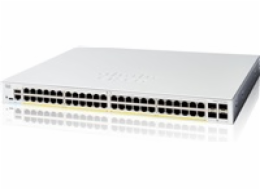
Cisco Catalyst switch C1300-48P-4X CISCO REFRESH jsou repasované produkty, které společnost CISCO dodává s certifikací kvality, zárukou a servisní podporou odpovídající ekvivalentnímu novému produktu Cisco Catalyst řady 1300 jsou managovatelné switche Gigabit Ethernet Layer 3 podnikové třídy určené pro malé a střední podniky a pobočky. Tyto jednoduché, flexibilní a bezpečné switche jsou ideální pro nasazení mimo rozvodnou skříň. Řada Catalyst 1300 pracuje na přizpůsobeném softwaru operačního systému Linux s intuitivním grafickým rozhraním, který zjednodušuje nastavení sítě a pokročilými funkcemi, které urychlují digitální transformaci, zatímco všudypřítomné zabezpečení chrání kritické obchodní transakce. Přepínače řady 1300 poskytují ideální kombinaci cenové dostupnosti a možností pro malé a střední podniky a pomáhají vám vytvořit efektivnější a lépe propojenou pracovní sílu. Stránky produktu: C1300-48P-4X Performance Switching capacity and forwarding rate (All switches are wire-speed and nonblocking) Capacity in millions of packets per second (mpps) (64-byte packets) 130.94 Switching capacity in gigabits per second (Gbps) 176.0 Layer 2 switching Spanning Tree Protocol (STP) Standard 802.1d spanning tree support Fast convergence using 802.1w (Rapid Spanning Tree Protocol [RSTP]), enabled by default Multiple spanning tree instances using 802.1s (MSTP); 8 instances are supported Per-VLAN Spanning Tree Plus (PVST+); 126 instances are supported Rapid PVST+ (RPVST+); 126 instances are supported Port grouping/link aggregation Support for IEEE 802.3ad Link Aggregation Control Protocol (LACP) Up to 8 groups Up to 8 ports per group with 16 candidate ports for each (dynamic) 802.3ad link aggregation VLAN Support for up to 4093 VLANs simultaneously Port-based and 802.1Q tag-based VLANs, MAC-based VLAN, protocol-based VLAN, IP subnet-based VLAN Management VLAN Private VLAN with promiscuous, isolated, and community port Private VLAN Edge (PVE), also known as protected ports, with multiple uplinks Guest VLAN, unauthenticated VLAN Dynamic VLAN assignment via RADIUS server along with 802.1X client authentication Customer premises equipment (CPE) VLAN Auto surveillance VLAN (ASV) Voice VLAN Voice traffic is automatically assigned to a voice-specific VLAN and treated with appropriate levels of QoS. Voice Services Discovery Protocol (VSDP) delivers networkwide zero-touch deployment of voice endpoints and call control devices Multicast TV VLAN Multicast TV VLAN allows the single multicast VLAN to be shared in the network while subscribers remain in separate VLANs. This feature is also known as Multicast VLAN Registration (MVR) VLAN translation Support for VLAN one-to-one mapping, in which customer VLANs (C-VLANs) on an edge interface are mapped to service provider VLANs (S-VLANs), and the original C-VLAN tags are replaced by the specified S-VLAN Q-in-Q VLANs transparently cross a service provider network while isolating traffic among customers Selective Q-in-Q Selective Q-in-Q is an enhancement to the basic Q-in-Q feature and provides, per edge interface, multiple mappings of different C-VLANs to separate S-VLANs Selective Q-in-Q also allows configuring of the Ethertype (Tag Protocol Identifier [TPID]) of the S-VLAN tag Layer 2 protocol tunneling over Q-in-Q is also supported Generic VLAN Registration Protocol (GVRP)/Generic Attribute Registration Protocol (GARP) GVRP and GARP enable automatic propagation and configuration of VLANs in a bridged domain Unidirectional Link UDLD monitors physical connections to detect unidirectional links caused by incorrect Detection (UDLD) wiring or cable/port faults to prevent forwarding loops and blackholing of traffic in switched networks DHCP relay at Layer 2 Relay of DHCP traffic to a DHCP server in a different VLAN; works with DHCP Option 82 Internet Group Management Protocol (IGMP) versions 1, 2, and 3 snooping IGMP limits bandwidth-intensive multicast traffic to only the requesters; it supports 2000 multicast groups (source-specific multicasting is also supported) IGMP querier IGMP querier is used to support a Layer 2 multicast domain of snooping switches in the absence of a multicast router IGMP proxy The IGMP proxy provides a mechanism for multicast forwarding based on IGMP membership information without the need for more complicated multicast routing protocols Head-of-Line (HOL) blocking HOL blocking prevention Loopback detection Loopback detection provides protection against loops by transmitting loop protocol packets out of ports on which loop protection has been enabled. It operates independently of STP Layer 3 IPv4 routing Wire-speed routing of IPv4 packets Up to 990 static routes and up to 128 IP interfaces IPv6 routing Wire-speed routing of IPv6 packets Layer 3 interface Configuration of a Layer 3 interface on a physical port, LAG, VLAN interface, or loopback interface Classless Interdomain Routing (CIDR) Support for CIDR Routing Information Protocol (RIP) v2 Support for RIP v2 for dynamic routing Policy-Based Routing (PBR) Flexible routing control to direct packets to a different next hop based on an IPv4 or IPv6 Access Control List (ACL) DHCP server Switch functions as an IPv4 DHCP server, serving IP addresses for multiple DHCP pools or scopes Support for DHCP options DHCP relay at Layer 3 Relay of DHCP traffic across IP domains User Datagram Protocol (UDP) relay Relay of broadcast information across Layer 3 domains for application discovery or relaying of Bootstrap Protocol (BOOTP)/DHCP packets Stacking Hardware stacking Up to 8 switches in a stack. Up to 200 ports managed as a single system with hardware failover Stacking is supported on the following models: Family 1: C1300-16P-4X, C1300-24T-4X, C1300-24P-4X, C1300-24FP-4X, C1300-48T-4X, C1300-48P-4X, C1300-48FP-4X, C1300-8MGP-2X, C1300-24MGP-4X, C1300-48MGP-4X Family 2: C1300-12XT-2X, C1300-12XS, C1300-16XTS, C1300-24XS, C1300-24XT, C1300-24XTS PIDs from the same Family can be stacked together. Cross-stacking between Families is not supported. High availability Fast stack failover delivers minimal traffic loss. Support for LAG across multiple units in a stack Plug-and-play stacking configuration/management Active/standby for resilient stack control Auto-numbering Hot swap of units in stack Ring and chain stacking options, auto stacking port speed, flexible stacking port options High-speed stack interconnects Cost-effective high-speed 10 Gigabit Ethernet fiber interfaces Security Secure Shell (SSH) Protocol SSH is a secure replacement for Telnet traffic. Secure Copy Protocol (SCP) also uses SSH. SSH v1 and v2 are supported Secure Sockets Layer (SSL) SSL support: Encrypts all HTTPS traffic, allowing highly secure access to the browser-based management GUI in the switch IEEE 802.1X (authenticator role) 802.1X: RADIUS authentication and accounting, MD5 hash, guest VLAN, unauthenticated VLAN, single/multiple host mode, and single/multiple sessions Supports time-based 802.1X, dynamic VLAN assignment, and MAC authentication IEEE 802.1X supplicant A switch can be configured to act as a supplicant to another switch. This enables extended secure access in areas outside the wiring closet (such as conference rooms) Web-based authentication Web-based authentication provides network admission control through a web browser to any host devices and operating systems STP Bridge Protocol Data Unit (BPDU) Guard A security mechanism to protect the network from invalid configurations. A port enabled for BPDU Guard is shut down if a BPDU message is received on that port. This avoids accidental topology loops STP Root Guard Prevents edge devices not in the
Skladem v eshopu
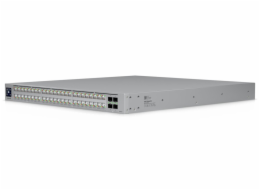
Ubiquiti UniFi Enterprise Campus 48 PoE 48portový L3 switch Etherlightning s podporou PoE+++ disponující vysokokapacitními připojeními 10G RJ-45 a 25G SFP28 pro systém s vysokou dostupností. Zařízení je vybaveno dvěma hot-swap napájecími mod...
Skladem, dodání 2-4 dní
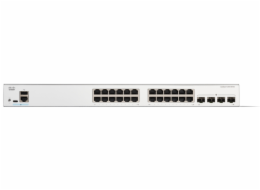
Cisco Catalyst switch C1200-24T-4G Řada Cisco Catalyst 1200 je další generací cenově dostupných chytrých přepínačů, které kombinují vysoký výkon a spolehlivost s kompletní sadou funkcí, které potřebujete pro malé a středně velké podnikové sítě. Přepínače fungují na přizpůsobeném softwaru operačního systému Linux a poskytují flexibilní možnosti správy, komplexní možnosti zabezpečení a funkce statického směrování na 3. vrstvě, které daleko přesahují možnosti neřízeného nebo levného přepínače a to za nižší cenu než u plně spravovaných přepínačů. Když potřebujete spolehlivé řešení pro sdílení online zdrojů a připojení počítačů, telefonů a bezdrátových přístupových bodů, chytré přepínače Catalyst řady 1200 poskytují ideální řešení za dostupnou cenu. Stránky produktu: C1200-24T-4G Performance Switching capacity and forwarding rate (All switches are wire-speed and nonblocking) Capacity in millions of packets per second (mpps) (64-byte packets) 41,66 Switching capacity in gigabits per second (Gbps) 56 Layer 2 switching Spanning Tree Protocol (STP) Standard 802.1d spanning tree support Fast convergence using 802.1w (Rapid Spanning Tree Protocol [RSTP]), enabled by default Multiple spanning tree instances using 802.1s (MSTP); 8 instances are supported Per-VLAN Spanning Tree Plus (PVST+); 126 instances are supported Rapid PVST+ (RPVST+); 126 instances are supported Port grouping/link aggregation Support for IEEE 802.3ad Link Aggregation Control Protocol (LACP) Up to 4 groups Up to 8 ports per group with 16 candidate ports for each (dynamic) 802.3ad Link Aggregation Group (LAG) VLAN Support for up to 255 active VLANs simultaneously Port-based and 802.1Q tag-based VLANs Management VLAN Guest VLAN Auto Surveillance VLAN (ASV) Voice VLAN Voice traffic is automatically assigned to a voice-specific VLAN and treated with appropriate levels of QoS. Voice Services Discovery Protocol (VSDP) delivers networkwide zero-touch deployment of voice endpoints and call control devices Generic VLAN Registration Protocol (GVRP) and Generic Attribute Registration Protocol (GARP) Enable automatically propagation and configuration of VLANs in a bridged domain Internet Group Management Protocol (IGMP) versions 1, 2, and 3 snooping Limits bandwidth-intensive multicast traffic to only the requesters; supports 255 multicast groups (source-specific multicasting is also supported) IGMP querier Used to support a Layer 2 multicast domain of snooping switches in the absence of a multicast router Head-of-Line (HOL) blocking HOL blocking prevention Loopback detection Provides protection against loops by transmitting loop protocol packets out of ports on which loop protection has been enabled. It operates independently of STP Layer 3 routing IPv4 routing Wire-speed routing of IPv4 packets Up to 32 static routes and up to 16 IP interfaces IPv6 routing Wire-speed routing of IPv6 packets Layer 3 interface Configuration of Layer 3 interface on physical port, LAG, VLAN interface, or loopback interface Classless Interdomain Routing (CIDR) Support for CIDR Dynamic Host Configuration Protocol (DHCP) relay at Layer 3 Relay of DHCP traffic across IP domains User Datagram Protocol (UDP) relay Relay of broadcast information across Layer 3 domains for application discovery or relaying of Bootstrap Protocol (BootP)/DHCP packets Security Secure Sockets Layer (SSL) Encrypts all HTTPS traffic, allowing secure access to the browser-based management GUI in the switch SSH Protocol SSH is a secure replacement for Telnet traffic. Secure Copy (SCP) also uses SSH. SSH v1 and v2 are supported. IEEE 802.1X (authenticator role) RADIUS authentication, guest VLAN, single/multiple host mode, and single/multiple sessions STP loopback guard Provides additional protection against Layer 2 forwarding loops (STP loops) Secure Core Technology (SCT) Ensures that the switch will receive and process management and protocol traffic no matter how much traffic is received Secure Sensitive Data (SSD) A mechanism to manage sensitive data (such as passwords, keys, and so on) securely on the switch, populating this data to other devices and a secure auto-configuration. Access to view the sensitive data as plain text or encrypted is provided according to the user-configured access level and the access method of the user Trustworthy systems Trustworthy systems provide a highly secure foundation for Cisco products Run-time defenses (Executable Space Protection [X-Space], Address Space Layout Randomization [ASLR], Built-In Object Size Checking [BOSC]) Port security Ability to lock source MAC addresses to ports and limit the number of learned MAC addresses RADIUS Supports RADIUS authentication for management access. Switch functions as a client Storm control Broadcast, multicast, and unknown unicast DoS prevention DoS attack prevention Multiple user privilege levels in CLI Level 1, 7, and 15 privilege levels ACLs Support for up to 512 rules Drop or rate limit based on source and destination MAC, VLAN ID, IPv4 or IPv6 address, IPv6 flow label, protocol, port, Differentiated Services Code Point (DSCP)/IP precedence, TCP/UDP source and destination ports, 802.1p priority, Ethernet type, Internet Control Message Protocol (ICMP) packets, IGMP packets, TCP flag; ACL can be applied on both ingress and egress sides Time-based ACLs supported Quality of service Priority levels 8 hardware queues Scheduling Strict priority and Weighted Round-Robin (WRR) queue assignment based on DSCP and Class of Service (802.1p/CoS) Class of service Port based, 802.1p VLAN priority based, IPv4/v6 IP precedence/Type of Service (ToS)/DSCP based, Differentiated Services (DiffServ), classification and re-marking ACLs, trusted QoS Rate limiting Ingress policer, egress shaping and rate control per VLAN, per port, and flow based Congestion avoidance A TCP congestion avoidance algorithm is required to reduce and prevent global TCP loss synchronization Standards Standards IEEE 802.3 10BASE-T Ethernet, IEEE 802.3u 100BASE-TX Fast Ethernet, IEEE 802.3ab 1000BASE-T Gigabit Ethernet, IEEE 802.3ad Link Aggregation Control Protocol, IEEE 802.3z Gigabit Ethernet, IEEE 802.3x Flow Control, IEEE 802.3 ad LACP, IEEE 802.1D (STP), IEEE 802.1Q/p VLAN, IEEE 802.1w RSTP, IEEE 802.1s Multiple STP, IEEE 802.1X Port Access Authentication, IEEE 802.3af, IEEE 802.3at, RFC 768, RFC 783, RFC 791, RFC 792, RFC 793, RFC 813, RFC 879, RFC 896, RFC 826, RFC 854, RFC 855, RFC 856, RFC 858, RFC 894, RFC 919, RFC 920, RFC 922, RFC 950, RFC 951, RFC 1042, RFC 1071, RFC 1123, RFC 1141, RFC 1155, RFC 1157, RFC 1213, RFC 1215, RFC 1286, RFC 1350, RFC 1442, RFC 1451, RFC 1493, RFC 1533, RFC 1541, RFC 1542, RFC 1573, RFC 1624, RFC 1643, RFC 1700, RFC 1757, RFC 1867, RFC 1907, RFC 2011, RFC 2012, RFC 2013, RFC 2030, RFC 2131, RFC 2132, RFC 2233, RFC 2576, RFC 2616, RFC 2618, RFC 2665, RFC 2666, RFC 2674, RFC 2737, RFC 2819, RFC 2863, RFC 3164, RFC 3411, RFC 3412, RFC 3413, RFC 3414, RFC 3415, RFC 3416, RFC 4330 IPv6 IPv6 IPv6 host mode IPv6 over Ethernet Dual IPv6/IPv4 stack IPv6 Neighbor Discovery (ND) IPv6 stateless address auto-configuration Path Maximum Transmission Unit (MTU) discovery Duplicate Address Detection (DAD) ICMP version 6 IPv6 over IPv4 network with Intrasite Automatic Tunnel Addressing Protocol (ISATAP) support IPv6 QoS Prioritizes IPv6 packets in hardware IPv6 ACL Drop or rate-limit IPv6 packets in hardware Multicast Listener Discovery (MLD v1/2) snooping Delivers IPv6 multicast packets only to the required receivers IPv6 applications Web/SSL, Telnet server/SSH, Ping, Traceroute, Simple Network Time Protocol (SNTP), Trivial File Transfer Protocol (T
Skladem, dodání 2-4 dní
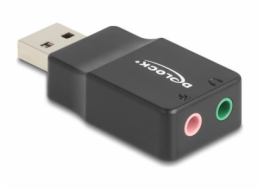
External USB Sound Card with USB-A male
Skladem-dodání 2-4 dní
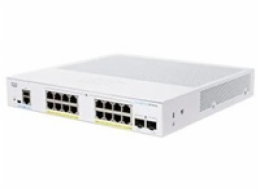
Cisco switch CBS350-16FP-2G-EU - REFRESH CISCO REFRESH jsou repasované produkty, které společnost CISCO dodává s certifikací kvality, zárukou a servisní podporou odpovídající ekvivalentnímu novému produktu Řízené switche řady Cisco Business 350 jsou spolehlivými stavebními prvky pro sítě malých firem. Díky intuitivnímu ovládacímu panelu, pokročilým funkcím a všudypřítomnému zabezpečení urychlují spravované switche řady Cisco Business 350 vaši digitální transformaci. Záruka platná do End of Support 31. 10. 2029. Oznámení End of Life pro CISCO CBS350 Stránky produktu: CBS350-16FP-2G-EU Quick start guide: Quick start guide Switching capacity and forwarding rate (All switches are wire speed and nonblocking) Capacity in Millions of Packets per Second (mpps) (64-byte packets) 26,78 Switching Capacity in Gigabits per Second (Gbps) 36 Layer 2 switching Spanning Tree Protocol (STP) Standard 802.1d Spanning Tree support Fast convergence using 802.1w (Rapid Spanning Tree [RSTP]), enabled by default Multiple Spanning Tree instances using 802.1s (MSTP); 8 instances are supported Per-VLAN Spanning Tree Plus (PVST+) and Rapid PVST+ (RPVST+); 126 instances are supported Port grouping/link aggregation Support for IEEE 802.3ad Link Aggregation Control Protocol (LACP) Up to 8 groups Up to 8 ports per group with 16 candidate ports for each (dynamic) 802.3ad link aggregation VLAN Support for up to 4,094 VLANs simultaneously Port-based and 802.1Q tag-based VLANs; MAC-based VLAN; protocol-based VLAN; IP subnet-based VLAN Management VLAN Private VLAN with promiscuous, isolated, and community port Private VLAN Edge (PVE), also known as protected ports, with multiple uplinks Guest VLAN, unauthenticated VLAN Dynamic VLAN assignment via RADIUS server along with 802.1x client authentication CPE VLAN Voice VLAN Voice traffic is automatically assigned to a voice-specific VLAN and treated with appropriate levels of QoS. Voice Services Discovery Protocol (VSDP) delivers network wide zero-touch deployment of voice endpoints and call control devices Multicast TV VLAN Multicast TV VLAN allows the single multicast VLAN to be shared in the network while subscribers remain in separate VLANs. This feature is also known as Multicast VLAN Registration (MVR) VLAN Translation Support for VLAN One-to-One Mapping. In VLAN One-to-One Mapping, on an edge interface customer VLANs (C-VLANs) are mapped to service provider VLANs (S-VLANs) and the original C-VLAN tags are replaced by the specified S-VLAN Q-in-Q VLANs transparently cross a service provider network while isolating traffic among customers Selective Q-in-Q Selective Q-in-Q is an enhancement to the basic Q-in-Q feature and provides, per edge interface, multiple mappings of different C-VLANs to separate S-VLANs Selective Q-in-Q also allows configuring of Ethertype (Tag Protocol Identifier [TPID]) of the S-VLAN tag Layer 2 protocol tunneling over Q-in-Q is also supported Generic VLAN Registration Protocol (GVRP)/Generic Attribute Registration Protocol (GARP) Generic VLAN Registration Protocol (GVRP) and Generic Attribute Registration Protocol (GARP) enable automatic propagation and configuration of VLANs in a bridged domain Unidirectional Link Detection (UDLD) UDLD monitors physical connection to detect unidirectional links caused by incorrect wiring or cable/port faults to prevent forwarding loops and black holing of traffic in switched networks Dynamic Host Configuration Protocol (DHCP) Relay at Layer 2 Relay of DHCP traffic to DHCP server in different VLAN; works with DHCP Option 82 Internet Group Management Protocol (IGMP) versions 1, 2, and 3 snooping IGMP limits bandwidth-intensive multicast traffic to only the requesters; supports 2K multicast groups (source-specific multicasting is also supported) IGMP Querier IGMP querier is used to support a Layer 2 multicast domain of snooping switches in the absence of a multicast router IGMP proxy The IGMP proxy provides a mechanism for multicast forwarding based on IGMP membership information without the need for more complicated multicast routing protocols. Head-of-Line (HOL) blocking HOL blocking prevention Loopback Detection Loopback detection provides protection against loops by transmitting loop protocol packets out of ports on which loop protection has been enabled. It operates independently of STP Layer 3 IPv4 routing Wirespeed routing of IPv4 packets Up to 990 static routes and up to 128 IP interfaces IPv6 routing Wirespeed routing of IPv6 packets Layer 3 Interface Configuration of Layer 3 interface on physical port, Link Aggregation (LAG), VLAN interface, or loopback interface Classless Interdomain Routing (CIDR) Support for classless interdomain routing RIP v2 Support for Routing Information Protocol version 2 for dynamic routing Policy-Based Routing (PBR) Flexible routing control to direct packets to different next hop based on IPv4 or IPv6 Access Control List (ACL) DHCP Server Switch functions as an IPv4 DHCP server serving IP addresses for multiple DHCP pools/scopes Support for DHCP options DHCP relay at Layer 3 Relay of DHCP traffic across IP domains User Datagram Protocol (UDP) relay Relay of broadcast information across Layer 3 domains for application discovery or relaying of Bootstrap Protocol (BOOTP)/DHCP packets Security ecure Shell (SSH) Protocol SSH is a secure replacement for Telnet traffic. Secure Copy Protocol (SCP) also uses SSH. SSH v1 and v2 are supported Secure Sockets Layer (SSL) SSL support: Encrypts all HTTPS traffic, allowing highly secure access to the browser-based management GUI in the switch IEEE 802.1X (Authenticator role) 802.1X: Remote Authentication Dial-In User Service (RADIUS) authentication and accounting, MD5 hash; guest VLAN; unauthenticated VLAN, single/multiple host mode and single/multiple sessions Supports time-based 802.1X; dynamic VLAN assignment; MAC authentication IEEE 802.1X supplicant A switch can be configured to act as a supplicant to another switch. This enables extended secure access in areas outside the wiring closet (such as conference rooms) Web-based authentication Web-based authentication provides network admission control through web browser to any host devices and operating systems STP Bridge Protocol Data Unit (BPDU) Guard A security mechanism to protect the network from invalid configurations. A port enabled for BPDU Guard is shut down if a BPDU message is received on that port. This avoids accidental topology loops STP Root Guard This prevents edge devices not in the network administrator’s control from becoming Spanning Tree Protocol root nodes STP loopback guard Provides additional protection against Layer 2 forwarding loops (STP loops) DHCP snooping Filters out DHCP messages with unregistered IP addresses and/or from unexpected or untrusted interfaces. This prevents rogue devices from behaving as DHCP Servers. IP Source Guard (IPSG) When IP Source Guard is enabled at a port, the switch filters out IP packets received from the port if the source IP addresses of the packets have not been statically configured or dynamically learned from DHCP snooping. This prevents IP address spoofing. Dynamic ARP Inspection (DAI) The switch discards ARP packets from a port if there are no static or dynamic IP/MAC bindings or if there is a discrepancy between the source or destination addresses in the ARP packet. This prevents man-in-the-middle attacks. IP/MAC/Port Binding (IPMB) The preceding features (DHCP Snooping, IP Source Guard, and Dynamic ARP Inspection) work together to prevent DOS attacks in the network, thereby increasing network availability Secure Core Technology (SCT) Makes sure that the switch will
Skladem v eshopu
Řízený L2+ switch, Plug and Play design, management přes Omada SDN, celková kapacita až 160 GB/s, rychlost směrování až 119 Mpps, 8x SFP+, 1x RJ-45 + microUSB, 5rychlostní připojení 0,1 / 1 / 2,5 / 5 / 10 GB/s, Auto MDI/MDI-X a Auto-Negotiation. Černá.
Skladem, dodání 2-4 dní
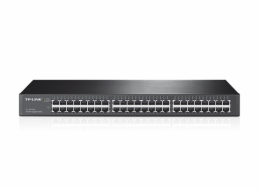
TP-Link switch TL-SG1048 48portový gigabitový switch 48portový gigabitový přepínač TL-SG1048 splňuje ty nejnáročnější požadavky pracovních skupin a oddělení na konektivitu. Přepínač TL-SG1048, který se vyznačuje spolehlivostí a jednoduchou správou, poskytuje 48 portů 10/100/1 000 Mbit/s. TL-SG1048 v sobě spojuje snadnou obsluhu a bezkonkurenční výkon. Výsledkem je výjimečná hodnota pro hospodárně smýšlející správce sítě, kteří chtějí to nejlepší řešení za nejlepší možnou cenu. 48 portů 10/100/1 000 Mbit/s RJ45 Podporuje automatické učení adres MAC a Auto MDI/MDIX Ocelové pouzdro pro montáž do standardních racků 19 Stránky produktu: https://www.tp-link.com/cz/business-networking/unmanaged-switch/tl-sg1048/ Technické specifikace HARDWARE FEATURES Standards and Protocols IEEE 802.3i, IEEE 802.3u, IEEE 802.3ab, IEEE 802.3x Interface 48 10/100/1000Mbps RJ45 Ports (Auto Negotiation/Auto MDI/MDIX) Network Media 10BASE-T: UTP category 3, 4, 5 cable (maximum 100m) 100BASE-TX/1000BASE-T: UTP category 5, 5e or above cable (maximum 100m) Fan Quantity 2 Physical Security Lock No Power Supply 100-240VAC, 50/60Hz Power Consumption Maximum: 29.8W (220V/50Hz) Dimensions ( W x D x H ) 17.32*8.7*1.73 in.(440*220*44 mm) Mounting Rack Mountable Max Power Consumption 32.29W(220V/50Hz) Max Heat Dissipation 110.17BTU/h PERFORMANCE Switching Capacity 96Gbps Packet Forwarding Rate 71.4Mpps MAC Address Table 8K Buffer Memory 16Mb Jumbo Frame 10KB Transfer Method Store-and-Forward OTHERS Certification FCC, CE, RoHS Package Contents 48-Port Gigabit Rackmount Switch Power Cord Installation Guide Rackmount Kits Rubber Feet Environment Operating Temperature: 0°C~40°C (32°F~104°F); Storage Temperature: -40°C~70°C (-40°F~158°F); Operating Humidity: 10%~90% non-condensing; Storage Humidity: 5%~90% non-condensing
Skladem, dodání 2-4 dní
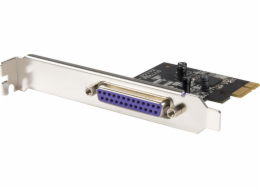
StarTech NIC Controller StarTech 1Port PCIe-Erweiterungskarte Drucker Kategorie zboží: Ovladače
Skladem-dodání 2-4 dní
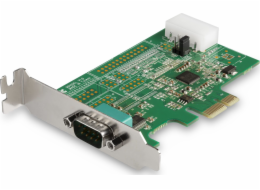
StarTech PCIe x1 řadič – RS-232 (PEX1S953LP)
Skladem-dodání 2-4 dní
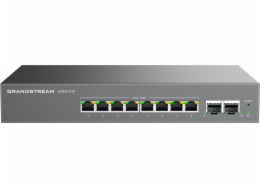
GWN7721P je 10portový managovatelný switch L2 Lite, vybavený 8x 2,5G ethernetovými porty a 2x 10g...
Skladem, dodání 2-4 dní
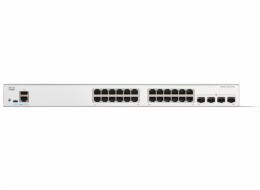
Cisco Catalyst switch C1200-24P-4G Řada Cisco Catalyst 1200 je další generací cenově dostupných chytrých přepínačů, které kombinují vysoký výkon a spolehlivost s kompletní sadou funkcí, které potřebujete pro malé a středně velké podnikové sítě. Přepínače fungují na přizpůsobeném softwaru operačního systému Linux a poskytují flexibilní možnosti správy, komplexní možnosti zabezpečení a funkce statického směrování na 3. vrstvě, které daleko přesahují možnosti neřízeného nebo levného přepínače a to za nižší cenu než u plně spravovaných přepínačů. Když potřebujete spolehlivé řešení pro sdílení online zdrojů a připojení počítačů, telefonů a bezdrátových přístupových bodů, chytré přepínače Catalyst řady 1200 poskytují ideální řešení za dostupnou cenu. Stránky produktu: C1200-24P-4G Performance Switching capacity and forwarding rate (All switches are wire-speed and nonblocking) Capacity in millions of packets per second (mpps) (64-byte packets) 41,66 Switching capacity in gigabits per second (Gbps) 56 Layer 2 switching Spanning Tree Protocol (STP) Standard 802.1d spanning tree support Fast convergence using 802.1w (Rapid Spanning Tree Protocol [RSTP]), enabled by default Multiple spanning tree instances using 802.1s (MSTP); 8 instances are supported Per-VLAN Spanning Tree Plus (PVST+); 126 instances are supported Rapid PVST+ (RPVST+); 126 instances are supported Port grouping/link aggregation Support for IEEE 802.3ad Link Aggregation Control Protocol (LACP) Up to 4 groups Up to 8 ports per group with 16 candidate ports for each (dynamic) 802.3ad Link Aggregation Group (LAG) VLAN Support for up to 255 active VLANs simultaneously Port-based and 802.1Q tag-based VLANs Management VLAN Guest VLAN Auto Surveillance VLAN (ASV) Voice VLAN Voice traffic is automatically assigned to a voice-specific VLAN and treated with appropriate levels of QoS. Voice Services Discovery Protocol (VSDP) delivers networkwide zero-touch deployment of voice endpoints and call control devices Generic VLAN Registration Protocol (GVRP) and Generic Attribute Registration Protocol (GARP) Enable automatically propagation and configuration of VLANs in a bridged domain Internet Group Management Protocol (IGMP) versions 1, 2, and 3 snooping Limits bandwidth-intensive multicast traffic to only the requesters; supports 255 multicast groups (source-specific multicasting is also supported) IGMP querier Used to support a Layer 2 multicast domain of snooping switches in the absence of a multicast router Head-of-Line (HOL) blocking HOL blocking prevention Loopback detection Provides protection against loops by transmitting loop protocol packets out of ports on which loop protection has been enabled. It operates independently of STP Layer 3 routing IPv4 routing Wire-speed routing of IPv4 packets Up to 32 static routes and up to 16 IP interfaces IPv6 routing Wire-speed routing of IPv6 packets Layer 3 interface Configuration of Layer 3 interface on physical port, LAG, VLAN interface, or loopback interface Classless Interdomain Routing (CIDR) Support for CIDR Dynamic Host Configuration Protocol (DHCP) relay at Layer 3 Relay of DHCP traffic across IP domains User Datagram Protocol (UDP) relay Relay of broadcast information across Layer 3 domains for application discovery or relaying of Bootstrap Protocol (BootP)/DHCP packets Security Secure Sockets Layer (SSL) Encrypts all HTTPS traffic, allowing secure access to the browser-based management GUI in the switch SSH Protocol SSH is a secure replacement for Telnet traffic. Secure Copy (SCP) also uses SSH. SSH v1 and v2 are supported. IEEE 802.1X (authenticator role) RADIUS authentication, guest VLAN, single/multiple host mode, and single/multiple sessions STP loopback guard Provides additional protection against Layer 2 forwarding loops (STP loops) Secure Core Technology (SCT) Ensures that the switch will receive and process management and protocol traffic no matter how much traffic is received Secure Sensitive Data (SSD) A mechanism to manage sensitive data (such as passwords, keys, and so on) securely on the switch, populating this data to other devices and a secure auto-configuration. Access to view the sensitive data as plain text or encrypted is provided according to the user-configured access level and the access method of the user Trustworthy systems Trustworthy systems provide a highly secure foundation for Cisco products Run-time defenses (Executable Space Protection [X-Space], Address Space Layout Randomization [ASLR], Built-In Object Size Checking [BOSC]) Port security Ability to lock source MAC addresses to ports and limit the number of learned MAC addresses RADIUS Supports RADIUS authentication for management access. Switch functions as a client Storm control Broadcast, multicast, and unknown unicast DoS prevention DoS attack prevention Multiple user privilege levels in CLI Level 1, 7, and 15 privilege levels ACLs Support for up to 512 rules Drop or rate limit based on source and destination MAC, VLAN ID, IPv4 or IPv6 address, IPv6 flow label, protocol, port, Differentiated Services Code Point (DSCP)/IP precedence, TCP/UDP source and destination ports, 802.1p priority, Ethernet type, Internet Control Message Protocol (ICMP) packets, IGMP packets, TCP flag; ACL can be applied on both ingress and egress sides Time-based ACLs supported Quality of service Priority levels 8 hardware queues Scheduling Strict priority and Weighted Round-Robin (WRR) queue assignment based on DSCP and Class of Service (802.1p/CoS) Class of service Port based, 802.1p VLAN priority based, IPv4/v6 IP precedence/Type of Service (ToS)/DSCP based, Differentiated Services (DiffServ), classification and re-marking ACLs, trusted QoS Rate limiting Ingress policer, egress shaping and rate control per VLAN, per port, and flow based Congestion avoidance A TCP congestion avoidance algorithm is required to reduce and prevent global TCP loss synchronization Standards Standards IEEE 802.3 10BASE-T Ethernet, IEEE 802.3u 100BASE-TX Fast Ethernet, IEEE 802.3ab 1000BASE-T Gigabit Ethernet, IEEE 802.3ad Link Aggregation Control Protocol, IEEE 802.3z Gigabit Ethernet, IEEE 802.3x Flow Control, IEEE 802.3 ad LACP, IEEE 802.1D (STP), IEEE 802.1Q/p VLAN, IEEE 802.1w RSTP, IEEE 802.1s Multiple STP, IEEE 802.1X Port Access Authentication, IEEE 802.3af, IEEE 802.3at, RFC 768, RFC 783, RFC 791, RFC 792, RFC 793, RFC 813, RFC 879, RFC 896, RFC 826, RFC 854, RFC 855, RFC 856, RFC 858, RFC 894, RFC 919, RFC 920, RFC 922, RFC 950, RFC 951, RFC 1042, RFC 1071, RFC 1123, RFC 1141, RFC 1155, RFC 1157, RFC 1213, RFC 1215, RFC 1286, RFC 1350, RFC 1442, RFC 1451, RFC 1493, RFC 1533, RFC 1541, RFC 1542, RFC 1573, RFC 1624, RFC 1643, RFC 1700, RFC 1757, RFC 1867, RFC 1907, RFC 2011, RFC 2012, RFC 2013, RFC 2030, RFC 2131, RFC 2132, RFC 2233, RFC 2576, RFC 2616, RFC 2618, RFC 2665, RFC 2666, RFC 2674, RFC 2737, RFC 2819, RFC 2863, RFC 3164, RFC 3411, RFC 3412, RFC 3413, RFC 3414, RFC 3415, RFC 3416, RFC 4330 IPv6 IPv6 IPv6 host mode IPv6 over Ethernet Dual IPv6/IPv4 stack IPv6 Neighbor Discovery (ND) IPv6 stateless address auto-configuration Path Maximum Transmission Unit (MTU) discovery Duplicate Address Detection (DAD) ICMP version 6 IPv6 over IPv4 network with Intrasite Automatic Tunnel Addressing Protocol (ISATAP) support IPv6 QoS Prioritizes IPv6 packets in hardware IPv6 ACL Drop or rate-limit IPv6 packets in hardware Multicast Listener Discovery (MLD v1/2) snooping Delivers IPv6 multicast packets only to the required receivers IPv6 applications Web/SSL, Telnet server/SSH, Ping, Traceroute, Simple Network Time Protocol (SNTP), Trivial File Transfer Protocol (T
Skladem-dodání 2-4 dní
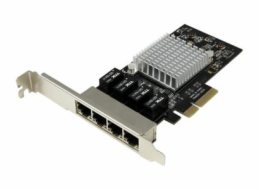
STARTECH 4-Port Gigabit Ethernet Network Card
Skladem-dodání 2-4 dní
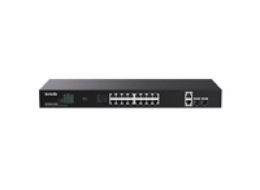
Tenda TEG1120P-16-250W Přepíná data pomocí 18ti portů RJ45 a 2x SFP sloty, 16 portů 10/100/1000 Mb/s podporuje PoE802.3af/at. Switch má ochranu proti přepětí 6kV. Podpora přepojování uzlů v módu Store-and-Forward. Full-duplex kontrola toku 802.3x, half-duplex kontrola toku v režimu Back-Pressure. Je vhodná jak do menších a středních firem, tak i do větších domácností. Napájení portů pomocí PoE 802.3af (15,4W) a 802.3at (30W). Max. celkem 230 Wattů na 16 PoE portů, využití pro venkovní i vnitřní IP kamery, Access Pointy/Routery, IP telefony, apod. Přepínač Standard / Priority / Extend / VLAN mode Standard mode: V tomto módu pracuje jako klasický switch, veškeré porty mají auto-negaci, všechny porty spolu komunikují, Port1 až Port18 rychlost 10/100/1000 Mb/s, SFP port rychlost 1000 Mb/s. Priority mode: Port1 až Port8 mají nastavenou velmi vysokou QoS prioritu. Extend mode: PoE porty Port9 až Port16 mají navýšen dosah ke koncovému zařízení až na 250m (záleží také na koncovém zařízení, kabeláži, apod.). Všechny porty switche spolu navzájem komunikují. VLAN mode: V tomto módu jsou Port1 až Port16 izolovány samy od sebe, každý port Port1 až Port16 může komunikovat jen s uplink porty Port17, Port18, SFP1 (19), SFP2 (20). Tento mód zabraňuje velkému šíření broadcastů a DHCP spoofingu. Technická specifikace Standardy a protokoly: IEEE802.3, IEEE802.3u, IEEE802.3ab, IEEE802.3x, IEEE802.3af, IEEE802.3at Porty PoE: 16x 10/100/1000 Mbps porty RJ45 auto-negace a s podporou PoE IEEE802.3 at/af PoE standart Porty Uplink: 2x 10/100/1000 Mbps porty RJ45 auto-negace, 2x 100/1000 Mbps SFP Celková propustnost: 40 Gbps Velikost tabulky MAC adresace: 8K Mód přepínání: Store-And-Forward LED Indikace: 20x Linka/Aktivita portu, 1x PoE-Max, 1x Napájení PoE napájení: Port 1 to Port 16 support standard IEEE802.3at/af power (maximum power for each port is 30W),PoE power type is (1 and 2 +, 3 and 6 - line pair), totally 230 Watt for PoE Level přepěťové ochrany: - pro porty: 6kV, - pro napájení: 6kV, ESD: vzduch: ±10kV, kontakt: ±8kV Buffer: 4M Packet forwarding rate: 41,7 Mpps Napájení: 100 až 240 V, AC 50/60 Hz Spotřeba: 15 W (bez PoE napájení), 250 W (s připojenými PoE zařízeními max. 230 W) Rozměry: 440mm x 178,8mm x 44mm(L*W*H) Celkem max. napájení PoE: 230 W Umístění: rackmount 19", na stěnu, desktop MTBF: 50 000 hodin+ Provozní teplota: 0° až 45 °C Vlhkost: 10%-90%RH (nekondenzující) Certifikace: FCC/CE/RoHS
Skladem, dodání 2-4 dní
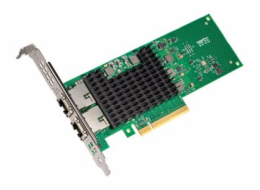
NIC/PCiE up to 10Gb RJ45 x 2 OEM
Skladem-dodání 2-4 dní
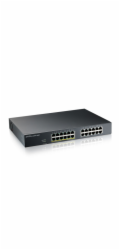
Zyxel GS1915-24EP, 24-port GbE, 12 port PoE, 130 Watt 802.3at, rackmount, fanless, Smart hybrid mode Switch, standalone
Dodání 3-5 dní
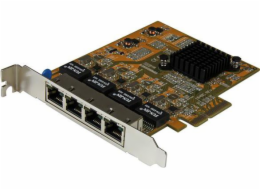
StarTech Síťová karta ST1000SPEX43 Výrobce: StarTech Kategorie: síťové karty
Skladem-dodání 2-4 dní
Řízený L2 switch, management přes UniFi Controller / Network, 4 LAN porty z 8 podporují 802.3af/at PoE napájení s celkovým budgetem 52 W, až 12 W na 1 port, Auto MDI/MDI-X, FLow Control, DHCP Snooping, ochrana vůči ESD / EMP výbojům. Bílá barva.
Skladem, dodání 2-4 dní
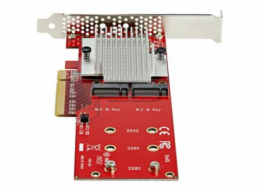
Startech Dual M.2 PCIe SSD Adapter Card, x8 / x16 Dual NVMe or AHCI M.2 SSD to PCI Express 3.0, M.2 NGFF PCIe (M-Key) Compatible, Vented, Supports 2242, 2260, 2280, JBOD, Mac & PC
Skladem-dodání 2-4 dní